Germany Seeks Global Influence with UN Security Council Bid for 2027-2028 Term
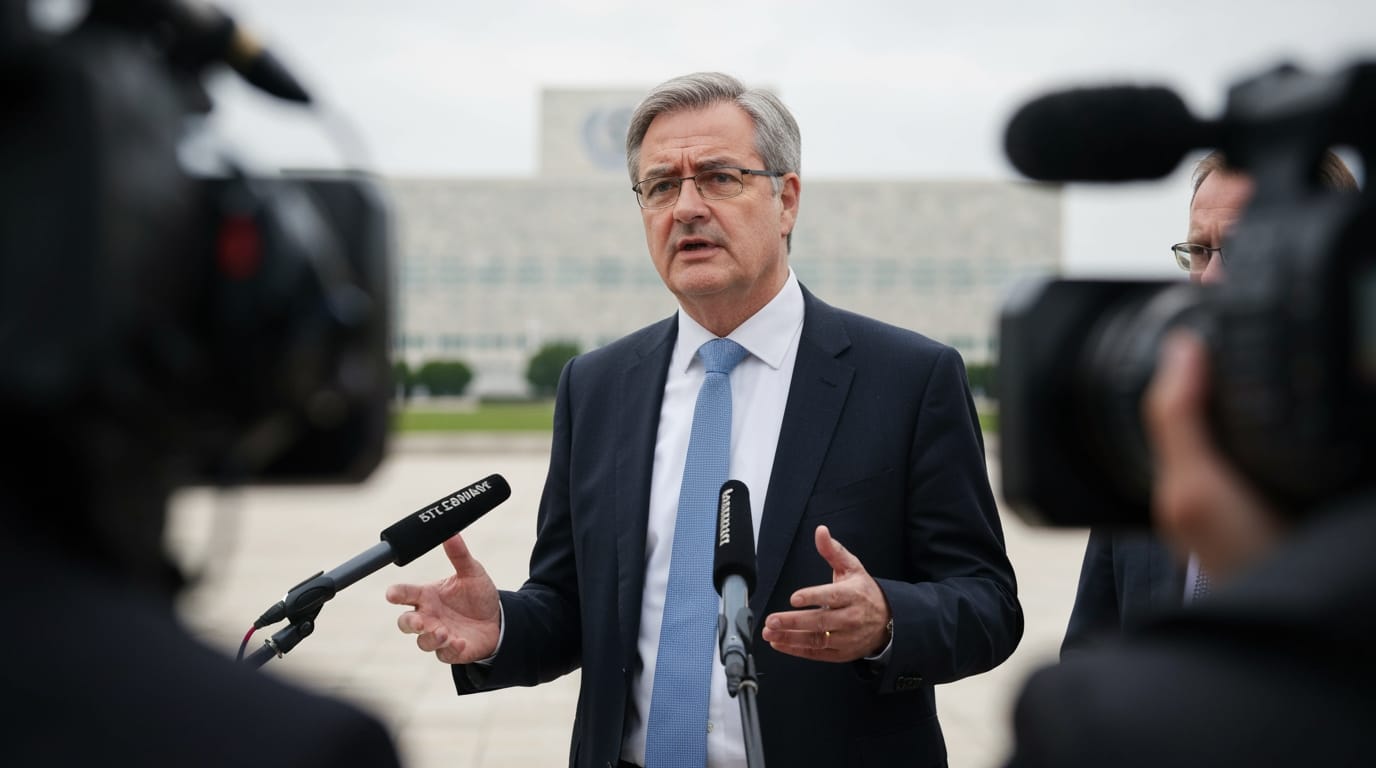
New York, NY – Germany is actively campaigning for a non-permanent seat on the United Nations Security Council for the 2027-2028 term, signaling its commitment to a rules-based international order amidst escalating global crises. The election for these coveted seats is slated for June 3, 2026, at the UN General Assembly in New York. This bid underscores Germany's long-held ambition to shoulder greater responsibility in international peace and security, leveraging its economic power and diplomatic influence to address pressing global challenges.
A Renewed Push for Multilateralism
Germany's candidacy is framed around a robust commitment to multilateralism and the strengthening of international cooperation. Its proposed agenda for the Security Council membership focuses on critical areas including conflict prevention, crisis resolution, the nexus of climate and security, human rights, and the emerging challenges in cyberspace and new technologies. This comprehensive approach reflects a belief that global issues necessitate global solutions, with the UN serving as an irreplaceable platform despite its imperfections. German officials have emphasized the importance of upholding the UN Charter and international law as foundational principles for global stability.
Foreign Minister Annalena Baerbock has highlighted Germany's readiness to play a central role in promoting peace, security, and sustainable development, specifically focusing on climate change and human rights. This aligns with Germany's historical engagement, which includes co-chairing the Group of Friends on Climate and Security with Nauru and collaborating with Tuvalu on combating rising sea levels. Germany has also pledged significant financial contributions to climate projects, providing at least six billion euros annually since 2022. Furthermore, the nation aims to empower women and young people in peace processes, recognizing their vital role in conflict resolution and societal stability.
Decades of Commitment and Contribution
Germany's involvement with the United Nations dates back to September 18, 1973, when both East and West Germany became members. Since its reunification, Germany has consistently deepened its engagement, becoming a steadfast pillar of the UN system. It stands as the second-largest overall contributor to the UN system and the fourth-largest contributor to both the regular UN budget and peacekeeping budgets. In 2022, Germany's total financial contributions to the UN, including assessed and voluntary payments, exceeded 6.8 billion euros.
The country's commitment extends beyond financial contributions to active participation in UN missions worldwide. Germany deploys military, police, and civilian personnel to various peacekeeping operations, such as UNIFIL in Lebanon, UNMISS in South Sudan, and MINURSO in Western Sahara. More than 30 UN organizations, employing over 1,000 staff members, are based in German cities like Bonn, Berlin, and Hamburg, further cementing its role as a key partner. Germany has previously served as a non-permanent member of the Security Council five times, with its most recent tenure from 2019 to 2020. During these terms, Germany has consistently used its platform to advocate for issues like conflict prevention, disarmament, and climate protection.
Navigating the Complexities of UN Reform
Beyond its immediate bid for a non-permanent seat, Germany has long been a vocal proponent of comprehensive Security Council reform. Together with Brazil, India, and Japan, it forms the Group of Four (G4), advocating for an expansion of both permanent and non-permanent seats to better reflect current geopolitical realities. The current structure, with its five permanent members (China, France, Russia, the United Kingdom, and the United States) originating from the victors of World War II, is widely seen as anachronistic.
However, the path to reform is fraught with challenges, including competing interests among member states and the reluctance of existing permanent members to cede power or accept new additions. While Germany aspires to a permanent seat, it also acknowledges the complexities, with some suggesting a common European Union seat as an alternative, though this faces its own hurdles. For its current non-permanent bid, Germany is competing with other nations such as Austria and Portugal for the available seats in the Western European and Other States group.
Recent scrutiny has also highlighted a potential challenge to Germany's credibility on the international stage. Concerns have been raised regarding perceived inconsistencies in applying principles of international humanitarian law and recent budget cuts to development cooperation and humanitarian aid. Critics argue that if Germany seeks a strong security policy role, it must consistently uphold international law and increase support for aid, particularly in contexts like the Gaza conflict, to maintain trust and partnerships.
Broadening Global Influence and Responsibility
Securing a seat on the UN Security Council would provide Germany with a crucial platform to directly shape international responses to conflicts and crises. It offers an opportunity to amplify its foreign policy priorities, ranging from humanitarian concerns and human rights to the regulation of new technologies and environmental peacebuilding. Ambassador Wolfgang Hermann Dodd, Germany's Special Envoy for the UN Security Council campaign, has articulated the nation's priorities, including upholding a rules-based multilateral order, fostering peaceful dispute resolution, and amplifying the concerns of Small Island Developing States.
A successful bid would empower Germany to further its vision of a world order based on justice and the rule of law, rather than "the rule of the strongest." By focusing on conflict prevention and addressing root causes such as inequality and climate change, Germany aims to stabilize societies and build resilience globally. Its ongoing engagement with UN peacekeeping and its conceptual contributions, including hosting the UN Peacekeeping Ministerial, demonstrate a proactive approach to global security. Through this bid, Germany seeks not only to project its values but also to demonstrate that active participation in the UN Security Council is a vital avenue for meaningful global leadership in an increasingly complex world.


