The Roar of the "Cockroaches": India's Youth Mobilize Against Disillusionment
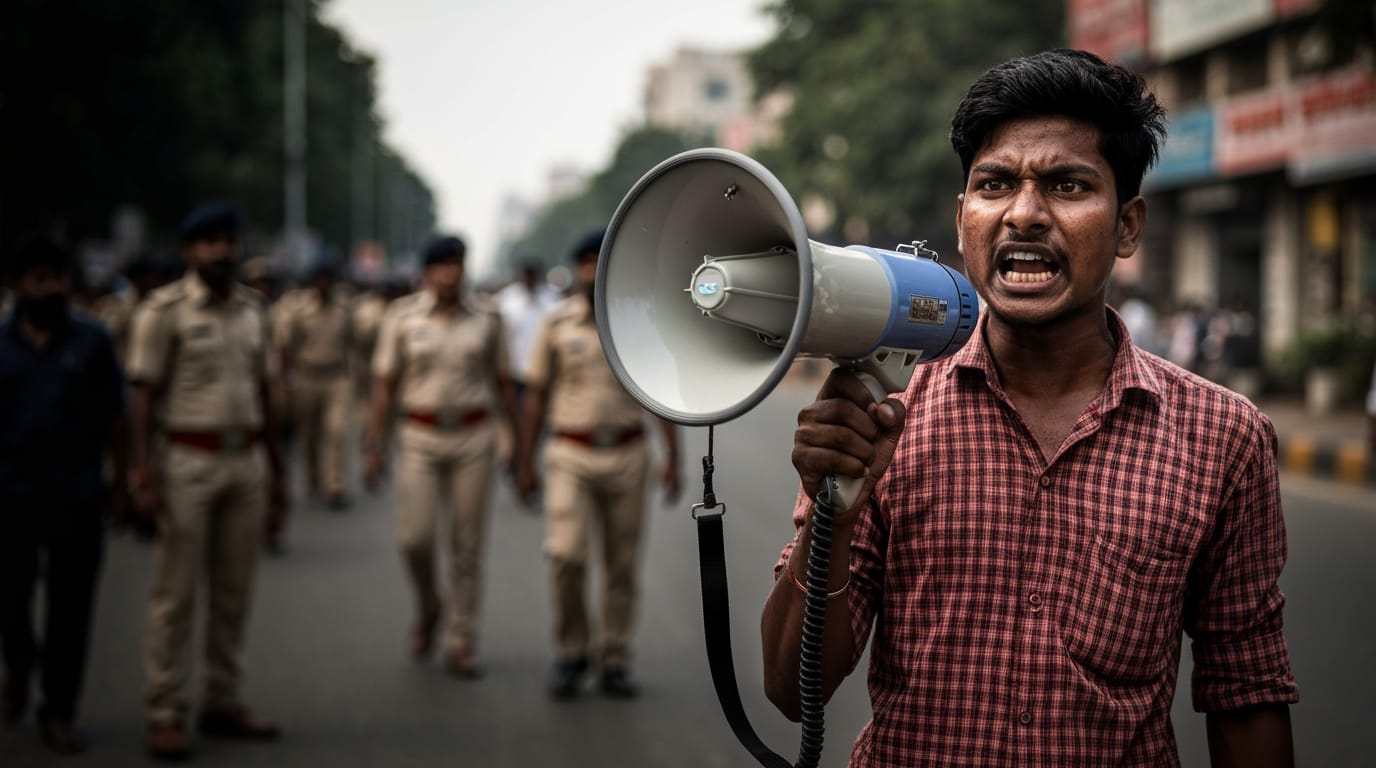
NEW DELHI – A nascent, yet rapidly swelling, online movement dubbed the "Cockroach Janta Party" (CJP) has dramatically emerged as a potent voice for India's frustrated youth, transforming a judicial jibe into a symbol of resilience and dissent. What began as satirical online content has quickly evolved into a significant expression of anger against pervasive unemployment, educational grievances, and economic pressures, challenging the political establishment and drawing millions of young Indians into its fold.
The movement's unprecedented rise underscores deep-seated anxieties within a demographic that constitutes over half of India's 1.42 billion population, highlighting a growing disconnect between the aspirations of the young and the opportunities available to them. Analysts suggest the CJP's momentum could pose a notable challenge to the ruling Bharatiya Janata Party (BJP), signaling a new era of youth activism that leverages digital platforms to demand accountability from a system many feel has left them behind.
The Genesis of a Gibe Turned Symbol
The "Cockroach Janta Party" derives its unusual name from a controversial remark made by Supreme Court Chief Justice Surya Kant. During a recent court hearing, Kant was widely reported to have compared some unemployed young people and activists to "cockroaches" and "parasites." The comments sparked immediate backlash across social media, where many perceived them as dismissive and insulting to India's struggling youth. While the Chief Justice later clarified that his remarks were directed at individuals with "fake and bogus degrees" who attack institutions, not unemployed youth in general, the initial statement ignited a firestorm.
Instead of shying away from the pejorative term, young Indians embraced it, transforming the "cockroach" into an ironic symbol of their enduring presence and collective resilience in the face of adversity. The CJP, founded by Abhijeet Dipke, a 30-year-old political communications strategist and Boston University student, rapidly gained traction. Within days, its Instagram page amassed more than 22 million followers, significantly outpacing the ruling BJP's long-established presence on the platform. Dipke has asserted that the movement's explosive growth was not pre-planned but rather a spontaneous reflection of widespread, pre-existing frustrations among India's younger generation.
A Deep Well of Discontent: Unemployment and Educational Woes
The meteoric rise of the CJP is inextricably linked to critical socio-economic challenges plaguing India's youth, primarily the persistently high rates of unemployment and systemic issues within the education sector. India's youth unemployment rate stood at 16.03% in 2024, marking a slight increase from the previous year. For graduates, the situation is even more dire, with an estimated unemployment rate of 13%. A report from Azim Premji University indicated that nearly 40% of graduates aged 15-25 and 20% of those aged 25-29 were jobless.
The nation's labor force expands by approximately 8 million people annually, yet the economy struggles to generate a commensurate number of full-time employment opportunities. This mismatch contributes to India's high "Not in Education, Employment, or Training" (NEET) rate, which is close to 25% in 2024, exceeding the global average of 20%. Furthermore, a significant skills-jobs gap means that only 8.25% of graduates find roles aligned with their qualifications, with nearly 50% relegated to "elementary" or "semi-skilled" jobs that do not utilize their education.
Beyond job scarcity, the education system itself has become a flashpoint for anger. Recent incidents involving leaks of exam papers and errors in marking final-year school exams have threatened to derail the careers of millions of students. In response, nearly 800,000 students have signed a petition demanding the resignation of Education Minister Dharmendra Pradhan, illustrating the depth of frustration with these systemic failures. These educational setbacks, coupled with rising inflation and increasing living costs, including escalating fuel prices and gas shortages linked to international conflicts, have created a fertile ground for widespread youth discontent.
From Digital Echoes to Concrete Demands
Initially a phenomenon confined to social media, the Cockroach Janta Party is now transitioning from online satire to tangible calls for real-world change. Abhijeet Dipke has announced plans to return to India to lead peaceful protests in Delhi, demanding the education minister's resignation and urging young people to exercise their constitutional right to seek government accountability. This move signifies a critical shift from digital expression to direct civic action.
The CJP has also put forth a manifesto outlining its core demands. These include a ban on post-retirement rewards for judges, a mandate for 50% of parliamentary and cabinet seats to be reserved for women, protection of voting rights, advocacy for an independent press, and a 20-year ban on politicians switching parties, a practice often perceived as opportunistic. The movement's satirical content, featuring memes and mock campaign slogans, directly targets the perceived corruption, joblessness, and political dysfunction within the existing governance structure.
The government's reaction to the CJP's emergence has signaled its growing concern. The movement's official X (formerly Twitter) account was blocked in India, citing a "legal demand." However, mirroring the "endurance" symbol they adopted, the CJP quickly established a new account, posting, "You thought you can get rid of us? Lol," indicating their determination to persist. Some members have already begun to take the "cockroach" persona offline, with groups dressed as cockroaches participating in community service, such as cleaning the Yamuna River, demonstrating a commitment to action beyond mere digital protest.
Broader Implications for India's Political Landscape
The rapid proliferation and increasing organization of the Cockroach Janta Party represent a significant development in India's political landscape. Political analysts suggest that the movement's immense popularity has begun to chip away at the image of Prime Minister Narendra Modi, despite his party's recent electoral successes in various states. This suggests that while traditional political victories may continue, a significant segment of the youth remains unaddressed and increasingly vocal.
The CJP highlights a generational shift in activism. While youth anger in India has historical precedents—from post-independence disillusionment to protests against economic issues in the 1970s—the current wave is characterized by its digital genesis and rapid viral spread. Modern Indian youth, exposed to globalization, often face "thwarted wants and needs" and "inequitable access and opportunities," leading to distress and anger that finds new outlets.
The movement's ability to mobilize millions and articulate specific grievances signals that traditional political parties can no longer ignore the digital sphere or the specific concerns of the under-30 demographic. While the CJP itself may not field electoral candidates, its influence lies in its capacity to shape public discourse, demand accountability, and potentially pressure established parties to address the critical issues facing India's vast youth population. The "cockroaches" have proven they are not easily swept aside, and their collective buzz is becoming increasingly difficult for the political establishment to ignore.
Conclusion
The "Cockroach Janta Party" stands as a powerful testament to the evolving nature of dissent and political engagement in modern India. Born from an insult, it has been embraced by a generation grappling with economic insecurity, educational anxieties, and a desire for greater political accountability. The movement's rapid online growth, followed by strategic plans for offline mobilization and a clear manifesto, demonstrates that India's youth are not merely passive observers but active participants in shaping their nation's future. As the CJP continues to challenge the status quo, its trajectory will offer crucial insights into the enduring power of collective voice and the potential for satirical protest to catalyze significant social and political change in the world's most populous democracy.