Germany's AfD Draws Millions in Public Funds Amidst Extremism Concerns
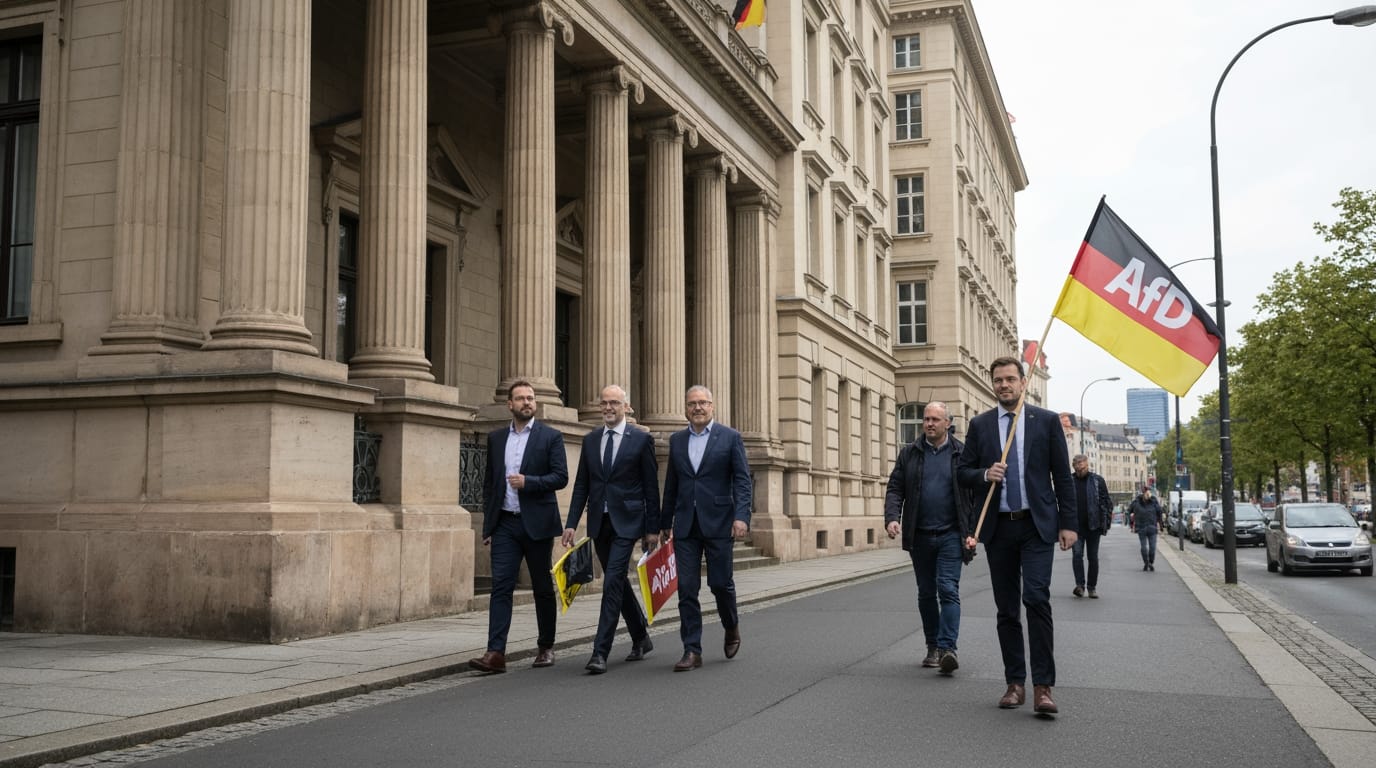
BERLIN – Germany's Alternative for Germany (AfD) party continues to receive substantial public funding, amassing millions of euros annually, a practice that has intensified public debate and scrutiny given the party's classification by the Federal Office for the Protection of the Constitution (Verfassungsschutz) as a "confirmed right-wing extremist endeavor." This financial support, rooted in Germany's foundational laws designed to foster a robust multi-party democracy, presents a complex dilemma as the controversial party utilizes state resources to advance its agenda.
The flow of public funds to the AfD highlights the intricate balance within German political financing, where principles of equal opportunity and transparency clash with growing concerns about the party's democratic integrity. While the German system aims to prevent corruption and ensure all parties can participate effectively, the significant state subsidies directed to the AfD are viewed by many as inadvertently bolstering a political force increasingly seen as a threat to the democratic order it operates within.
The Foundations of German Party Finance
Germany's system of party financing is designed to ensure political parties can fulfill their constitutional mandate without undue influence from private interests. The Act on Political Parties, primarily enacted in 1994 and amended in 2015, governs how parties are funded, mandating both public subsidies and strict transparency requirements for private donations. The core principle is "rootedness in society," meaning public funds are allocated based on a party's electoral success and its ability to generate private income.
Public funding primarily comprises two types of annual subsidies. First, parties receive a per-vote subsidy: 83 cents for each valid vote cast in federal, European, and state elections. To encourage competition for newer parties, the first four million votes are subsidized at a slightly higher rate of 1 euro per vote. Second, a matching donations component provides parties with 45 cents for every euro raised through membership fees, contributions from elected officials, and small donations (excluding those over €3,300). Eligibility for these funds requires a party to secure at least 0.5 percent of valid votes in federal or European elections, or 1 percent in state parliamentary elections.
Beyond these direct subsidies, German law dictates strict transparency. Donations exceeding €500 must be identified, while those over €10,000 annually require the donor's name and address to be listed in financial reports. Single donations surpassing €35,000 must be immediately reported to the President of the Bundestag and publicly disclosed. This framework, outlined in Article 21 of the Basic Law, aims to shed light on parties' financial sources.
AfD's Financial Growth Amidst Electoral Success
The AfD's rising electoral fortunes have directly translated into increased public funding, allowing the party to consolidate its position within the German political landscape. In the 2025 federal election, for instance, the AfD garnered over 10.3 million votes, entitling the federal party to approximately €9.25 million through the per-vote subsidy alone. Further votes secured in state and European elections contribute additional millions.
In 2023, the party reported over €4.1 million in membership fees and more than €9.3 million in smaller donations. These self-generated revenues qualified the AfD for an additional €6.04 million in matching state contributions. Party membership has also seen growth, with figures increasing to 52,000 members by February 2025 from 39,673 in December 2023, suggesting that future matching contributions are likely to be even higher.
The AfD's financial trajectory has been notable since its inception. In its early years, when membership fees and direct donations were less substantial, the party controversially engaged in a gold trading business. This venture, generating sales of around €2 million annually in 2014 and 2015, allowed the party to demonstrate "income from business activity," a criterion necessary to qualify for state party financing. This early strategy underscored the party's determination to establish a financial base that would unlock access to public subsidies.
"Dark Money" and Legal Scrutiny
Despite benefiting significantly from public funds and advocating for anti-corruption measures, the AfD has been embroiled in several financial scandals involving "dark money" and illegal donations. These controversies have frequently placed the party under legal and public scrutiny, contradicting its self-proclaimed image as an anti-establishment force untainted by special interests.
One prominent scandal involved illegal donations channeled to the campaign of senior AfD politician Alice Weidel. In the run-up to the 2017 general election, the AfD's regional office in Lake Constance received €132,000 in weekly payments documented as "campaign donations for Alice Weidel." Further irregular contributions of €150,000 were identified in early 2018. These funds were found to originate from a German billionaire property tycoon, Henning Conle, who reportedly funneled the money through intermediaries and split the amounts to circumvent German laws requiring the disclosure of large donations and prohibiting anonymous contributions. German law specifically bans donations from non-EU citizens unless they are German nationals and mandates immediate reporting of large contributions.
The AfD was subsequently fined over €500,000 by German authorities for accepting these illegal donations, an amount that included penalties three times the value of the illicit funds, and was ordered to return the money. Similar irregular contributions were identified for other AfD figures, including Jörg Meuthen. These incidents have highlighted gaps in existing transparency rules and fuelled calls for their improvement and stricter enforcement.
The Funding Dilemma: Extremism and Democracy
The continued public financing of the AfD has become a focal point of a broader debate concerning Germany's "militant democracy" – a system designed to protect itself from those who seek to undermine its core principles. The classification of the entire AfD as a "confirmed right-wing extremist endeavor" by the Federal Office for the Protection of the Constitution in 2025 has amplified this tension. Critics argue that providing significant state funds to a party challenging the rule of law and human rights, while simultaneously attacking democratic institutions, is inherently contradictory.
This paradox has prompted discussions about potential mechanisms to curtail such funding. In January 2024, a new tool was successfully used to exclude the NPD (now known as Die Heimat), another far-right party, from public funding. This mechanism allows for the cessation of state financial support for parties that demonstrate a clear anti-democratic orientation, even without a formal party ban. Unlike a party ban, this tool does not require proving the potential to implement anti-constitutional goals, only a clear anti-democratic stance. In theory, this precedent could be applied to the AfD, raising profound questions about the future of its public funding.
The debate also extends to the fundamental purpose of public party financing. While intended to ensure equal opportunity for all political actors, the question arises whether these funds should be accessible to organizations that domestic intelligence agencies classify as extremist. This situation forces a re-evaluation of how Germany's democratic institutions can safeguard themselves without infringing upon the principles of political pluralism and freedom of association.
Conclusion
The substantial public funding received by Germany's AfD underscores a critical juncture in the nation's political discourse. While the system of public financing is designed to strengthen democracy by supporting a diverse party landscape, the allocation of millions to a party labeled as extremist by intelligence agencies creates significant societal and political friction. The AfD's financial controversies, coupled with its ideological positioning, challenge the very rationale behind state support for political parties. As the party continues to gain electoral ground, the ongoing debate about its funding, and the potential application of measures to restrict it, will remain a central theme in safeguarding Germany's democratic foundations. The balancing act between fostering political competition and protecting constitutional values promises to be a defining challenge for the years to come.


