Germany's Auto Giants Face Unprecedented Cull Amid Global Shifts
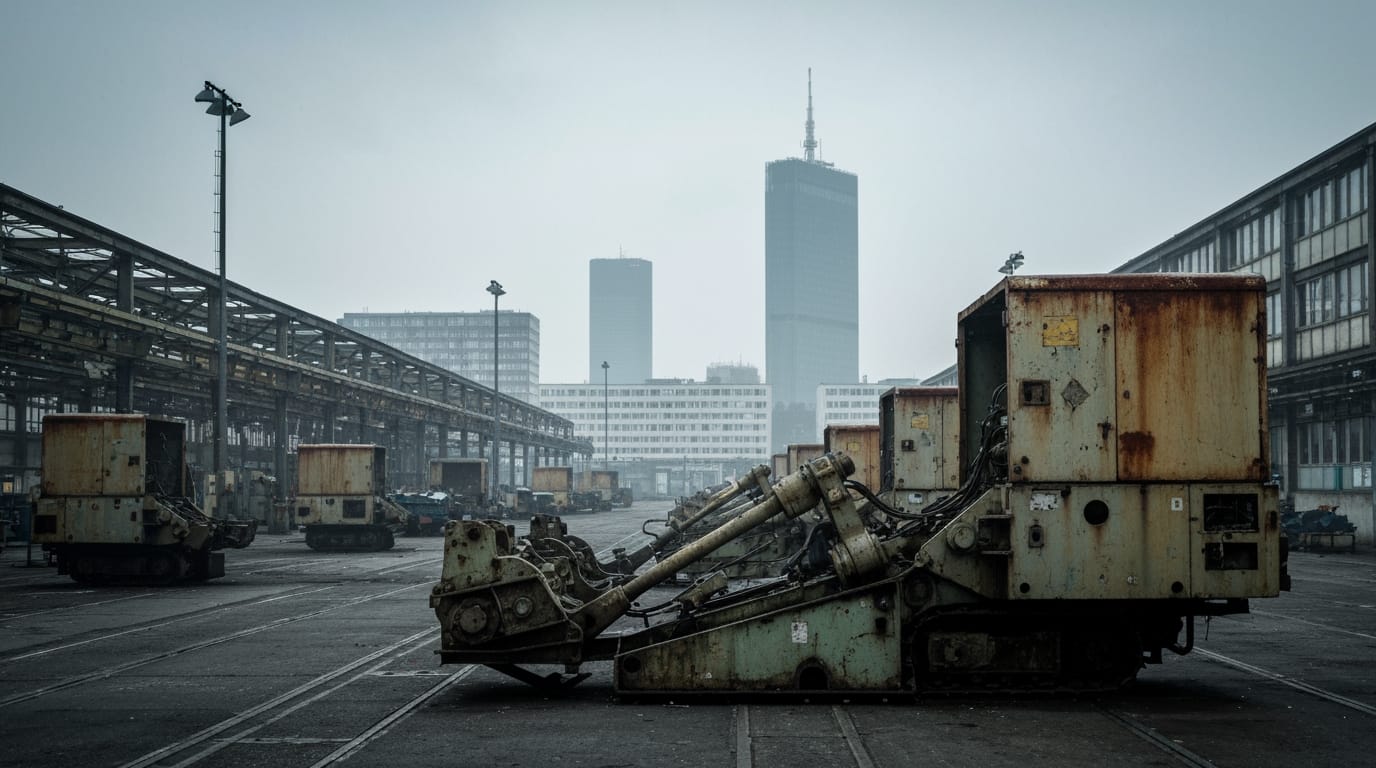
Germany's revered automotive industry, a cornerstone of its economic might and a symbol of engineering prowess, is undergoing a profound and challenging transformation. From the mass-market dominance of Volkswagen to the luxury prestige of BMW, the nation's carmakers are facing an unprecedented "cull" driven by the accelerating shift to electric vehicles (EVs), intensifying global competition, particularly from China, and escalating geopolitical and economic pressures. This industrial upheaval is forcing deep strategic reevaluations, massive cost-cutting measures, and significant workforce reductions that are reshaping the landscape of German manufacturing.
The Electrification Imperative and Intensified Competition
The global automotive sector is in the midst of its most significant technological shift in a century, moving away from the internal combustion engine (ICE) towards electric powertrains. This transition is not merely an engineering challenge; it fundamentally alters the value chain, emphasizing battery technology and software development over traditional mechanical systems, areas where German manufacturers have historically lagged.
Adding to this complex scenario is the formidable rise of Chinese automakers. Brands like BYD and Xpeng have achieved an "uncatchable lead" in key EV technologies and are rapidly expanding their footprint globally, including into European markets. Once a guaranteed growth market for German carmakers, China has become a battleground where local manufacturers, often with more agile development cycles and aggressive pricing strategies, are eroding the market share of established foreign players. Volkswagen, Mercedes-Benz, BMW, and Porsche have all reported steep quarterly sales declines in China, ranging from 30% to 41% in the April-June quarter, severely impacting their overall profits. This downturn has led to German manufacturers holding very low market shares in China's burgeoning EV segment, where one in two cars sold is already electric. The differing speeds of EV adoption across regions—rapid in China, medium in Europe, and slower in the U.S.—further complicate strategic planning for global manufacturers.
Volkswagen's Drastic Overhaul and Workforce Reductions
Volkswagen Group, Europe's largest carmaker, finds itself at the forefront of this transformative period, forced into a comprehensive strategic reboot in response to flat sales and sharply falling profits. The company's operating profit tumbled by 53% to $10.4 billion, its lowest since 2016, necessitating drastic action to achieve an 8% to 10% operating return on sales by 2030.
Central to Volkswagen's turnaround strategy are extensive job cuts. Initially, the company announced plans to eliminate 50,000 jobs across its entire corporate umbrella by 2030, impacting major brands like Volkswagen, Audi, and Porsche, as well as its software division CARIAD. Binding agreements have already secured over 28,000 worker departures within Volkswagen AG alone by 2030, contributing to approximately $1 billion in expense reductions over the past year. Recent reports indicate that CEO Oliver Blume is evaluating an even more substantial reduction, potentially up to 100,000 global job cuts, alongside the possible closure of four German plants that employ around 40,000 workers. These measures aim to address a significant 20% cost disadvantage compared to key competitors and to generate over $7 billion in annual net cost savings by 2030. The group also intends to reduce its annual global production capacity from 10 million to 9 million vehicles and prune its model lineup by up to half to streamline operations and enhance competitiveness. Porsche, a premium brand within the VW Group, is also undertaking significant workforce adjustments, planning an additional 5,000 job cuts by 2035, bringing its total reductions to approximately 9,400 positions through natural attrition, partial retirement, and voluntary severance programs.
BMW's Strategic Adaptation and Workforce Adjustments
While often perceived as more agile in its transition, BMW is also feeling the immense pressures of the evolving automotive landscape. Previously, CEO Oliver Zipse had pledged to avoid job losses linked to the EV transformation, emphasizing upskilling existing employees to adapt to new production methods. BMW's strategy involved producing both ICE and EV models under the same roof, aiming for a smoother transition.
However, the escalating challenges, including rising EV transition costs, U.S. tariffs, and intense Chinese competition, have necessitated significant workforce adjustments. BMW recently announced plans to cut up to 8,000 jobs in Germany by the end of 2027 through a voluntary redundancy program. These reductions will primarily affect administrative and development roles, with production workers largely spared. The decision follows a profit warning issued in June, where the company lowered its profit forecast due to weaker-than-anticipated performance in China, a market where its sales slumped by 30% year-on-year in the second quarter. BMW's Q2 pre-tax earnings subsequently dropped over 33%. These moves underscore that even traditionally stable players are not immune to the deep structural changes sweeping through the industry.
The Broader Ripple Effect: Suppliers and the German Economy
The transformation of Germany's automotive industry extends far beyond the major car manufacturers, sending significant ripple effects through the vast network of suppliers and impacting the broader national economy. The shift to EVs reduces the number of components required for a vehicle—an electric powertrain has approximately 20 moving parts compared to 2,000 in an ICE system—directly threatening a significant portion of the supplier base.
Experts predict that suppliers could face a workforce reduction of around 20% due to this shift, with a significant number of companies expected to go out of business. Major tier-1 suppliers have already announced substantial job cuts: Continental aims for reductions in the mid-four-digit range, while ZF Friedrichshafen, a key parts maker, has long-term plans to cut up to 15,000 jobs, including 7,600 in its electrified drivetrain division. Bosch, the world's largest automotive supplier, plans to eliminate 13,000 positions in its mobility division.
Overall, the German automotive sector has seen more than 100,000 jobs disappear since 2019, with the German Association of the Automotive Industry (VDA) anticipating another 125,000 job losses by 2035. The automotive workforce experienced a slight decline in 2024, continuing a downward trend since 2019, with suppliers bearing the brunt of these adjustments.
The economic implications are severe. Germany's economy contracted in both 2023 and 2024—the first consecutive annual declines in over two decades—accompanied by a more than 22% rise in corporate insolvencies each year. High domestic energy and labor costs exacerbate these pressures, leading nearly 40% of German industrial firms to consider relocating operations abroad. The Bundesbank has highlighted the profound transformation and the less favorable international environment as key challenges for the industry.
Conclusion
The German automotive industry is navigating a period of unprecedented change. The "cull" is deep and widespread, affecting not only the iconic brands like Volkswagen and BMW but also the intricate web of suppliers that underpin this vital sector. The rapid acceleration of EV technology, the fierce competitive landscape dominated by Chinese manufacturers, and persistent economic headwinds are forcing German automakers to fundamentally rethink their strategies, production methods, and workforce structures.
While the challenges are immense, necessitating significant job reductions and painful restructuring, they also present an opportunity for innovation and renewed competitiveness. The ability of Germany's auto giants to adapt, invest in new technologies, reskill their workforce, and redefine their position in the global market will determine the future of an industry that has long been a symbol of national pride and economic strength. The coming years will be crucial in demonstrating whether these titans can successfully navigate this transformation and emerge stronger in a new automotive era.