Germany's Automotive Heartlands Face Existential Crisis Amidst "Polycrisis"
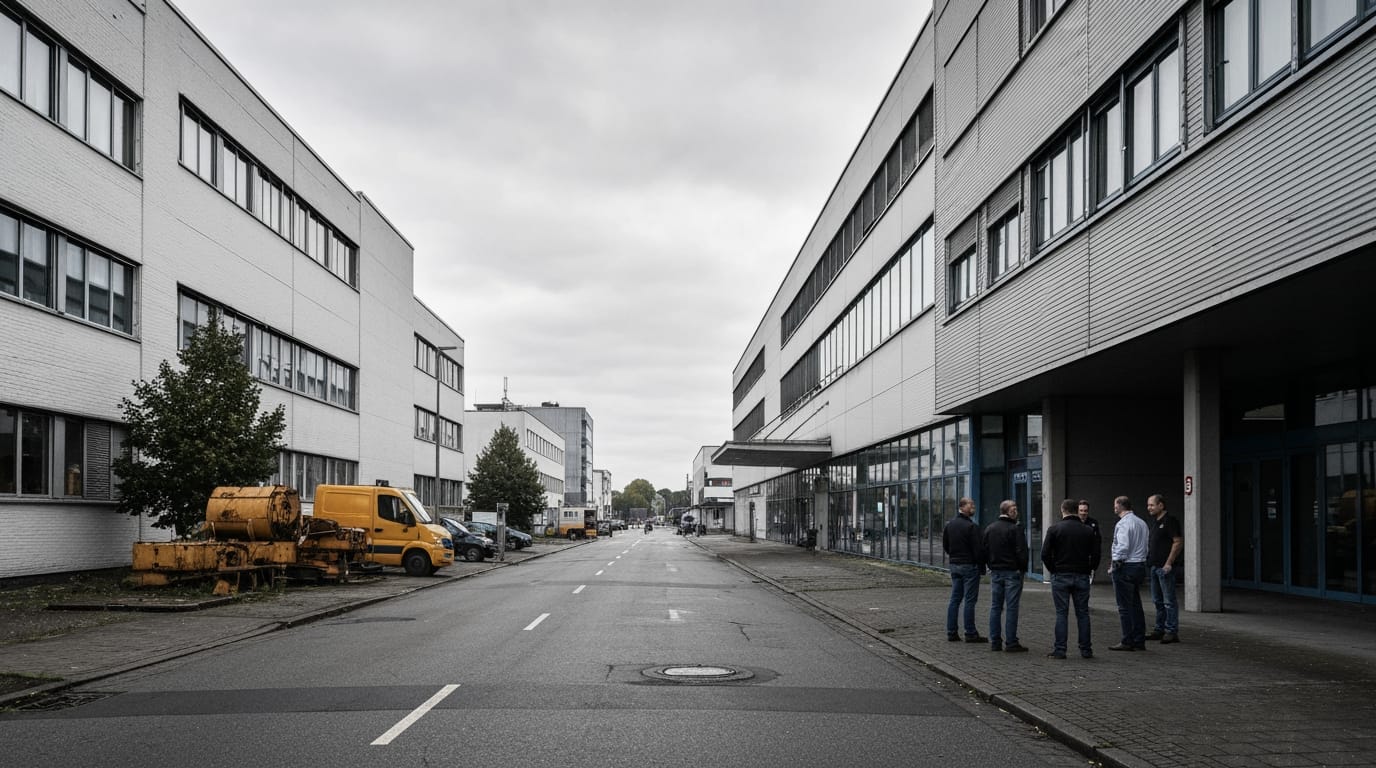
Germany's storied automotive industry, a long-standing symbol of national engineering prowess and economic might, is grappling with an unprecedented "structural crisis" that extends far beyond a typical cyclical downturn. Once the undisputed engine of Europe's largest economy, generating approximately 5-6% of its GDP and one-fifth of its manufacturing output, the sector and the cities it sustains are now navigating a treacherous landscape of plummeting profits, fierce global competition, and the immense costs of a rapid technological transformation. The combined weight of these challenges threatens to redefine the economic future of Germany's traditional auto capitals.
The Electric Shock: A Costly Transition and Shifting Landscape
At the core of Germany's automotive predicament is the seismic shift towards electric vehicles (EVs). This transition, while essential for environmental goals and future competitiveness, comes with enormous investment costs in research and development, retooling production lines, and advancing battery technology. German carmakers, including giants like Volkswagen, Mercedes-Benz, and BMW, were initially slow to ramp up their EV investments, putting them at a disadvantage against nimbler global rivals.
Adding to the industry's woes, the demand for EVs has not met initial ambitious projections, particularly after Germany ended its subsidies for electric vehicle purchases at the close of 2023. This policy change, driven by budget constraints, led to a significant slump in EV sales within the country. The manufacturing process for electric vehicles is also inherently different, requiring fewer parts and different skill sets compared to traditional internal combustion engine (ICE) cars. This structural change is a major catalyst for widespread job losses, particularly impacting regions and companies heavily reliant on ICE powertrain components.
Global Headwinds and Domestic Economic Drag
The challenges are compounded by intense international competition, primarily from rapidly ascending Chinese EV manufacturers. These companies, bolstered by substantial government support and advanced domestic battery supply chains, have aggressively entered the global market, exerting immense price pressure and capturing market share, including in segments historically dominated by German brands. The German automotive industry has seen its market share decline and production costs increase in this competitive environment.
Domestically, high energy prices and elevated labor costs further erode the competitiveness of German manufacturers. Lingering supply chain disruptions, a legacy of the pandemic, the war in Ukraine, and ongoing geopolitical tensions, continue to cause shortages in raw materials and components, leading to production delays and increased operational complexities. The broader German economy itself is in a period of stagnation, with the International Monetary Fund projecting zero growth for 2025, further dampening domestic demand for new vehicles. Weak demand is evident across European and Chinese markets, contributing to a perfect storm for carmakers. Adding to trade tensions, new US tariffs, such as a projected 25% duty on European cars, risk further impacting German brands, for whom the US remains a crucial export destination. This protectionist trend forces companies to consider costly local production, undermining Germany's export-driven model.
The Ripple Effect: Cities and Jobs Under Threat
The financial strain on Germany's automakers is stark. Major players have reported significant profit declines in early 2025, with Mercedes-Benz seeing a 56% drop, Volkswagen a 36% decline, and BMW's profits falling by 29-38%. This downturn has directly translated into a sharp reduction in production, which has fallen from a peak of 5.6 million units in 2017 to below 4 million in 2024, with forecasts indicating further contraction.
The crisis is not confined to corporate boardrooms; it is profoundly impacting the country's workforce and the regional economies that have long thrived on automotive manufacturing. Between June 2024 and June 2025 alone, nearly 52,000 jobs were shed, representing a 6.7% reduction in the automotive workforce. Projections suggest that total automotive jobs could fall below 650,000 by 2027.
Regions historically dependent on ICE production, such as Bavaria, Baden-Württemberg, and Niedersachsen, are particularly vulnerable to mass job losses, with estimates ranging from 25,000 to 40,000 potential losses in these states by 2030. The extensive network of small and medium-sized enterprise (SME) suppliers, a critical component of the automotive ecosystem, is also in severe distress, with nearly half reporting a "bad" or "very bad" current situation. Many suppliers, especially those focused on powertrain components, face devastating job cuts, with some studies predicting a 14% decline by 2030 and a staggering 60% by 2040. Companies are resorting to efficiency programs, restructuring, workforce reductions, and even considering relocating investments abroad to mitigate the impact. Entire cities and villages, whose infrastructures and economies were built around automotive factories, now face an uncertain future.
Navigating the Storm: Policy and the Path Forward
In response to the escalating crisis, German policymakers and industry leaders are searching for solutions. The German Finance Minister, Lars Klingbeil, has announced an extension of tax breaks for electric vehicles until the end of 2030, aiming to rekindle demand. There are growing calls for reintroducing EV purchase subsidies, potentially harmonized across the European Union, to stimulate the market. Government and industry officials are convening "Automotive Summits" to address the deep-seated issues facing the sector.
Strategic investments in charging infrastructure are recognized as crucial for broader EV adoption. Industry efforts are also focused on innovation in battery technology and autonomous driving, areas considered vital for future competitiveness. While some long-term forecasts suggest a positive outlook for the German automotive market by 2030-2033, driven by advancements in EV technology and supportive government policies, this growth is often projected in market value rather than necessarily a rebound in traditional manufacturing employment or unit production. The immediate future remains fraught with challenges, requiring rapid adaptation and a willingness to embrace transformative change.
The financial crisis gripping Germany's auto capitals is a multifaceted challenge, reflecting a complex interplay of technological disruption, global economic shifts, and intense competition. The industry, once a symbol of stability and innovation, is now at a critical juncture. The path forward demands not just incremental adjustments but a profound re-imagining of its role, production models, and workforce strategies. The ability of Germany's automotive heartlands to adapt and innovate in this rapidly changing landscape will determine not only the future of a crucial industry but also the economic resilience and social fabric of the nation itself.