Germany's Carnival Season: Millions Expected to Flood Streets Amidst Heightened Security
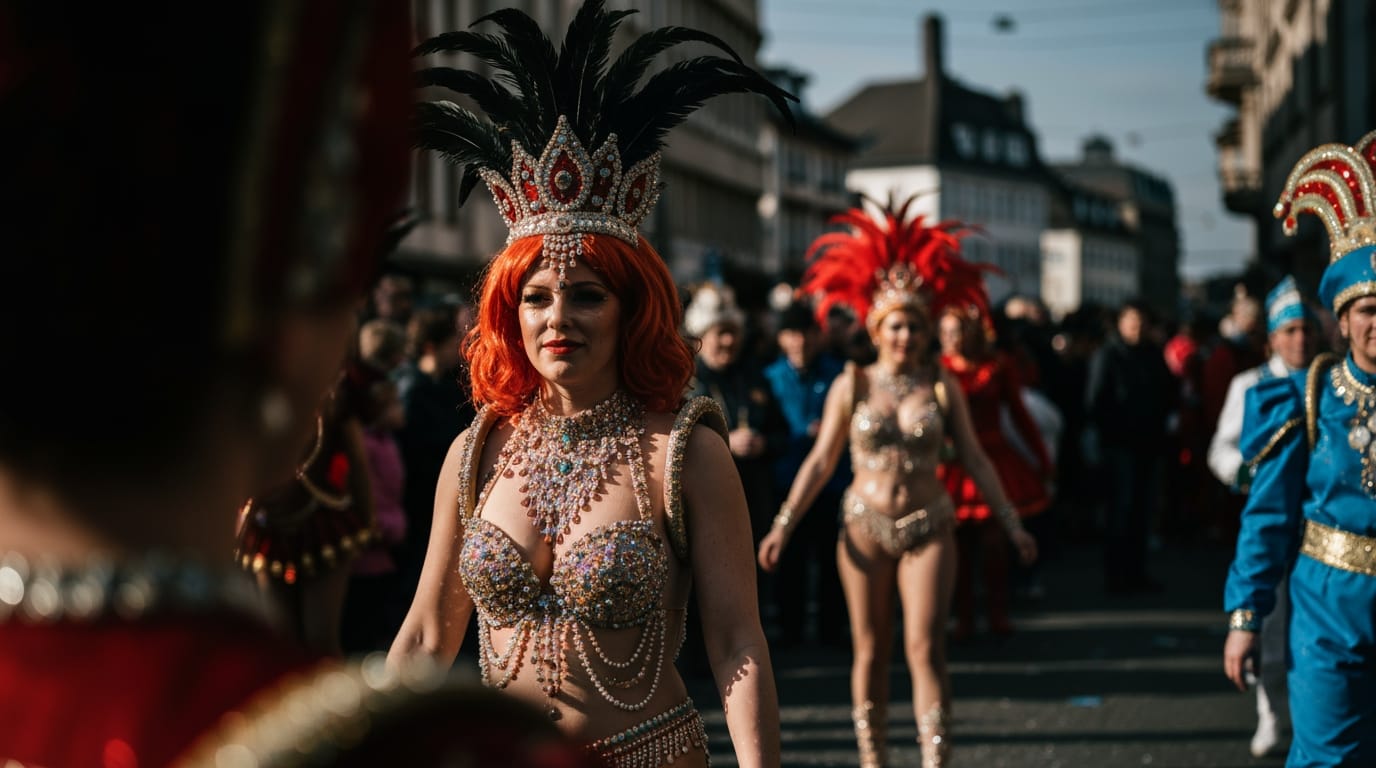
Cologne, Germany – Millions are poised to descend upon the streets of Germany's traditional Carnival strongholds as the nation enters the exuberant "fifth season," culminating in the grand parades of Rosenmontag (Rose Monday) on February 16, 2026. Cities like Cologne, Düsseldorf, and Mainz are preparing for massive turnouts, promising a vibrant spectacle of elaborate floats, satirical displays, and joyous revelry, all while operating under an intensified security umbrella.
Germany's Carnival, known regionally as Karneval, Fasching, or Fastnacht, officially commenced on November 11, 2025, at 11:11 a.m., but the true crescendo of street festivities, often dubbed the "crazy days," begins with Weiberfastnacht (Women's Carnival Day) on February 12, 2026, and stretches until Ash Wednesday on February 18, 2026. This period transforms the Rhineland into a hub of cultural celebration, where everyday norms are temporarily suspended in favor of costume-clad merriment.
A Spectacle of Scale and Satire
The heart of the Carnival celebrations beats strongest on Rosenmontag, with each major city hosting its signature parade. Cologne, the largest and arguably most famous, anticipates over a million spectators to line its 8.5-kilometer route, eager to witness approximately 11,500 participants distributing hundreds of tons of sweets, known as "Kamelle," and flower bouquets. The procession, organized by the Cologne Carnival Committee of 1823, features floats adorned with often biting political and social satire, a tradition that has continued uninterrupted since 1823.
Similarly, Düsseldorf's Rosenmontag parade expects around 700,000 attendees, renowned for its giant political satire floats crafted by artists like Jacques Tilly, which frequently draw international attention for their provocative commentary on global figures and events. In Mainz, approximately 600,000 spectators are projected to gather for their parade, which commences precisely at 11:11 a.m. and winds through the city center for several hours. Mainz's parade, featuring its distinctive "Schwellköpp" (oversized papier-mâché heads), stands alongside Cologne and Düsseldorf as one of the three most significant Rose Monday parades in Germany. Throughout these events, traditional calls such as "Kölle Alaaf" in Cologne, "Düsseldorf Helau" in Düsseldorf, and "Mainz, Helau" fill the air, underscoring local pride and tradition.
Beyond the main parades, the "crazy days" are filled with a myriad of events. Weiberfastnacht sees women symbolically "storming" city halls, seizing control for a day of playful rebellion, a custom dating back to the Bonn laundresses of 1824. Neighborhood parades, or "Veedelszöch," offer more intimate, community-focused celebrations, particularly appealing to families.
Carnival as an Economic Engine
Far from being merely a cultural phenomenon, Germany's Carnival season is a significant economic driver. Despite a shorter duration this year due to an early Easter, economists predict that the festivities will inject nearly €2 billion into the German economy. The Institute of the German Economy (IW) projects substantial revenues across various sectors. The hospitality industry, encompassing hotels and restaurants, is expected to benefit most, with an estimated €900 million in earnings from food and beverage sales alone. Retail, driven by sales of costumes and sweets, anticipates €400 million, while travel is set to generate €290 million, and accommodation €210 million.
Cities like Cologne and Düsseldorf experience a surge in tourism, with hotel rates in Cologne, for instance, rising by almost 80% during peak Carnival days. This economic boost underscores the profound cultural and financial significance of these age-old traditions, demonstrating their resilience and importance to local economies.
Heightened Security in a Time of Vigilance
The joyous atmosphere of Carnival this year is juxtaposed with a heightened sense of vigilance. Following recent violent incidents in Munich and Magdeburg, and even explicit calls from the Islamic State for potential attacks, German authorities have implemented intensified security protocols across all major Carnival events. These measures aim to ensure the safety of millions of participants and spectators.
Security enhancements include a significantly increased police presence, deployment of additional protective barriers, thorough bag searches, and knife checks. In Cologne, police will deploy over 1,500 officers, alongside 300 public order employees and 1,200 private security staff. Mainz police have committed over 1,100 officers to ensure parade safety. Some areas will also enforce weapon bans. Event organizers face the challenge of implementing these extensive measures, with concerns raised about the financial implications and the absence of standardized security requirements across the country. These increased costs have, in some instances, led to the cancellation of smaller parades. Despite these challenges, authorities emphasize their commitment to safeguarding the celebrations, balancing the need for security with the preservation of Carnival's free-spirited nature.
Tradition Endures Amidst Modern Challenges
As Germany's Carnival season reaches its peak, the blend of deep-rooted tradition, communal joy, and contemporary security concerns paints a complex picture. The parades of Rosenmontag, with their vibrant colors, satirical wit, and outpouring of communal spirit, remain a testament to Germany's rich cultural heritage and the enduring human need for celebration. Despite the modern-day complexities of ensuring public safety and navigating significant logistical challenges, the "fifth season" continues to thrive, drawing massive crowds and delivering a substantial economic impact. The festivities will culminate on Veilchendienstag (Violet Tuesday) with the traditional "Nubbelverbrennung," the burning of a straw doll, symbolically cleansing the community of its Carnival excesses before the solemnity of Ash Wednesday and Lent begins. The enduring spirit of Carnival, characterized by its unique blend of revelry and resilience, ensures that this cherished tradition will continue to captivate and unite for years to come.


