Germany's Carnival Season Navigates Elevated Security Landscape Amid Persistent Threats
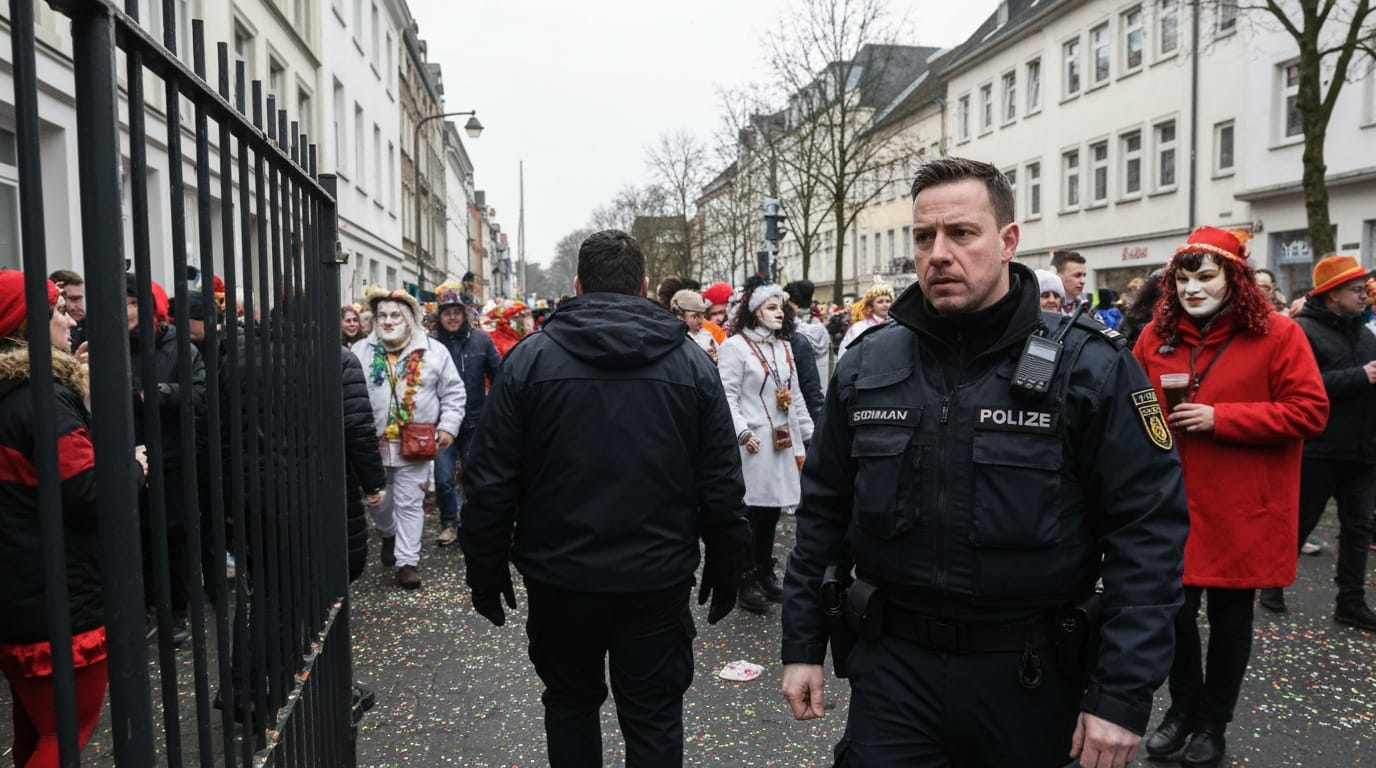
Germany's vibrant Carnival celebrations are unfolding across the Rhineland, with millions participating in a festive tapestry of parades and public gatherings. However, this year's revelry is accompanied by an unprecedented level of security, as authorities navigate a complex and evolving threat landscape. From increased police presence to anti-ramming barriers, organizers and law enforcement agencies are implementing extensive measures to safeguard participants, reflecting a heightened sense of vigilance across the nation.
The annual "fifth season," renowned for its colorful costumes, satirical floats, and joyous street parties in cities such as Cologne, Düsseldorf, and Mainz, is proceeding under the shadow of persistent security concerns. While the spirit of Carnival remains largely undeterred, a palpable awareness of potential risks underscores every aspect of the festivities. The careful balance between preserving traditional celebrations and ensuring public safety has led to comprehensive security protocols, distinguishing this year's events with a blend of exuberance and caution.
A Season Under Watch: The Elevated Threat Level
German security authorities have publicly acknowledged an elevated threat level for public events, including Carnival. The Federal Criminal Police Office (BKA) confirms that the overall risk posed by Islamist terrorism remains high across Germany. This assessment is not based on specific, credible plots for imminent attacks on Carnival events but rather on the persistent propaganda from groups like the Islamic State (IS). The IS has utilized social media to issue calls for attacks targeting public gatherings, specifically mentioning Carnival celebrations in Cologne and Nuremberg. While officials often characterize these as scaremongering attempts designed to sow fear and disrupt public life, the warnings are taken seriously, prompting proactive adjustments to security strategies. Political scientist and terrorism expert Peter Neumann notes that it would be a success for IS if such messages managed to paralyze public life, underscoring the importance of public resilience in the face of such threats.
Learning from Recent Tragedies: Shaping Modern Security Protocols
The intensified security measures for the current Carnival season are a direct response to a series of violent incidents that have occurred in Germany in recent years. Tragic events, such as a car attack at a Christmas market in Magdeburg that resulted in multiple casualties and injuries, and a separate incident in Munich where a driver deliberately targeted a demonstration, have profoundly influenced current security planning. Further incidents in Solingen and Aschaffenburg, some with suspected terrorist motives, have reinforced the need for robust protective measures at large public gatherings.
These events have led to a critical reassessment of potential vulnerabilities along parade routes and in crowded public spaces. Authorities are particularly focused on mitigating the risk of vehicle-ramming attacks, which have become a recurrent concern for mass events. The lessons learned from these past tragedies are directly informing the deployment of physical barriers and the strategic positioning of security personnel, demonstrating a proactive approach to evolving threats.
Unprecedented Security Deployment: A Multi-Layered Approach
In response to the identified risks, cities hosting major Carnival celebrations have significantly ramped up their security deployments. In North Rhine-Westphalia, the state encompassing Cologne and Düsseldorf, an impressive 9,900 police officers are on duty to monitor the festivities. Cologne alone has seen the deployment of 1,500 additional police officers, supported by 300 public-order officials and 1,200 private security staff. Similarly, Mainz authorities have committed over 1,100 officers to ensure safety during the main parade.
These personnel are implementing a multi-layered security approach. Extensive physical barriers and heavy vehicles are strategically placed along parade routes and at access points to prevent ramming attacks. Spot checks for knives and other prohibited items are being conducted, alongside thorough bag searches. Glass bans are enforced in central areas to minimize the risk of injury. Furthermore, authorities are utilizing advanced surveillance techniques, including drones and video surveillance tools, to enhance monitoring capabilities in crowded zones. Weapon bans in central areas, active since the official kick-off of Carnival season, allow police to conduct random searches without needing specific suspicion, further bolstering security.
Impact on Festivities and Organizers: Balancing Joy and Safety
The heightened security measures have not been without consequences for the Carnival landscape. While major cities proceed with their parades, some smaller towns and communities have canceled their events. These cancellations are often attributed to the increased financial burden associated with implementing the enhanced security protocols, alongside direct security concerns. The German Carnival Federation has noted that the rising costs could deter local communities from organizing future parades, posing a challenge to the tradition's long-term sustainability.
A significant concern for event planners is the lack of standardized security requirements across different regions, creating inconsistencies and added complexities for organizers. Despite these challenges, the overwhelming sentiment among revelers remains one of determination to celebrate. City officials and police have actively encouraged the public not to succumb to intimidation, emphasizing that the Carnival spirit should not be overshadowed by fear. While some cities have reported slightly smaller turnouts compared to previous years, the squares and streets remain awash with costumed participants, resolute in their commitment to the "Fifth Season."
Conclusion: A Resilient Celebration
Germany's Carnival season of 2026 stands as a testament to both the enduring spirit of its traditions and the evolving realities of modern security. Authorities are implementing comprehensive and adaptive security strategies, drawing lessons from past incidents and responding to current threat assessments, including propagandistic calls for attacks. The visible presence of law enforcement, combined with physical deterrents and advanced surveillance, aims to create a safe environment for the millions who participate.
While the financial and logistical demands of these heightened measures present ongoing challenges for organizers, the festive atmosphere largely prevails. The determination of revelers to engage in this cherished cultural event, even under the watchful eye of increased security, underscores a collective commitment to normalcy and tradition. Germany's Carnival continues, a vibrant demonstration of resilience in the face of persistent, yet managed, security concerns.