Germany's Climate Ambitions: A Global Leader at a Crossroads
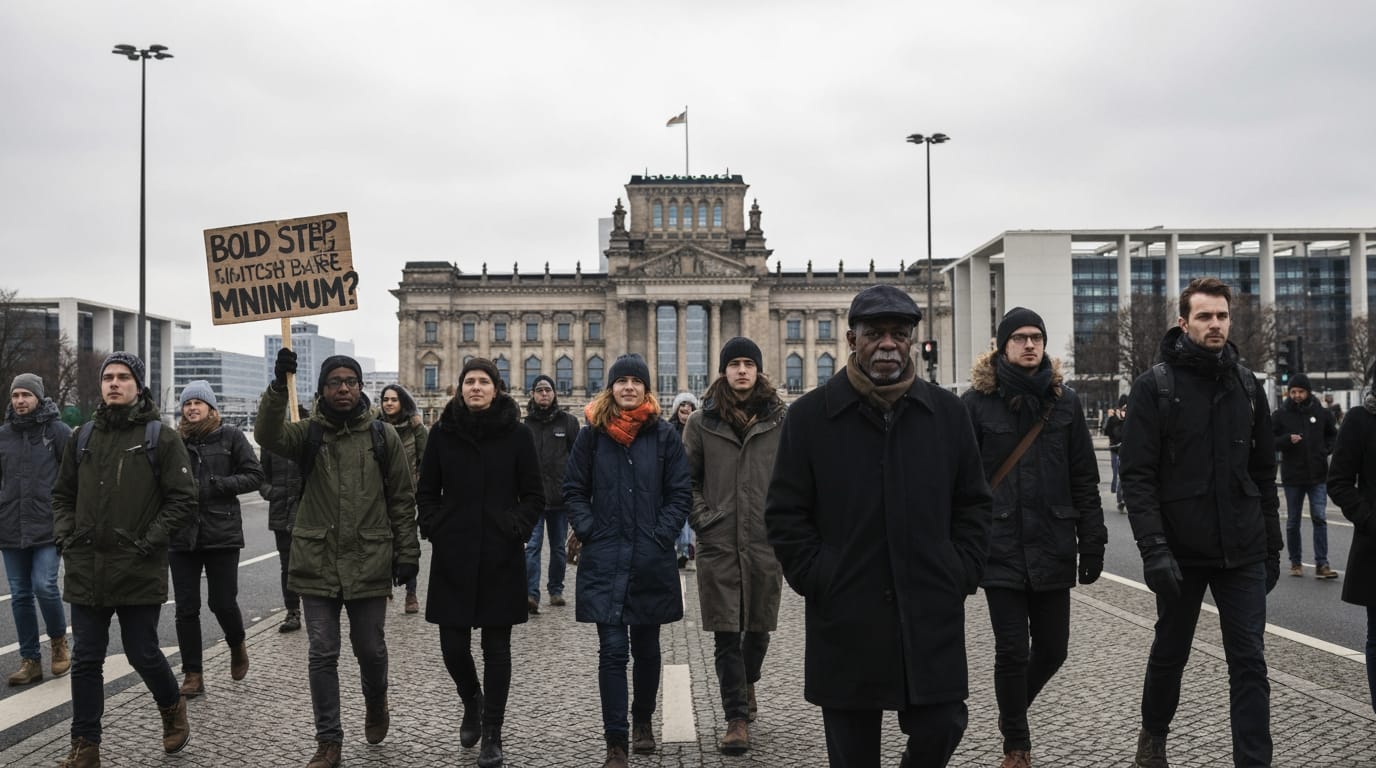
Germany, a nation long heralded as a pioneer in environmental policy, finds itself at a pivotal juncture in its ambitious pursuit of climate neutrality. With a legally binding target to achieve net-zero greenhouse gas emissions by 2045 and an interim goal of a 65 percent reduction by 2030, the country has laid out one of the most stringent climate frameworks globally. Yet, a growing chorus of critics and mounting challenges raise questions about whether these significant commitments represent a bold, achievable stride forward or merely a bare minimum response to an escalating crisis. The debate centers on the pace of the energy transition, the political will to implement tough measures, and the economic realities confronting Europe's largest economy.
Forging an Ambitious Climate Framework
Germany's commitment to climate action is deeply rooted in its "Energiewende" or energy transition, a policy initiated decades ago to shift away from fossil fuels and nuclear power towards renewable energy sources. This foundational effort has since evolved into a comprehensive legal framework, cemented by the 2019 Climate Protection Act. This landmark legislation enshrines greenhouse gas reduction targets into law, mandating annual emission budgets for various sectors and requiring successive governments to present programs to meet these goals. A crucial turning point occurred in 2021 when the Federal Constitutional Court ruled parts of the Climate Protection Act unconstitutional. The court mandated a revision, arguing that the existing law did not provide sufficient long-term reduction targets, potentially burdening future generations with drastic emission cuts. This ruling prompted Germany to accelerate its climate neutrality target from 2050 to 2045 and strengthen interim goals to an 88 percent reduction by 2040, compared to 1990 levels.
The country aims for renewable energy sources to supply 80 percent of its electricity consumption by 2030, a substantial increase from current levels. Legislative reforms are in place to support this, including targets for 100-110 gigawatts (GW) of onshore wind, 30 GW of offshore wind, and 200 GW of solar capacity by the end of the decade. Germany also plays a leading role in European Union climate policy, supporting collective action and contributing significantly to international climate finance initiatives.
Noteworthy Strides and Green Achievements
Despite the inherent complexities of decarbonizing a major industrial economy, Germany has demonstrated considerable progress in reducing its environmental footprint. Greenhouse gas emissions in Germany have decreased by 46.1 percent by 2023 compared to 1990 levels. This reduction is a testament to consistent policy efforts and technological advancements.
The expansion of renewable energy has been particularly notable. In 2024, renewable sources accounted for approximately 55 percent of Germany's gross electricity consumption. By the first three quarters of 2025, this share had further increased to nearly 57 percent, showcasing resilience even amidst challenging weather conditions impacting wind and hydropower output. Solar power has been a significant driver of this growth, with newly installed capacity reaching 17 GW in 2024, surpassing previous records. Germany consistently ranks among global leaders in wind and solar energy deployment, generating more electricity from these sources in 2025 than any other EU member state.
Preliminary data from 2023 indicated that Germany's carbon dioxide emissions fell to their lowest level in 70 years, a substantial drop attributed in part to an unexpected decline in coal use, a mild winter, and an economic slowdown that reduced industrial production. While these factors contributed to meeting the annual target, experts warn that the gains due to economic contraction may not be sustainable long-term.
The Uphill Battle: Persistent Hurdles and Mounting Criticism
While Germany's climate targets are ambitious, their implementation has been met with significant hurdles and criticism, leading some to question whether the current pace is sufficient to avert the worst impacts of climate change.
One of the most contentious issues revolves around the coal phase-out. Initially targeting a complete exit from coal-fired power by 2038, there is intense pressure from environmental groups and some political factions for an earlier 2030 deadline. The phase-out of nuclear power in 2023 has added to energy security concerns, increasing reliance on gas as a transitional fuel, a strategy now complicated by geopolitical events. Recent debates have even seen calls from industry representatives to reactivate reserve coal plants or delay planned closures in response to energy price spikes, highlighting the fragile balance between climate goals and economic stability.
Significant challenges persist in specific sectors. The transport and building sectors have consistently failed to meet their interim emissions reduction targets. Emissions in transport, for instance, increased between 2021 and 2023, with the shift to electric vehicles proceeding slower than anticipated. Critics argue that current policies lack the necessary impetus to drive deep decarbonization in these areas.
Industrial decarbonization presents another formidable obstacle. Sectors such as steel, chemicals, and cement, which are foundational to Germany's economy, are energy-intensive and difficult to abate. Transitioning these industries requires massive investments in new production processes and fuels like green hydrogen, which remains expensive. Public opposition to technologies like carbon capture and storage (CCS) further limits options, although the government has launched a €6 billion program in 2025 to support industrial decarbonization, including CCS technology, amid concerns about industrial competitiveness.
Furthermore, recent legislative changes have sparked alarm among environmental advocates. An amendment to the Federal Climate Protection Act in 2024 abolished binding annual sector-based targets for greenhouse gas emissions reduction, replacing them with an overall national target. This move has been widely criticized by NGOs and experts who argue it waters down accountability and makes it harder to identify and rectify underperforming sectors. The Climate Action Tracker, an independent scientific analysis, rates Germany's climate action as "Insufficient," projecting that implemented policies will fall short of the 2030 target.
The Stakes are High: Impacts and International Responsibility
The urgency of Germany's climate efforts is underscored by the escalating impacts of climate change already evident within its borders. The country is experiencing more intense heatwaves, droughts, and flash flooding, events that have caused significant economic losses, estimated at €145 billion between 2000 and 2021. Projections indicate that without urgent action, climate change could cost Germany up to €900 billion by 2050, with a substantial increase in populations vulnerable to floods and more frequent heatwaves.
Globally, Germany has historically been a significant cumulative emitter, ranking as the 6th heaviest cumulative emitter by 2021 and the 14th highest emitting nation in 2023. This historical responsibility, coupled with its economic strength, places a substantial burden on Germany to lead by example. While the nation has often been framed as a "climate leader," the effectiveness of its contributions to the global effort remains under scrutiny, particularly concerning its "fair share" contribution to international climate finance.
Navigating the Path Ahead
Germany's journey towards climate neutrality is a complex tapestry woven with ambition, technological innovation, economic pragmatism, and political compromise. While significant progress has been made, particularly in integrating renewable energy into its electricity mix, the path ahead is fraught with challenges. The ongoing debates surrounding the coal phase-out, the persistent struggles in the transport and building sectors, and the immense costs of industrial decarbonization underscore the difficulty of transforming an entire economy.
The critical question remains whether Germany can translate its leading climate framework into sufficiently rapid and comprehensive action to meet its ambitious targets. The coming years will be crucial in demonstrating whether Germany's climate move is indeed a bold step setting a global precedent or if the complexities of its implementation will ultimately relegate it to the bare minimum required to address a rapidly changing climate. The outcomes of this effort will not only shape Germany's future but also offer vital lessons for industrialized nations worldwide grappling with their own decarbonization pathways.