Germany's Coalition Fractured Over Fuel Price Relief Amid Soaring Costs
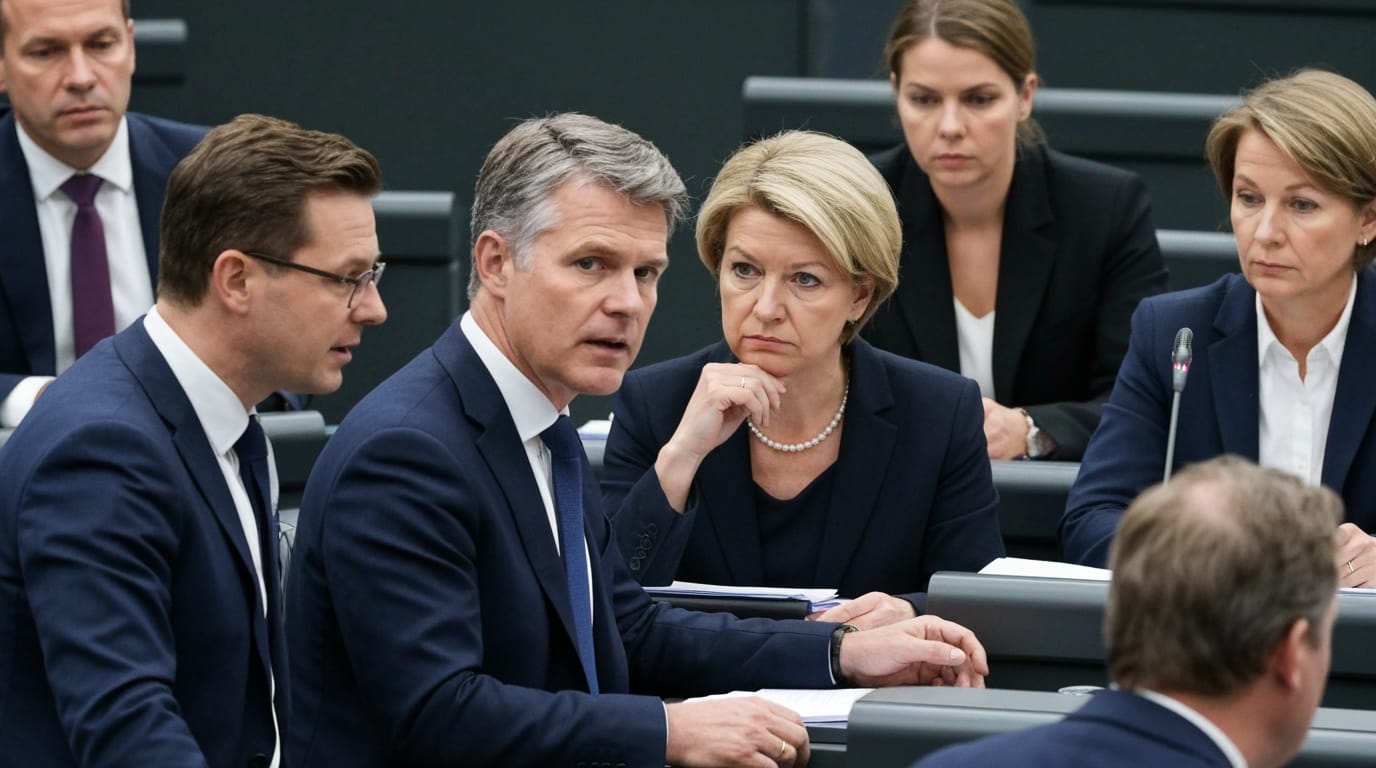
BERLIN – Germany's governing coalition finds itself increasingly strained by a widening internal rift over how to best address surging fuel prices, which continue to inflict economic pressure on consumers and businesses across the nation. The ongoing crisis in the Strait of Hormuz, coupled with the broader ramifications of the US-Israeli military campaign on Iran, has driven energy costs skyward, leaving the government scrambling for a cohesive response amidst mounting public frustration. The divisions underscore a fundamental philosophical clash within the coalition regarding fiscal responsibility versus immediate consumer protection, making consensus on comprehensive relief measures elusive.
The core of the disagreement revolves around the nature and financing of potential interventions. While there is a broad acknowledgement of the burden faced by German motorists and industries, the strategies proposed by different factions vary significantly. The Social Democratic Party (SPD) has advocated for robust governmental action, including the implementation of relative price caps on fuel and a windfall profits tax targeting energy companies. SPD representative Armand Zorn has been a prominent voice, accusing mineral oil corporations of exploiting their market power. Zorn argues that the price increases for petrol and diesel observed recently have been disproportionately higher than what global oil price fluctuations alone would justify. He suggests that revenues from a windfall tax on these "already realized gains" could finance relief measures for citizens.
In stark contrast, the conservative CDU/CSU bloc, while not part of the ruling coalition, has also weighed in, with Deputy Parliamentary Leader Sepp Müller tempering expectations for extensive state intervention. Müller warns against "empty promises" and accumulating new debt, emphasizing that every euro can only be spent once. He stressed that fully compensating for the price shock through tax funds is not feasible and would burden future generations while exacerbating inflation. The CDU's priority leans towards targeted relief for low and middle-income earners, families, and small to medium-sized businesses, even proposing a reduction in vehicle tax as a potential measure. Economy Minister Katherina Reiche, a member of the CDU, has also indicated an openness to increasing commuter allowances and exploring options to reduce power prices, acknowledging that current measures might fall short if the geopolitical instability persists.
The debate over fuel prices has also brought accusations of market manipulation to the forefront. German politicians from across the spectrum, including SPD’s Zorn and CDU’s Müller, have voiced strong criticism against oil companies, accusing them of "price gouging." Following a task force meeting that included representatives from major oil companies like BP and Shell, as well as the Federal Cartel Office, Zorn stated that the industry failed to provide satisfactory explanations for their pricing mechanisms, particularly regarding the price discrepancies compared to other European countries. Isabel Cademartori, SPD transport policy spokeswoman, further highlighted the industry's inability to explain why crude oil price increases are immediately passed on to consumers, while price drops are not. She questioned whether these companies anticipate record profits for the current year, calling such behavior "outrageous" given the burdens faced by German consumers.
In response to these concerns, Germany has already implemented some measures designed to increase transparency and curb rapid price fluctuations at the pump. A new law stipulates that fuel prices can now only be raised once per day at noon, a system modeled after Austria's approach. While prices can still be lowered at any time, the restriction on upward adjustments aims to prevent the frequent, sometimes daily, price hikes that drivers experienced previously. This measure is intended to limit price spikes and foster greater market clarity. However, public sentiment remains largely skeptical, with many drivers expressing doubt that this reform will deliver substantial or long-term relief. Concerns persist that refineries are not sufficiently transparent in their pricing, and there is a perception that political figures, often seen as detached from everyday financial struggles, may not fully grasp the severity of the situation.
The industry, through figures like Christian Kuchen, head of the Association for Fuels & Energy in Berlin, has rejected accusations of price gouging. Kuchen asserts that profit margins have remained consistent since the onset of the conflict in the region and that fuel prices in Germany are transparently set based on wholesale petrol and diesel rates. This stance, however, has done little to assuage the frustrations of a public contending with historically high costs at the pump.
Ultimately, the widening split within Germany’s political landscape over fuel price relief reflects a complex dilemma. The government is tasked with the unenviable balancing act of providing tangible relief to a stressed populace, maintaining fiscal discipline, and pursuing long-term climate goals, all while navigating a volatile global energy market exacerbated by geopolitical tensions. The immediate future suggests that finding common ground on a comprehensive and effective strategy will continue to be a significant challenge for Germany’s coalition, testing its unity and resolve in the face of persistent economic pressures.


