Germany's Crossroads: Chancellor Merz Pitches 2026 as a "Year of New Beginnings" Amidst Economic Shifts and Political Tensions
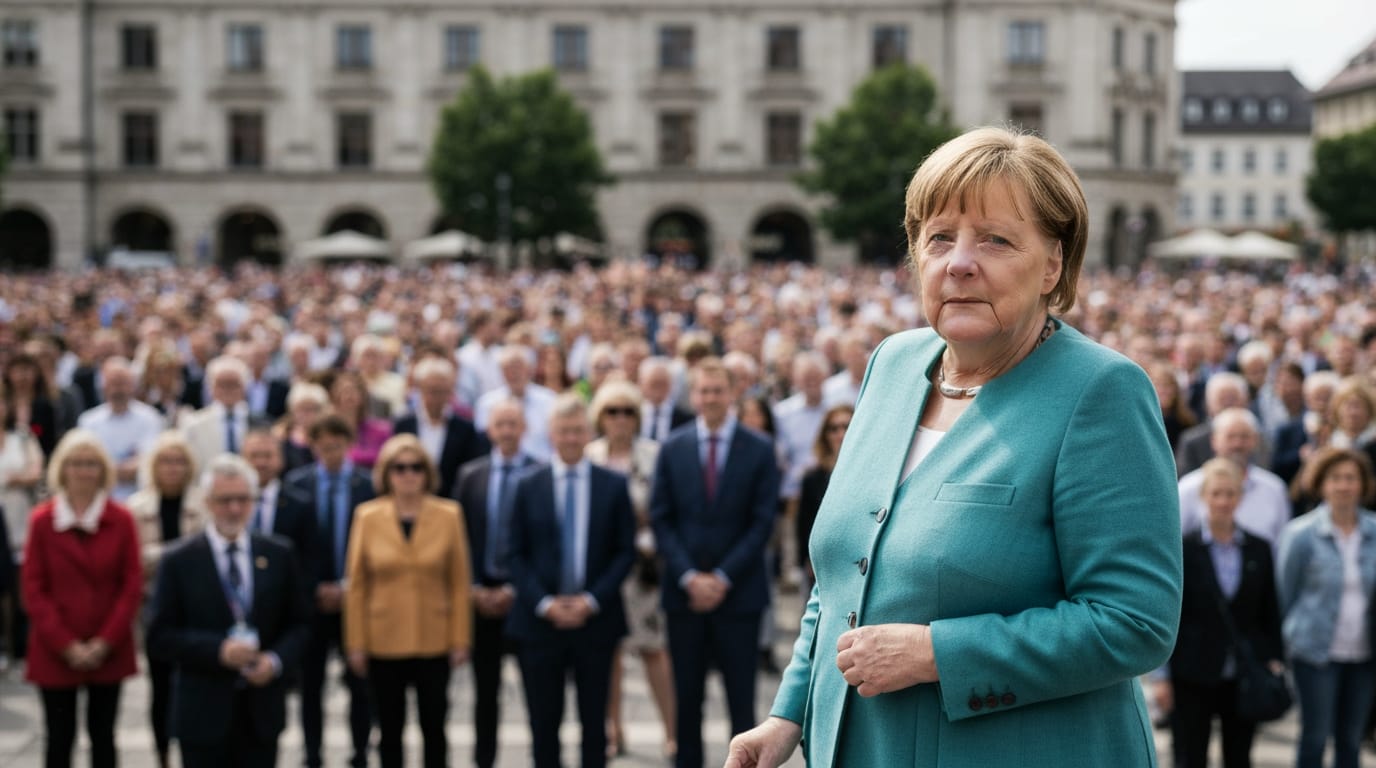
BERLIN — Chancellor Friedrich Merz has cast 2026 as a pivotal "year of new beginnings" for Germany, articulating a vision of renewed economic strength, heightened national security, and a reasserted role on the global stage. His optimistic outlook, delivered amidst persistent economic headwinds and a fractious domestic political landscape, signals a determined effort by the CDU/CSU-SPD coalition government to chart a new course for the nation. However, the ambitious agenda faces scrutiny from various quarters as Germany grapples with the legacy of economic stagnation and the burgeoning influence of populist movements.
A Grand Vision for German Renewal
At the heart of Chancellor Merz's "new beginning" is a comprehensive strategy for economic revitalization. Following a period of broad economic stagnation that saw Germany's real GDP contract in both 2023 and 2024, the government is focusing on strengthening "internal capacity" and boosting growth to restore Germany's leading position in Europe. A significant pillar of this plan is a massive infrastructure investment initiative, aiming to inject €500 billion over the next 12 years into crucial sectors such as schools, hospitals, roads, bridges, and transportation networks. This substantial public spending is expected to be a primary driver of economic growth in 2026 and beyond, with the government amending the constitutional debt rule to create fiscal space for these ambitious projects.
Beyond infrastructure, Merz's economic reset prioritizes competitiveness, a stance that has prompted concerns among environmental groups about a potential weakening of climate targets. His administration is moving forward with reforms to Germany's heating law in early 2026 and is exploring the resumption of operations at recently shut-down nuclear power plants, alongside research into advanced nuclear technologies. The goal is to reduce electricity costs for consumers and industries through lower taxes and network charges, promoting more flexible and affordable energy solutions. These measures aim to support key export-oriented industries that have faced significant challenges in recent years due to soaring energy costs and global competition.
Merz's vision also encompasses a significant reorientation of Germany's defense posture. He has committed to increased military spending, with the aim of making the Bundeswehr the strongest conventional army in Europe, projecting a rise in defense expenditure by up to €378 billion by 2029. Discussions around potential military conscription underscore a renewed emphasis on national security and a more assertive role for Germany in global affairs. Internationally, Chancellor Merz has explicitly voiced his ambition for Germany to assume a leading role within the European Union, advocating for a "new determination" on the global stage, particularly in response to geopolitical challenges in Ukraine and the Middle East.
The Economic Tightrope of 2026
While Chancellor Merz paints a picture of revitalization, the economic forecasts for 2026 reflect a cautious optimism tempered by ongoing challenges. After two years of contraction, Germany's economy is projected to rebound with modest growth. Goldman Sachs anticipates a 1.4% GDP growth, while the European Commission forecasts 1.2%, and S&P Global predicts a 0.5% increase stemming from the fiscal stimulus. The IWH Halle projects a 1.0% output growth, contrasting with Capital Economics' more conservative estimate of 0.6%. This anticipated growth is largely attributed to the expansionary fiscal policy, increased public spending on infrastructure and defense, and a projected boost in private consumption driven by real wage growth.
However, significant hurdles remain. Exports, a traditional engine of the German economy, are expected to continue weighing on growth due to persistent trade tensions and global geopolitical uncertainties. Investment is also projected to see only a gradual recovery after contracting in 2025. Furthermore, the long-term structural challenge of demographic aging is expected to keep social costs elevated, adding pressure to public finances. The 2026 budget, approved amidst considerable debate, involves record borrowing and has drawn criticism for exceeding the constitutional debt brake, raising concerns about the nation's burgeoning national debt. Despite the government's new fiscal package, its substantial effects on growth are not expected to fully materialize until 2026, indicating a delayed impact on the broader economy.
Navigating a Tumultuous Political Landscape
Chancellor Merz's bid for a "new beginning" unfolds against a backdrop of complex and often contentious domestic politics. His election as Chancellor in May 2025 was notably fraught, requiring a second round of voting, an unusual occurrence in German history, which highlighted underlying divisions. Since then, his personal approval ratings have reportedly fallen, and his black-red coalition government, comprising the Christian Democratic Union (CDU), its Bavarian sister party the Christian Social Union (CSU), and the Social Democratic Party (SPD), has already faced moments on the brink of collapse. Surveys indicate that nearly half of Germans believe the coalition may not survive until the next federal election cycle.
A critical challenge for the governing coalition is the escalating influence of the far-right Alternative for Germany (AfD). With five state elections scheduled for 2026, including crucial contests in Baden-Württemberg and Rhineland-Palatinate, there is a significant possibility that the AfD could secure leading positions in state governments. Chancellor Merz has vowed to confront the AfD vigorously, recognizing the internal debates within the CDU about stemming the flow of voters to the populist party. The AfD, for its part, has been a vocal critic of the government's fiscal policies, lambasting the 2026 budget as a "shell game" and a "full-throttle crash" towards economic instability due to record borrowing and perceived industrial decline. These upcoming state elections are widely seen as a crucial test for Merz's cabinet and the broader direction of German politics.
Key Policy Battlegrounds and Unanswered Questions
Several policy areas are set to become significant battlegrounds in 2026. The government's economic reset, prioritizing competitiveness, is still a "work in progress," with critical climate and energy policy decisions pending. While industry leaders express frustration over the slow pace of change, environmental groups worry about the long-term commitment to decarbonization, leaving many voters unconvinced by the current direction. The CDU's proposal to reconsider the EU's 2035 ban on new internal combustion engines exemplifies this tension, pitting economic pragmatism against environmental targets.
On social policy, Merz's government advocates for a more work-focused welfare system, including stricter eligibility criteria and potential reductions in benefits over time, alongside proposals to reduce social benefits for non-citizens. These stances, while aimed at incentivizing employment, are likely to spark debate about social equity and integration. Furthermore, while the government emphasizes digital transformation as a key growth driver, questions remain about the speed and effectiveness of implementing such changes across the economy.
Conclusion: A Defining Year Ahead
As Germany enters 2026, Chancellor Friedrich Merz's declaration of a "year of new beginnings" encapsulates a period of both significant ambition and profound uncertainty. His comprehensive agenda for economic revival, bolstered defense, and strengthened European leadership offers a clear pathway out of recent stagnation. Yet, the success of this vision hinges on successfully navigating persistent economic challenges, managing a delicate political coalition, and contending with the rising tide of populist opposition.
The coming year will serve as a crucial barometer for Merz's chancellorship and Germany's trajectory. The government's ability to translate ambitious plans into tangible improvements, particularly in the economic realm, while maintaining political cohesion and addressing societal concerns, will determine whether 2026 indeed becomes the transformative year of new beginnings that Chancellor Merz envisions, or merely another chapter in Germany's ongoing quest for stability and prosperity.


