Germany's Defense Chief Warns of Frayed Global Order Amid Asia Outreach
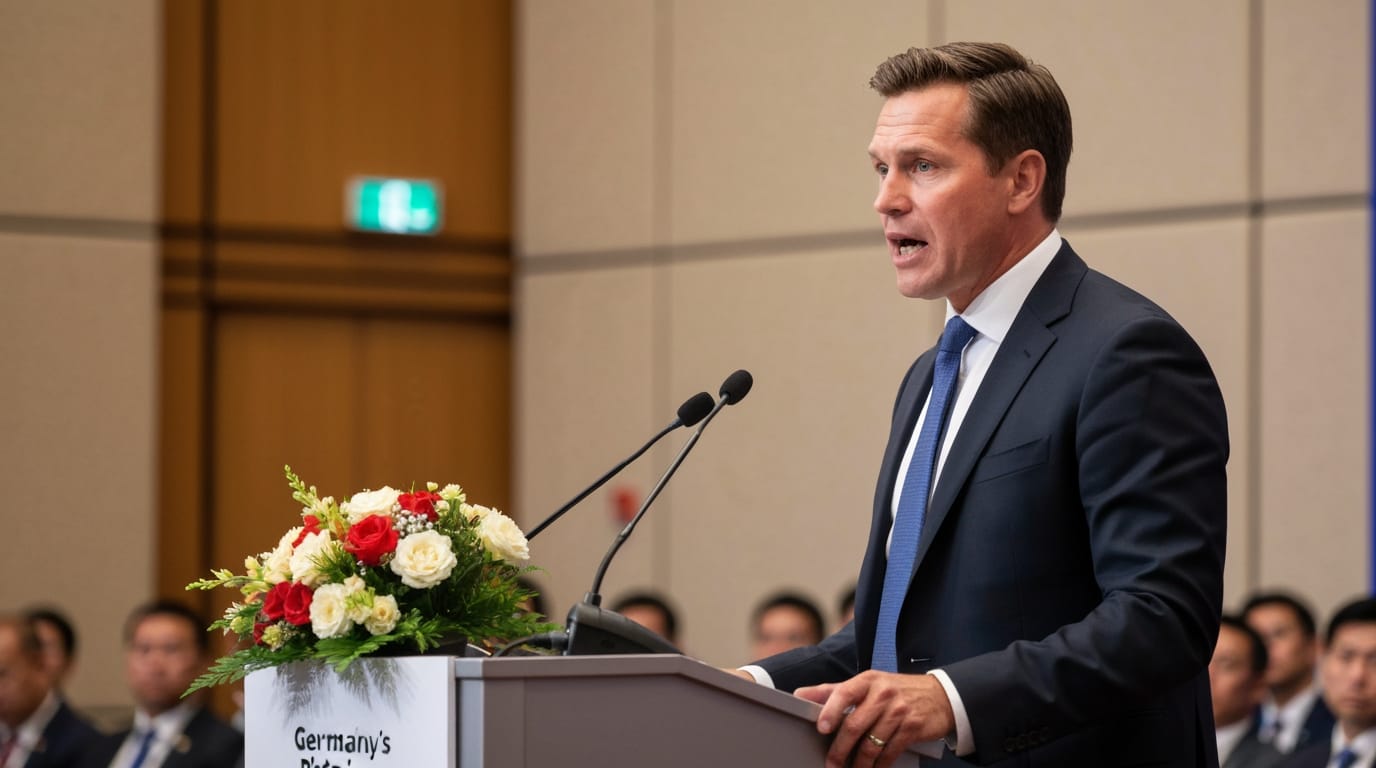
In a series of high-stakes diplomatic engagements across Asia, German Defence Minister Boris Pistorius has issued a stark warning about the "erosion of the international order," emphasizing an urgent need for closer cooperation among democratic nations to safeguard global stability. His recent tour, spanning Japan, Singapore, and Australia in March 2026, underscores Germany's accelerating pivot towards the Indo-Pacific, a region Berlin now considers inextricably linked to European security.
Pistorius's journey served as a potent symbol of Germany's evolving geopolitical strategy, aiming to forge deeper defense and industrial ties with key regional partners against a backdrop of escalating tensions in the South China Sea, concerns over Taiwan, and broader global instability, including the ongoing conflict in the Middle East. Germany's defense minister articulated a clear message: the challenges facing the Indo-Pacific are not distant concerns but rather central to the maintenance of a rules-based international system that benefits all.
A Unified Front Against Disruption
Pistorius's itinerary included significant stops in Tokyo, Singapore, and Canberra, where he advocated for enhanced security cooperation with "like-minded partners" to counter the perceived fraying of the international order. In Japan, a cornerstone of this diplomatic offensive, Pistorius proposed a landmark Reciprocal Access Agreement (RAA). This agreement is designed to streamline the exchange and deployment of troops for joint exercises, significantly reducing bureaucratic hurdles for both the Bundeswehr and Japan's Self-Defense Forces. Discussions also focused on establishing regular security consultations and exploring military-industrial cooperation, particularly in areas like drones and counter-drone systems. Germany's commitment to the region is not new; it has maintained a liaison officer in the Indo-Pacific since 2024 and actively participates in multinational efforts to enforce United Nations Security Council sanctions against North Korea.
The visit to Singapore saw Pistorius reinforcing Germany's industrial ties within the Indo-Pacific. In a tangible step, Essen-based ThyssenKrupp Marine Systems (TKMS) signed a cooperation agreement with its local industry partner, ST Engineering, reflecting Germany's pursuit of resilient supply chains, defense partners, and strategic anchors in the region. The minister's delegation included senior executives from major German defense companies, underscoring the dual focus on military and industrial collaboration.
In Australia, the final leg of his tour, Pistorius and his counterpart, Defence Minister Richard Marles, agreed to initiate discussions on a Status of Forces Agreement (SOFA), which would similarly simplify the hosting of each other's troops. Further cementing defense alignment, Australia committed to joining Germany's initiative to develop an "early warning system for space," a response to the growing capabilities of nations like Russia and China to disrupt satellite operations. Australia also plans to acquire missiles from German company TDW, integrating them into its domestic guided weapons manufacturing to mitigate supply shortages.
The Indo-Pacific at a Crossroads
Central to Pistorius's message was the conviction that "security in Europe and security in the Indo-Pacific are two sides of the same coin." He specifically highlighted "dangerous activities" in the South China Sea, where competing territorial and maritime claims have long fueled tensions, emphasizing the imperative of upholding international rules and ensuring freedom of navigation. Concerns were also raised regarding China's growing influence and North Korea's threats, alongside the broader implications of Beijing's close monitoring of how the U.S. and its allies manage conflicts in Ukraine and Iran.
Pistorius underscored the significance of maintaining peace and stability across the Taiwan Strait, a sentiment echoed in a joint statement with Australia that reaffirmed opposition to any unilateral actions aimed at altering the status quo. Germany's engagement in the region is framed not as targeting any specific nation but as a concerted effort to preserve a rules-based international order, protect vital trade routes, and secure global supply chains.
Germany's Shifting Geopolitical Calculus
Germany's intensified focus on the Indo-Pacific is a reflection of a profound shift in its foreign and defense policy, accelerated by the recognition that global security challenges demand a more interconnected response. The 2020 Indo-Pacific guidelines, which Pistorius's trip significantly advances, provide a framework for Berlin to enhance its role as a security actor beyond its immediate European neighborhood.
This evolving strategy includes a tangible increase in military presence, with Germany having deployed a frigate to the Indo-Pacific in 2024 and planning for maritime patrol aircraft and a naval infantry unit in 2027, alongside participation in the large-scale RIMPAC naval exercises in 2028. While ruling out a permanent large-scale military presence, Germany aims to strengthen partnerships and engage in selective cooperation, prioritizing freedom of navigation, upholding international law, and protecting global value and supply chains.
Beyond Asia: A Global Crisis of Order
Pistorius's warnings about a "frayed global order" extended beyond the Indo-Pacific, encompassing grave concerns over the Iran-Israel conflict. During his visit to Australia, he described the conflict as an economic "catastrophe" and stressed that Germany did not want to be "sucked into" the war, advocating instead for an immediate ceasefire and Germany's readiness to assist in securing peace. This reflects a broader European reluctance to get entangled in a conflict that did not involve prior consultation with allies.
The minister also reiterated Germany's unwavering support for Ukraine against Russian aggression, emphasizing that European and Indo-Pacific partners "must defend the rules-based international order, no matter where it is challenged." This stance highlights Germany's belief that the aggression in Ukraine poses a threat to the global order as a whole, sending a dangerous message to "revisionist powers" if left unchecked.
Bolstering Stability in an Unstable World
Germany's assertive outreach in Asia, spearheaded by Defence Minister Boris Pistorius, signals a significant evolution in its foreign and security policy. It represents a clear commitment to active engagement in upholding the rules-based international order, recognizing that security and economic prosperity are globally intertwined. By strengthening alliances, fostering defense industrial cooperation, and contributing to regional security frameworks, Germany aims to bolster stability in an increasingly volatile world. While navigating complex geopolitical landscapes, Berlin's enhanced presence in the Indo-Pacific underscores a long-term strategy to reinforce multilateralism and ensure that the "power of law" prevails amidst escalating global challenges.


