Germany's Grand Coalition: Merz Declares Stability Amid Lingering Economic Headwinds
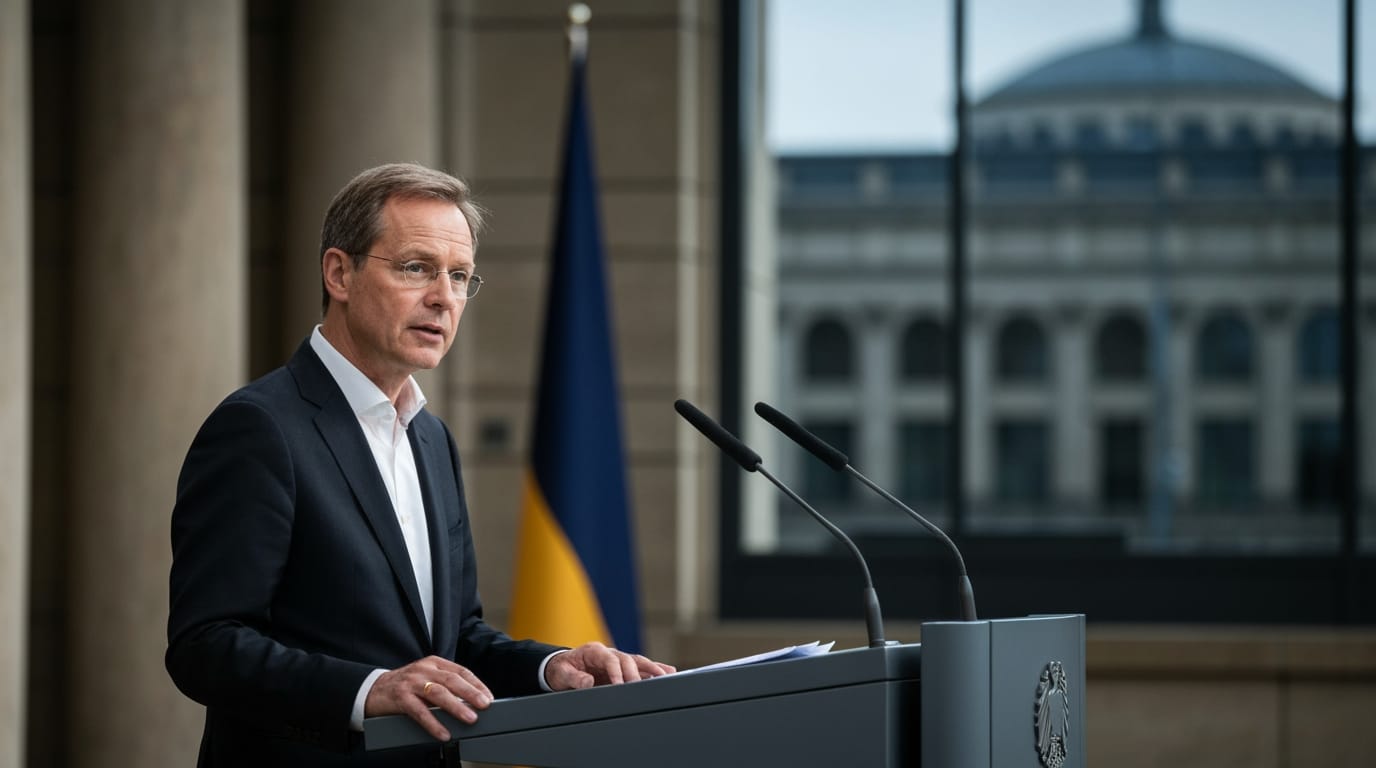
BERLIN – German Chancellor Friedrich Merz asserts his grand coalition government has found a "stable foundation" and is making significant progress, a year into an administration that arose from political upheaval. The Chancellor’s remarks come as his two-party alliance, comprising his conservative Union bloc (CDU/CSU) and the center-left Social Democrats (SPD), navigates persistent economic challenges and widespread public skepticism in Europe’s largest economy. His optimism is notably underscored by a recently unveiled comprehensive reform package designed to revitalize Germany's sluggish economy, though the path ahead remains complex.
A New Era Forged From Crisis
Chancellor Merz's current administration took office on May 6, 2025, following a period of considerable political turmoil that saw the collapse of the previous "Ampelkoalition" led by former Chancellor Olaf Scholz. The tripartite government, consisting of Scholz's Social Democrats (SPD), the Greens, and the liberal Free Democratic Party (FDP), dissolved in November 2024 amidst deep-seated disagreements over economic policies, particularly regarding the national budget and Germany's constitutionally enshrined "debt brake". Disputes intensified after Scholz dismissed then-Finance Minister Christian Lindner, prompting the FDP to withdraw from the government.
This rupture led to snap federal elections in February 2025, significantly earlier than originally scheduled. The elections saw Merz's CDU/CSU emerge as the leading party. To ensure stability and avoid another potentially fractious three-party arrangement, a grand coalition was formed with the SPD. This marked a pivotal shift in German politics, transitioning from a progressive "traffic light" alliance to a more traditional centrist partnership. Merz, upon presenting his coalition deal on April 9, 2025, declared, "Germany is back on track," signaling an intent to restore confidence and impetus.
The Chancellor's Assessment: A "Stable Foundation"
Just ten weeks into his chancellorship, on July 18, 2025, Chancellor Merz conveyed a positive outlook, stating that his coalition possessed a "stable foundation" and had already achieved substantial progress. He highlighted the launch of an investment program, plans to increase defense spending, and the implementation of a tougher stance on migration as initial successes. Merz also emphasized his prominent role in diplomatic efforts concerning Ukraine, signaling Germany's continued commitment on the international stage.
More recently, on July 2, 2026, the government introduced a package of 34 reforms aimed at jumpstarting the national economy. This sweeping initiative covers areas such as pensions, taxation, the labor market, and bureaucracy reduction. Key proposals include tax relief for lower and middle-income families, partially offset by a slight tax increase for high earners, an overhaul of the pension system to include a gradual increase in the retirement age and an investment fund, and measures to ease bureaucracy for businesses. Fitch Ratings noted that the coalition's ability to agree on this package after a period of friction suggested a "renewed political capacity" to implement policy. Merz's administration has also passed over 170 laws, including restrictions on migration, reforms to the Bürgergeld (minimum-income guarantee), and stabilization of pensions, and removed the debt brake for defense spending.
Navigating Economic Turbulences and Public Doubt
Despite the Chancellor's assertions of stability and progress, the German government faces formidable economic headwinds and considerable public dissatisfaction. The country's economy experienced two consecutive years of recession, with a modest 0.2% growth in the first quarter of 2025. Business expectations have plummeted to their lowest levels in nearly three years, casting a shadow over economic recovery prospects. Chancellor Merz himself has candidly warned that Germany is grappling with an economic decline, citing soaring labor costs, high energy prices, and a risk of diminishing international competitiveness. Concerns raised by the International Monetary Fund regarding financial stability risks and rising national debt further underscore the challenging economic landscape.
Public opinion polls reflect this unease. As of March 2026, a significant 86% of Germans expressed dissatisfaction or strong dissatisfaction with the government's performance, with only 12% reporting satisfaction. A July 2026 survey indicated that most citizens believe the government is falling short of expectations, particularly in areas like energy policy, climate protection, and transport infrastructure, with many perceiving a deterioration in policy outcomes. This widespread public skepticism highlights the difficult task facing Merz's coalition in rebuilding trust and demonstrating tangible improvements in daily life.
The Path Forward: Reforms, Resilience, and Rising Populism
The newly agreed-upon reform package represents a critical effort by the grand coalition to address Germany's structural issues and foster economic growth. While it aims to modernize the economy and improve public finances, some economists suggest it may not be "transformative" enough to significantly boost Germany's weak medium-term growth prospects or fully tackle deeper competitiveness challenges. Implementing these reforms will require sustained political will and coalition cohesion, particularly given the "hard pills to swallow" for both the CDU/CSU and SPD members.
Moreover, the political landscape remains fragmented. The February 2025 snap elections saw the far-right Alternative for Germany (AfD) secure 20.8% of the vote, making it the second-largest party and adding an urgent layer of pressure on centrist parties to deliver effective governance. Merz has publicly condemned the "Germany first" narrative, directly challenging the nationalist sentiments gaining traction. Internationally, the government continues to prioritize support for Ukraine, a stance reaffirmed by Merz at a "Coalition of the Willing" summit in Paris on July 14, 2026. However, external factors, such as shifting US foreign policy stances, continue to pose challenges to Germany's economic and security outlook.
Conclusion
Chancellor Friedrich Merz's declaration that Germany's grand coalition has "found its footing" reflects a critical moment of asserted stability following a tumultuous political period. The government, now a year in, has passed significant legislative reforms and presented an ambitious economic package aimed at revitalizing the nation. Yet, this newfound stability is juxtaposed against a backdrop of deep-seated economic challenges, including a stagnating economy and pervasive public dissatisfaction. While the coalition demonstrates a renewed capacity for agreement, the success of its reforms in fostering tangible growth and regaining public trust will be the ultimate measure of its "stable foundation." The path ahead for Germany's government remains one of careful navigation through economic uncertainty, internal political dynamics, and the rising tide of populist sentiment.


