Germany's New Military Service Law Ignites Fierce Societal Debate
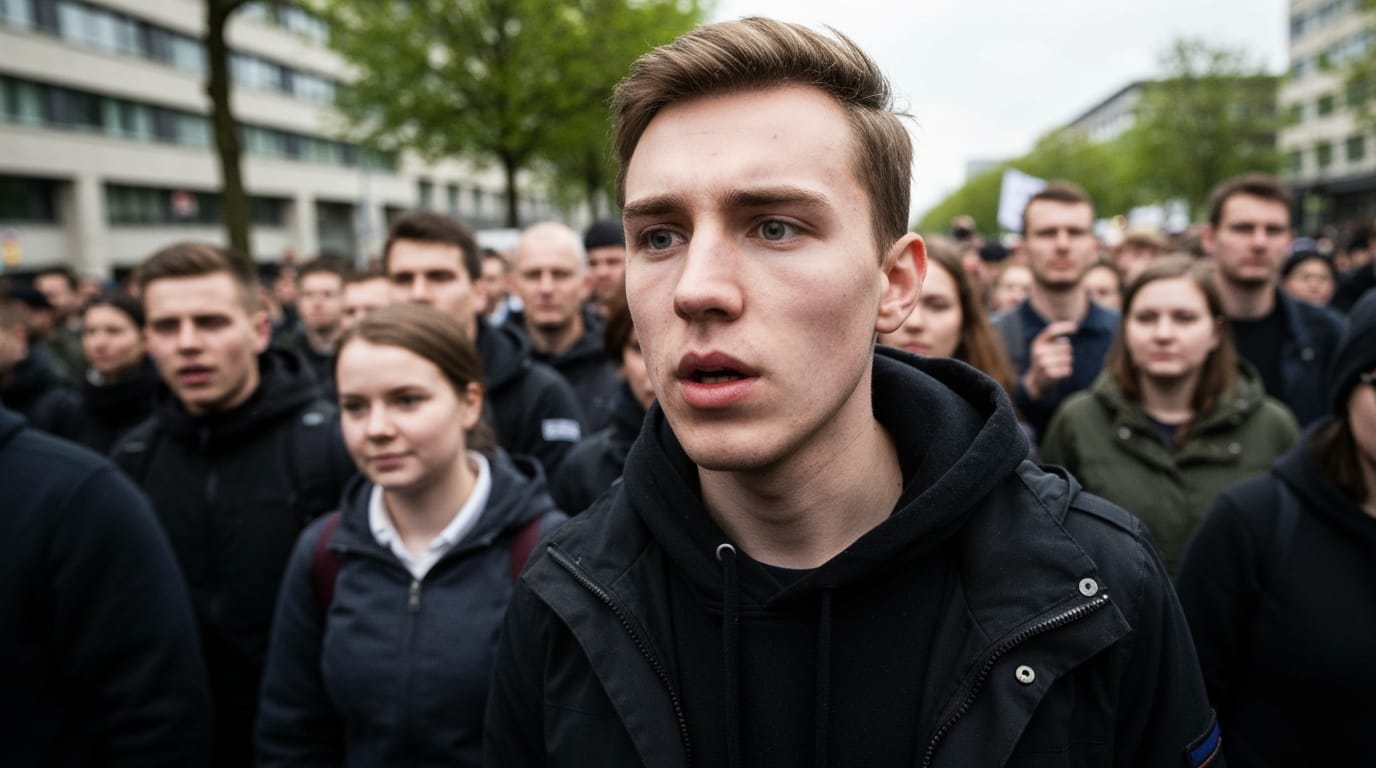
BERLIN, Germany – A new military service law, recently approved by the Bundestag, is poised to reshape Germany’s defense landscape, mandating questionnaires for young men and laying the groundwork for potential conscription. The legislation, set to take effect in January 2026, represents a significant policy shift driven by escalating geopolitical tensions, particularly Russia's ongoing aggression in Ukraine. While proponents champion the move as a vital step to bolster national security and address critical troop shortages in the Bundeswehr, the law has sparked widespread societal polarization, drawing sharp criticism from youth groups and advocates of individual freedom.
The debate underscores a complex national reckoning with Germany's role in a rapidly changing global security environment, challenging deeply entrenched pacifist sentiments that have prevailed since the post-Cold War era. The new framework seeks to balance the immediate need for a more robust military with long-standing constitutional principles and deeply held public opinions on compulsory service.
The Anatomy of the New Law: Voluntary First, Compulsory as a Last Resort
At its core, the new military service law introduces a multi-tiered system designed to increase the personnel strength of the Bundeswehr. Starting January 2026, all German men turning 18, specifically those born on or after January 1, 2008, will be legally obligated to complete an online questionnaire. This survey will inquire about their willingness to serve in the armed forces, assess their fitness levels, and gather information on their skills and interests. For young women, responding to the questionnaire will be voluntary.
Following the questionnaire, eligible male respondents will face a mandatory medical examination starting from July 2027, aimed at determining their suitability for military service. While the system is designed to remain voluntary initially, with significant incentives offered to encourage enlistment, it contains provisions for compulsory service if recruitment targets are not met. These incentives include a monthly gross payment of €2,600, along with potential benefits such as free driving licenses. Those who commit to service for fewer than 12 months will be designated "voluntary military personnel," while longer commitments will earn them the status of "temporary soldiers" with improved pay and pension prospects.
A pivotal, and controversial, aspect of the law is the inclusion of a "last resort" mechanism: if the Bundeswehr fails to reach its desired troop numbers through voluntary means by 2035, a lottery system for compulsory enlistment could be activated. This would, however, require a separate parliamentary vote, allowing the Bundestag to decide on such a measure if expansion targets are not met. The current plan aims to boost active soldier numbers to 260,000 by 2035, a significant increase from the approximately 180,000 currently serving, complemented by an additional 200,000 reservists.
A New Era of Geopolitical Realities: The Rationale Behind the Shift
The impetus for Germany's renewed focus on military service stems from a dramatic reappraisal of its security posture following Russia's full-scale invasion of Ukraine in 2022. For years, the Bundeswehr had faced criticism for being understaffed and ill-equipped, a consequence of declining investment and a shift away from national defense following the end of the Cold War. Germany suspended its compulsory military conscription in 2011, a policy that had been in place since 1956/57. This decision was largely driven by the perceived absence of a significant military threat and a focus on developing a professional army for international missions.
However, the war in Ukraine served as a stark wake-up call, highlighting the vulnerabilities of a downsized military and the imperative to meet NATO obligations, including the target of spending 2% of GDP on defense. Chancellor Friedrich Merz has articulated an ambitious goal to transform the Bundeswehr into "Europe's strongest conventional army," acknowledging the critical need for Germany to assume greater responsibility for European security. Defense Minister Boris Pistorius has been a prominent voice advocating for the reforms, underscoring that "freedom of expression, freedom to demonstrate, freedom of religion and the state 'do not protect themselves by themselves'." He suggests that a capable military serves as a deterrent, reducing the likelihood of conflict.
The government's decision also draws parallels with successful models in other European nations, particularly the Nordic countries like Sweden, which have effectively combined voluntary service with attractive conditions to meet their defense needs. Proponents argue that the law is not merely about increasing numbers but about fostering a stronger sense of civic responsibility and ensuring Germany's readiness to defend itself and its allies in an increasingly volatile world.
A Nation Divided: Voices of Support and Dissent
Despite the government's emphasis on national security, the new military service law has exposed deep fissures within German society. Supporters, often older demographics, largely back the reintroduction of some form of military service, viewing it as a necessary measure for collective defense and a civic duty. A poll conducted earlier in the year indicated that a majority of Germans, approximately 54%, supported a return to a conscription system, with support strongest among those over 60.
However, the most vocal opposition comes from younger generations, the demographic directly affected by the new requirements. Student groups and youth activists have organized protests in multiple German cities, expressing strong resistance to the law. Placards and slogans reflect anxieties about personal freedom and a rejection of militarization, with some protesting the idea of becoming "cannon fodder." This demographic, aged 18 to 29, shows significantly higher opposition, with up to 63% against compulsory military service.
Concerns also extend to the practicalities and fairness of the system. Critics question whether a voluntary model, even with enhanced incentives, can truly meet the ambitious recruitment targets, particularly given high dropout rates among new recruits. There are fears that the "appearance of volunteerism" could merely pave the way for an eventual return to full conscription, undermining individual choice. The mandatory questionnaire for men while it remains voluntary for women has raised issues of gender equality, with some arguing that any form of compulsory service should apply equally to all genders, potentially requiring a constitutional amendment. Furthermore, the financial implications of expanding the Bundeswehr, coupled with potential capacity issues in barracks and training facilities, are also points of contention. Some suggest alternative approaches, such as a broader year of civic duty encompassing both military and social services, or even a greater focus on developing a unified European army, as potentially more effective and less divisive solutions.
Conclusion: Navigating a Complex Future
Germany's new military service law represents a delicate compromise in the face of unprecedented security challenges. It attempts to reconcile the urgent need to strengthen the Bundeswehr and fulfill international defense commitments with a society that, for decades, has largely embraced a professional, volunteer military. The dual-track system, prioritizing voluntary enlistment while retaining the option for compulsory service, reflects this balancing act.
As the law begins its implementation in January 2026, the ongoing debate will continue to shape Germany's identity as a military power and its relationship with its citizens. The success of the "voluntary first" approach, the ability to meet recruitment targets, and the eventual public acceptance of the new framework will be closely watched, both within Germany and across Europe, as the nation navigates its path in a more uncertain world. The challenge ahead lies not only in rebuilding military strength but also in maintaining national cohesion and ensuring that the burden of defense is perceived as both necessary and equitable.


