Germany's Political Fault Lines Exposed: AfD Conference Ignites Massive Protests in Erfurt
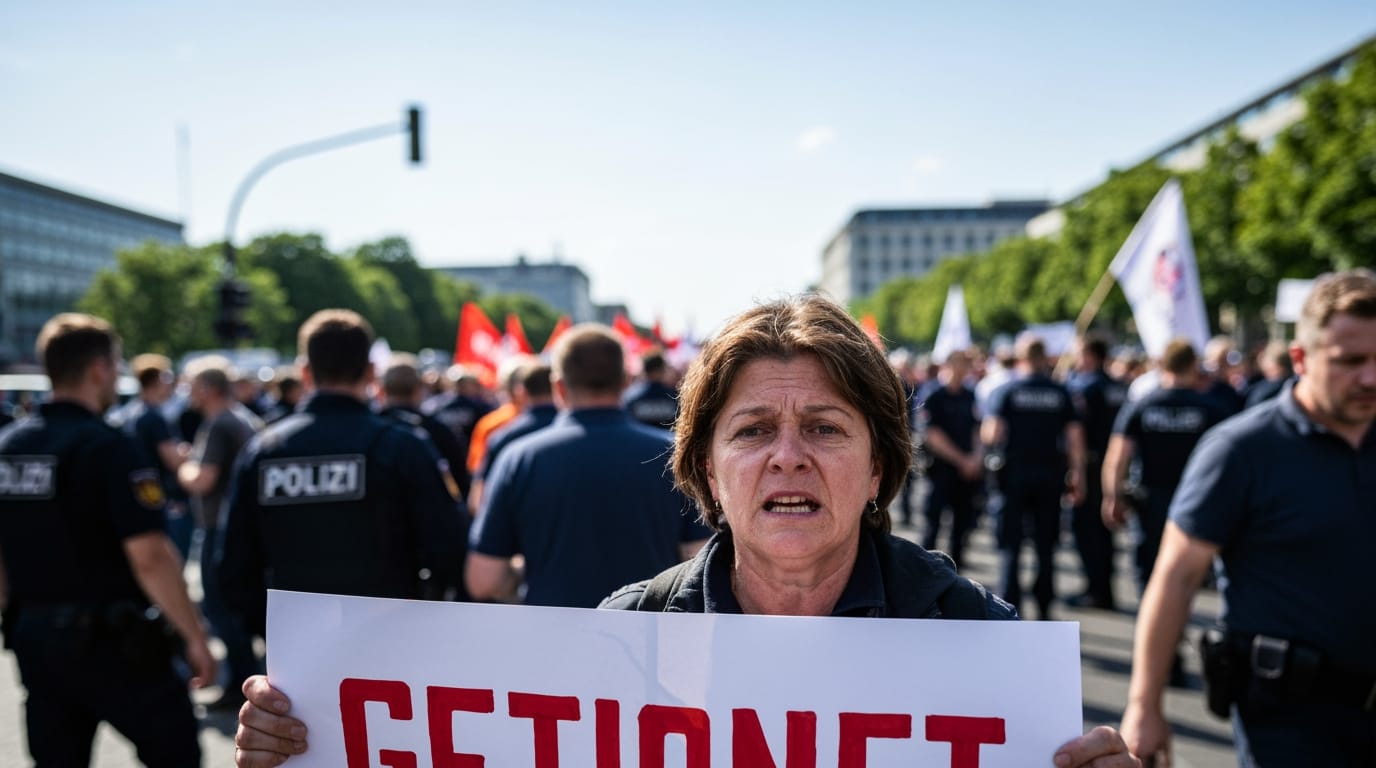
Erfurt, Germany – Thousands of protesters converged on the city of Erfurt this Saturday, July 4, blocking roads and disrupting the annual conference of the far-right Alternative for Germany (AfD) party. The demonstrations underscore a deeply polarized nation grappling with the rising influence of a party that mainstream rivals accuse of threatening democratic values, just months before crucial regional elections where the AfD hopes to secure significant power.
Police deployed in large numbers, including reinforcements from across Germany, to manage the anticipated standoff between AfD delegates and a diverse coalition of anti-fascist groups, unions, and civil society organizations. The protests, which police estimated drew around 15,000 participants in and around the eastern city, transformed Erfurt into a flashpoint for the ongoing national debate over Germany's political future.
The AfD Gathers Amidst Scrutiny
Inside the conference hall, the AfD's co-leaders, Alice Weidel and Tino Chrupalla, are expected to be re-elected, solidifying their leadership as the party charts a course for unprecedented electoral success. The two-day annual congress in Erfurt is strategically timed ahead of critical regional elections in the eastern states of Saxony-Anhalt and Mecklenburg-Vorpommern. In these historically less prosperous regions of former East Germany, the AfD consistently polls highest, with some surveys suggesting the party could achieve an absolute majority in Saxony-Anhalt. This prospect has fueled both the party's ambition and the intensity of public opposition, as a state-level victory would mark a significant breakthrough for the AfD, allowing it to potentially govern for the first time.
The Alternative for Germany, founded over a decade ago, initially emerged as a Eurosceptic movement but has since shifted further to the right, adopting a platform centered on anti-immigration, nationalist rhetoric, and opposition to climate change measures. The party's program includes calls for tougher immigration policies and "remigration" demands, a term interpreted by critics as advocating for mass deportations of foreign-born Germans, including those with citizenship. Germany's domestic intelligence agency has classified the AfD as a "suspected right-wing extremist group," with parts of the party under surveillance due to anti-constitutional views. Despite this, the party has seen its support soar in national opinion polls, often positioning itself as the second-strongest political force in the country.
A Roar of Opposition on Erfurt's Streets
Outside the conference, the streets of Erfurt echoed with chants and slogans opposing the AfD. Georg Becker, a spokesperson for "Widersetzen" ("Resist"), an anti-AfD umbrella group, articulated the demonstrators' resolve, stating their intention to clearly signal that "fascism is on the rise here in Germany" and that it "won't be tolerated." Protesters actively sought to block roads and highways leading to the convention center, at times sitting in rows to impede delegate access, watched by police in riot gear.
The scale of the protests highlights a broader, ongoing wave of civil society mobilization against the AfD that commenced in early 2024. This surge in public dissent was significantly catalyzed by revelations of a secret meeting in late 2023, where AfD politicians and right-wing extremists reportedly discussed "remigration" plans. Critics and anti-AfD groups argue that the party promotes racist policies and attitudes fundamentally incompatible with Germany's constitutional order and democratic principles. Concerns were also raised about the symbolic timing of the Erfurt conference, with some seeing a deliberate provocation in its coincidence with the 100th anniversary of a Nazi conference held in nearby Weimar, an assertion the AfD denies.
Police documents, as reported by news weekly Der Spiegel, indicated that up to 2,500 of the estimated 50,000 potential demonstrators were expected to be prepared for violence, underscoring the tense atmosphere surrounding the event. Some within the AfD, including lawmaker Beatrix von Storch, appeared to welcome the confrontation, posting online that "The countdown to civil war in Erfurt is ticking," and asserting, "You only have violence. We have arguments."
The Shifting Political Landscape and its Implications
The current political climate in Germany is characterized by a significant realignment of voter sentiment, with the AfD's ascent driven by a mix of nationalist appeals, demands for stricter immigration controls, and a widespread frustration among voters with successive governments and perceived economic stagnation. Mainstream parties, including Chancellor Friedrich Merz's conservatives, have maintained a "firewall" strategy, consistently ruling out any cooperation with the AfD. This stance aims to isolate the far-right party and prevent its integration into coalition governments at both state and national levels.
However, the AfD's continued electoral gains, particularly its strong performance in recent municipal elections and its second-place finish in the last national election, present a complex challenge to this strategy. If the party achieves significant victories in upcoming state elections, it could force a re-evaluation of political alliances and governance structures. Concerns have been voiced that an AfD interior minister, for example, could pose a "security risk" due to the party's problematic views and its legal battles with the domestic intelligence agency. Opponents also fear the potential for the party to replace civil servants and compromise confidential information if it gains control of state administrations.
Conclusion: A Nation Divided at a Crossroads
The events in Erfurt this weekend symbolize a nation at a critical juncture, wrestling with fundamental questions about its identity, democratic resilience, and future direction. The AfD's conference, framed by the party as a step towards governmental power, was met with a resounding public rejection from a broad coalition of citizens determined to defend Germany's democratic principles.
While the AfD continues to capitalize on public discontent and project an image of strength, the counter-demonstrations highlight a significant segment of the population deeply concerned by the party's agenda and its historical echoes. The political confrontations unfolding in Erfurt are not merely about an annual party meeting but represent a microcosm of the larger struggle for Germany's political soul, with the outcomes of upcoming regional elections poised to further shape the country's trajectory. The ongoing standoff illustrates the deepening polarization within German society, as mainstream parties contend with the AfD's rise and the sustained efforts of civil society to resist what many perceive as a threat to the nation's democratic foundations.


