Germany's Roads: A Battle Against a Changing Climate

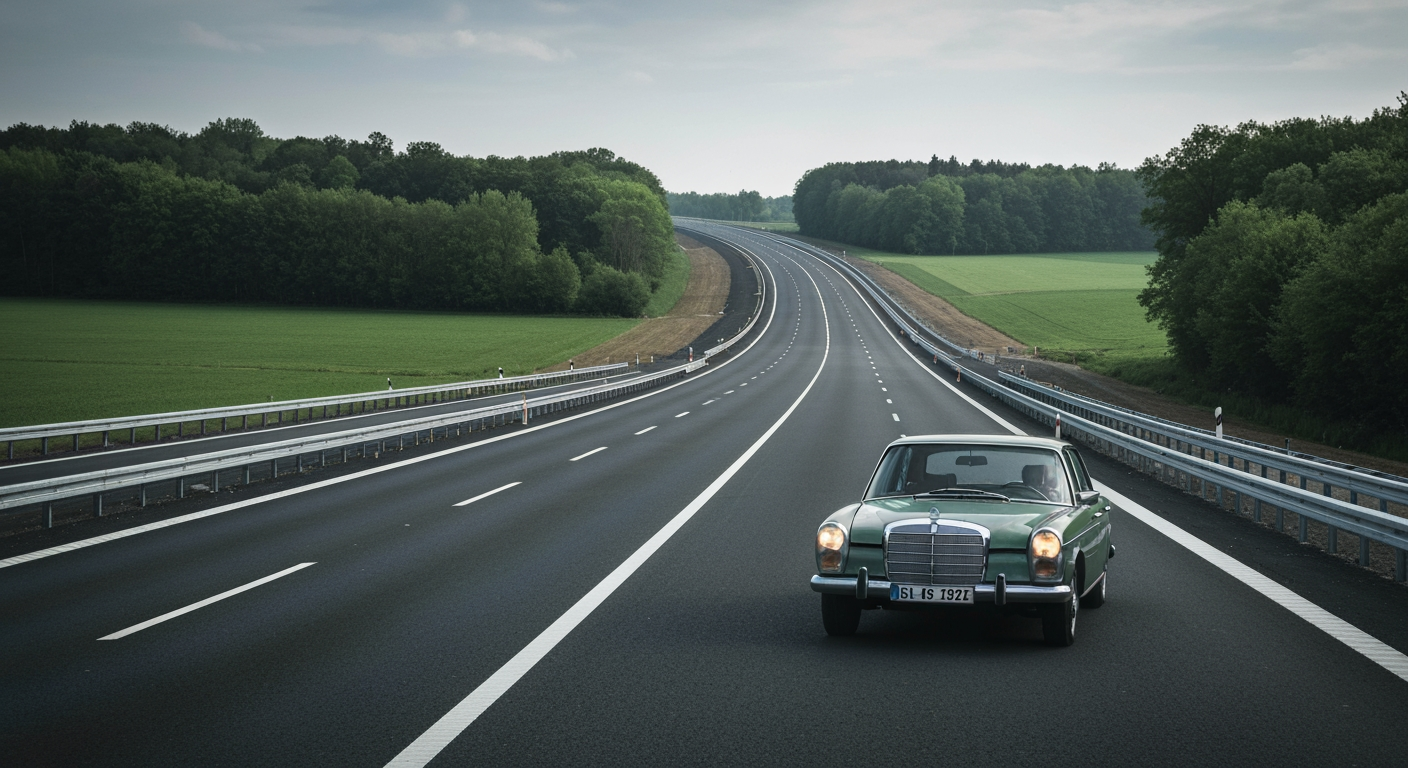
Germany's vaunted road network, a symbol of engineering prowess and efficiency, is increasingly showing signs of strain under conditions it was never designed to endure. As extreme heatwaves become a recurring feature of European summers, the very infrastructure built for a cooler past is buckling, raising critical questions about the future of national planning in an era of rapid climate change. The challenge facing German engineers and policymakers is how to adapt a vast system that was optimized for freezing winters to the scorching realities of a hotter present.
The core of the problem lies in the foundational design principles of Europe's road infrastructure. For decades, German roads, much like those across the continent, were engineered to withstand long, cold, and often snowy winters. This necessitated the use of softer grades of bitumen, a key component in asphalt, which remains flexible in sub-zero temperatures. This flexibility was crucial in preventing cracks caused by repeated freeze-thaw cycles, ensuring road longevity during colder months. However, this traditional engineering choice, once a strength, now presents a significant vulnerability as summer temperatures escalate far beyond historical norms.
The consequences of this design mismatch are becoming starkly evident with each successive heatwave. As air temperatures climb, often reaching or exceeding 39 degrees Celsius, road surfaces can become significantly hotter, sometimes surpassing 60 degrees Celsius. At these elevated temperatures, the softer bitumen in the asphalt loses its rigidity. This can lead to a range of severe issues: roads softening, developing ruts under the weight of heavy vehicles, and in extreme cases, cracking, buckling, or even experiencing "blow-ups" where sections of the road surface explode upwards. These failures are no longer isolated incidents; in 2019, concrete motorways in Saxony-Anhalt saw similar blow-ups during a July heatwave, and in 2023, rail tracks and roads across Southern Germany buckled under record-breaking heat. The frequency and intensity of these events are increasing, with temperatures once considered extreme now lasting longer and returning more often. Even parts of Germany's tram networks have been affected, with material around rail tracks melting and then hardening, rendering them unsafe.
The dilemma for German engineers is complex: how to build roads that can endure both deep freezes and intense heat. While engineers in countries like India routinely design highways to withstand pavement temperatures above 60 degrees Celsius using harder viscosity-grade bitumen, polymer-modified asphalt, and concrete pavements, Europe's historical focus on cold-weather resilience presents a different set of challenges. The materials that perform optimally in freezing conditions often do not perform well in extreme heat, and vice versa. Simply switching to harder bitumen might address heat resistance but could compromise the road's ability to resist cracking during cold winters. This highlights a fundamental incompatibility that requires innovative solutions rather than simple material swaps.
Addressing this growing crisis demands a significant paradigm shift in infrastructure planning and investment. Emergency resurfacing and temporary speed limits are merely stopgap measures; a long-term strategy is urgently needed. Experts advocate for substantial investment in research and development to identify and implement new materials and construction techniques that offer greater resilience across a wider temperature spectrum. This could include the wider adoption of polymer-modified bitumen or rigid concrete pavements, which offer superior heat resistance, while also ensuring winter durability. The situation underscores that climate change is not merely an environmental concern but a profound economic, safety, and societal issue. Adapting Germany's, and indeed Europe's, critical infrastructure to a rapidly changing climate is an imperative that goes beyond repair; it calls for a comprehensive rethinking of how nations build for the future.
The ongoing struggles of Germany's roads against intensified heatwaves serve as a powerful reminder that infrastructure designed for a climate that no longer exists will inevitably fail. The challenge now is to move beyond the legacy of "yesterday's climate" and proactively build a resilient road network capable of withstanding the climatic realities of today and tomorrow. This requires not just financial commitment, but also a willingness to innovate and adapt engineering standards to safeguard the nation's vital transportation arteries.
Sources
Related Articles


A New Era of Environmental Triumph: Cities, Wildlife, and Technology Lead the Green Revolution
Global efforts are demonstrating a tangible shift towards environmental restoration and sustainable living, with significant advancements emerging from urban centers, groundbreaking wildlife conservation, and innovative...

The Blazing Battle: Why Wildfire Suppression is Harder Than Ever, and How We're Fighting Back
The fight against wildfires is intensifying, with blazes growing larger, more frequent, and more destructive across the globe. What was once a seasonal threat in specific regions has evolved into a year-round crisis,...