Germany's Solar Revolution: A Nation Powers Up with Unprecedented Renewable Growth
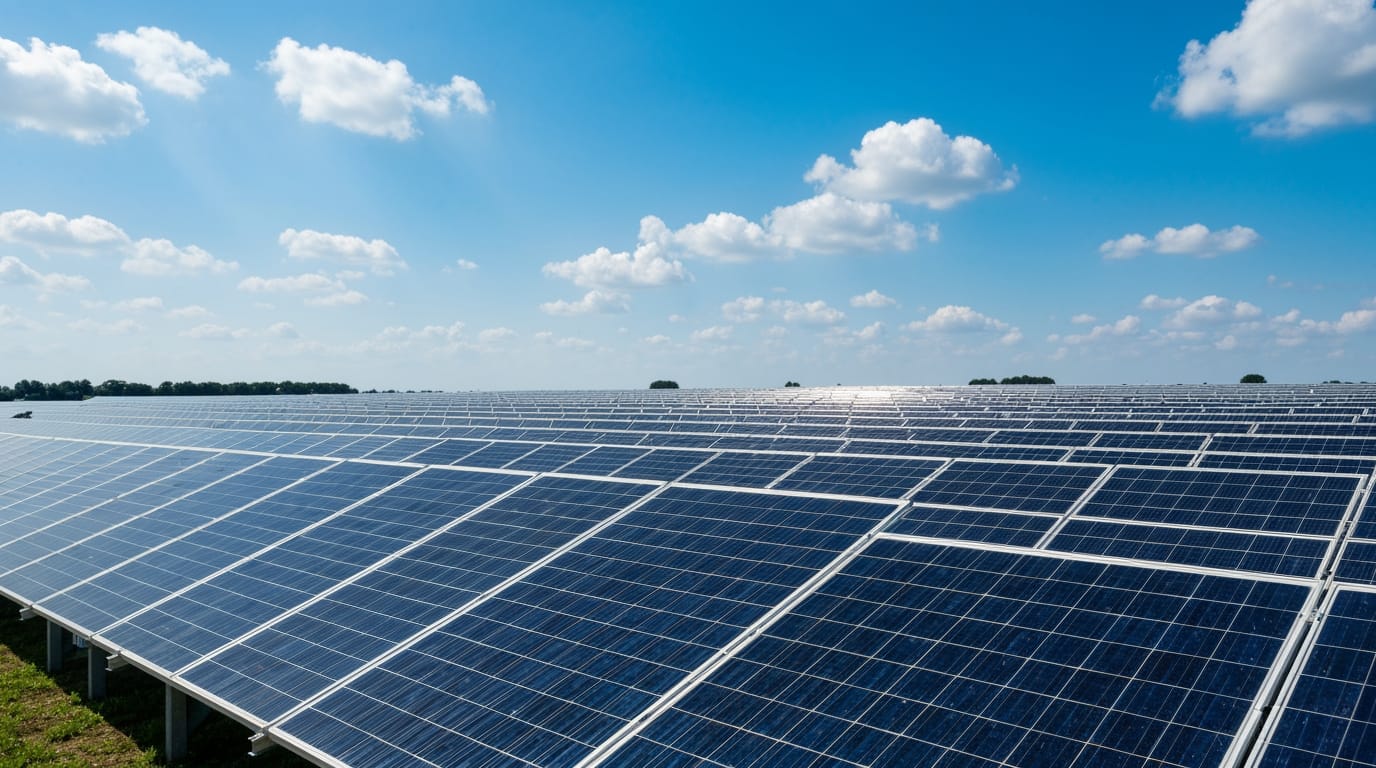
Berlin, Germany – Germany is experiencing a groundbreaking surge in solar power, rapidly transforming its energy landscape and setting new benchmarks for renewable energy adoption worldwide. Bolstered by ambitious government targets and a robust policy framework, solar energy is not only becoming a dominant force in the nation's electricity mix but is also driving significant economic and environmental benefits, despite facing evolving challenges in grid integration and storage.
The Solar Surge: Reaching New Heights in Renewable Generation
Germany's commitment to clean energy has propelled its solar power sector to unprecedented levels. By the end of 2024, the nation's total installed solar power generation capacity surpassed 100 gigawatts (GW) for the first time, marking a significant milestone in its ambitious energy transition. This achievement positions Germany as a global leader in solar deployment, a journey that began earnestly in the early 2000s.
The pace of solar expansion has been remarkable. In 2024 alone, Germany added approximately 17 GW of new installed capacity, an increase of about 10% over 2023. This continued a record-breaking trend, with over 15 GW installed in 2023, double the additions from 2022. The growth in solar power has been so rapid that, in the first nine months of 2024, Germany installed more than 100,000 solar panels daily. As of April 2024, the country had already surpassed its 2024 target of 88 GW of total solar capacity.
Solar energy's contribution to the national grid is steadily increasing. In 2024, solar systems provided 14% of Germany's electricity consumption, up from 12% in 2023. Combined with wind power, renewables accounted for a record 59% of total power generation in the first nine months of 2024, exceeding fossil fuels for the first time. This surge pushed renewable energy sources to cover a record 62.7% of net public electricity generation in Germany in 2024. The main driving force behind the growth in 2024 was ground-based photovoltaic power stations, which saw an additional installed capacity of 6.3 GW, a 40% increase over the previous year. Rooftop solar installations also continue to be popular, with approximately 1.8 million systems across the country as of 2023, contributing significantly to the overall capacity.
Policy and Prowess: The Engine of Germany's "Energiewende"
The extraordinary growth in Germany's solar sector is deeply rooted in robust policy frameworks, most notably the Renewable Energy Sources Act (EEG), first enacted in 2000. The EEG introduced pioneering feed-in tariffs (FITs), which guaranteed renewable energy producers a fixed price for electricity fed into the grid over a long period, typically 20 years. This mechanism provided crucial investment security and financial support during the nascent stages of solar and other renewable technologies, effectively de-risking investments and accelerating market development.
While FITs have undergone several revisions, with rates adjusted to reflect market developments and declining technology costs, their initial impact was transformative. The "Solar Peak Act," for instance, introduces new rules aimed at managing electricity peaks and negative pricing associated with excessive solar generation by removing feed-in tariff compensation during such periods. However, compensation mechanisms are in place to ensure financial stability for operators.
Beyond the EEG, geopolitical events have also served as catalysts. Russia's invasion of Ukraine in 2022 significantly reshaped Germany's energy market by reducing dependence on Russian fossil fuels. This spurred the German government to accelerate legislation aimed at expanding solar power as part of a broader goal to source 80% of its energy needs from renewables by 2030 and achieve climate neutrality by 2045. The country aims to expand its solar capacity to 215 GW by 2030, a target that requires an annual installation of 22 GW from 2025 onwards.
Economic and Environmental Dividends: A Model for Sustainable Growth
The widespread adoption of solar power in Germany has generated substantial economic and environmental benefits. Economically, the solar industry has created tens of thousands of jobs across manufacturing, installation, maintenance, and research sectors. Households and businesses equipped with solar systems realize significant savings on electricity bills, with a typical German household potentially saving upwards of €10,000 over 20 years.
Beyond individual savings, solar energy contributes to broader economic resilience. Studies indicate that the presence of solar in the electricity mix lowers overall utility costs for nearly all German households, even those without their own solar installations. A study by Enervis, on behalf of the German Solar Association, found that wholesale electricity prices would have been 15% higher without solar in the mix, translating to an average annual saving of approximately 50 euros for German households. Furthermore, the increased domestic energy production from solar has reduced Germany's reliance on imported fossil fuels, enhancing energy security.
Environmentally, Germany's solar capacity significantly contributes to climate goals by avoiding approximately 50 million tons of CO2 emissions annually. The decarbonization of the energy system is evident, with carbon dioxide emissions from German electricity generation 58% lower than in 1990. The complete phase-out of nuclear power in 2024 and the closure of 6 GW of coal-fired power plants further underscore this commitment.
Navigating the Challenges: Integration, Storage, and Grid Modernization
Despite the resounding success, Germany's rapid solar expansion presents complex challenges, primarily related to grid stability and the integration of intermittent renewable sources. The fluctuating nature of solar electricity, which peaks during daylight hours, can lead to temporary bottlenecks, particularly at the distribution grid level. This has resulted in periods of overproduction and negative wholesale electricity prices, indicating that solar producers sometimes face significant price cuts during peak production hours.
To address these issues, significant investment in energy storage solutions is critical. The German Institute for Economic Research (DIW) emphasizes the need for more and improved use of storage, as existing PV storage systems often fully charge during summer peaks, leading to excess electricity being fed into the grid. Germany has made strides in this area, increasing installed battery capacity from 8.6 GW to 12.1 GW in 2024. Battery storage capacity reached 12 GW in 2024, with storage costs significantly reduced. Home storage batteries, with 9.2 GW of installed capacity, account for the majority of installed battery capacity.
Grid infrastructure modernization is another pressing concern. Project developers frequently criticize slow and complex grid connection processes, with an average wait of almost four months to allocate a grid connection point, and some instances taking years. The German Solar Association (BSW-Solar) advocates for simplified, standardized, and digitized grid access, along with transparent information and standardized deadlines. Smart electricity meters are also crucial for optimizing storage potential, but their expansion in Germany is lagging. There are also concerns from some sectors that the rapid shift to renewables, without adequate infrastructure, could stress the economy.
The Path Ahead: Sustaining the Momentum
Germany is poised to continue its leadership in solar energy, with ambitious targets guiding its future trajectory. The country aims for solar power to meet 25% of its electricity needs by 2030, nearly doubling its current share. To achieve this, the government plans to install 22 GW of new solar capacity annually from 2025 onward. The long-term vision includes reaching 215 GW of solar PV capacity by 2030 and 400 GW by 2040. These targets are nearly in line with what is needed to help limit global temperature rise to 1.5°C.
The strategy involves a multi-faceted approach, emphasizing hybrid projects combining solar, wind, and storage, and promoting decentralized generation. Innovations such as plug-in balcony solar panels are also gaining traction, with over 430,000 registered in 2024. The focus remains on overcoming grid integration challenges through advanced technologies, flexible market designs, and improved regulatory frameworks. The success of Germany's "Energiewende" will increasingly depend on its ability to effectively integrate these variable renewable sources into a stable and resilient national grid.
Germany's rapid expansion of solar power underscores its unwavering commitment to a sustainable energy future. While challenges remain in perfecting grid integration and energy storage, the nation's progress offers valuable lessons and a compelling blueprint for other countries embarking on their own renewable energy transitions. The ongoing solar revolution in Germany is not merely a technological shift but a profound societal transformation, building a cleaner, more energy-independent future.


