Germany's Youthful Surge: A New Generation Reshapes Bundestag's Dynamics
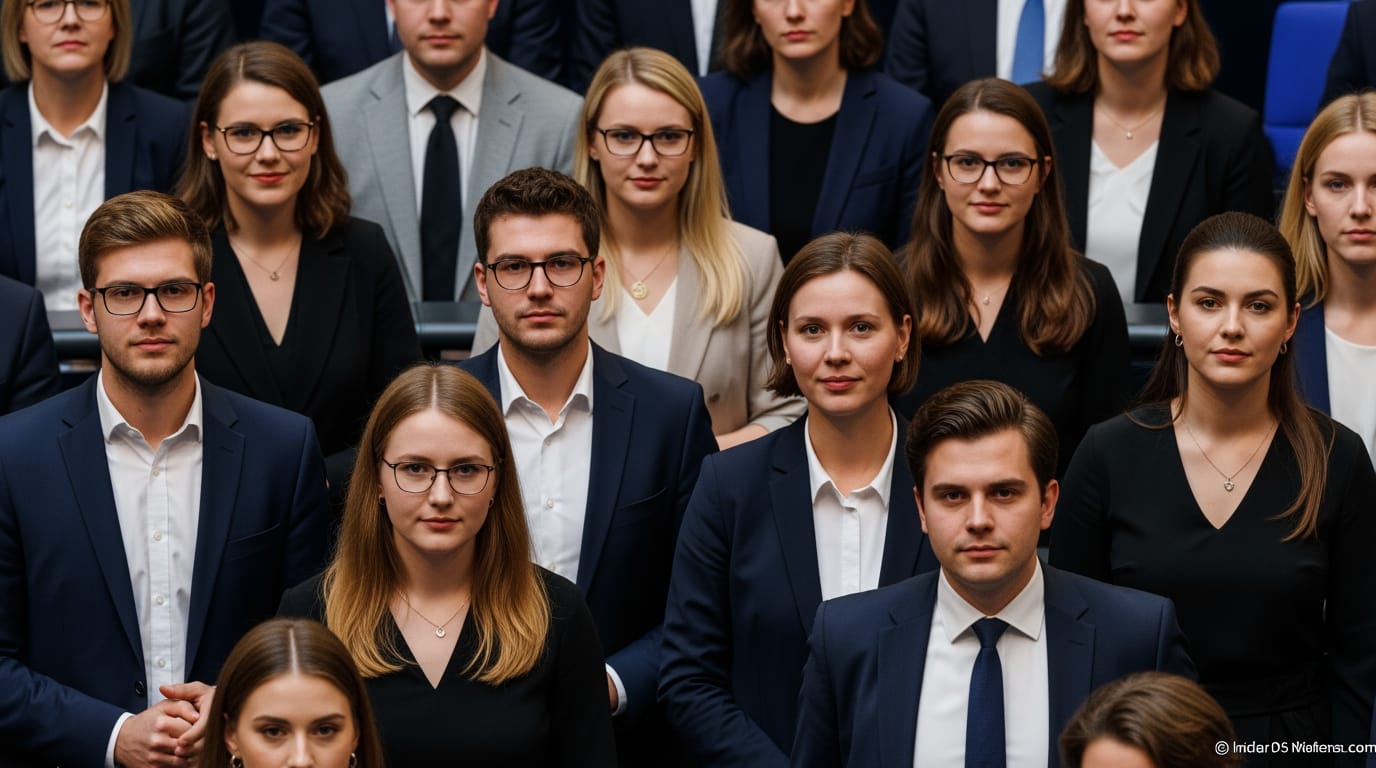
BERLIN – A profound generational shift is underway in German politics, as a wave of young lawmakers asserts its influence within the Bundestag, challenging traditional norms and injecting new perspectives into national discourse. Following the 2021 federal election, Germany's parliament saw a significant influx of fresh faces, drastically altering its demographic makeup and signaling a dynamic recalibration of priorities that resonates deeply with a populace navigating complex global and domestic challenges. This infusion of youth, while celebrated by many as a vital rejuvenation of democracy, also brings with it novel internal frictions and a stark polarization of the youth vote, underscoring a pivotal moment for the future direction of Europe's largest economy.
A Parliament Rejuvenated: The Post-2021 Shift
The 2021 federal election marked a watershed moment for youth representation in the Bundestag. The average age of members decreased to 47.3 years, a notable drop from previous legislative periods. More strikingly, 50 members were under the age of 30, with an additional 143 falling between 30 and 39 years old. This stands in stark contrast to the 2017 parliament, where only 12 members were under 30 and merely 15 percent were below 40, a figure that has since doubled to 30 percent. The Green Party, in particular, showcases this trend with the lowest average age among parliamentary groups at 42.4 years.
Among the trailblazers of this new generation are figures like Emilia Fester and Niklas Wagener of the Greens, both of whom entered the Bundestag in October 2021 at just 23 years old. More recently, Emily Vontz of the Social Democratic Party (SPD), born in 2000, became the youngest member of the 20th Bundestag upon assuming office in January 2023, marking the first time a German MP was born in the new millennium. By February 2025, Luke Hoß of Die Linke, at 23, became the youngest member, advocating passionately against poverty and for affordable housing. This surge of younger parliamentarians, many of whom started their political journeys in party youth organizations, is widely seen as making the German parliament a more accurate reflection of the society it represents.
Shaping the Agenda: New Priorities in a Complex World
The arrival of these younger lawmakers has brought a palpable shift in policy discussions and priorities. Issues such as climate action, education reform, digital transformation, and social justice are increasingly at the forefront of legislative efforts. Ria Schröder of the Free Democratic Party (FDP), for instance, articulates a clear commitment to "future generations," emphasizing climate and education as central to her work. Similarly, Jakob Blankenburg of the SPD champions environmentalism and social justice, while Merle Spellerberg of the Greens is a vocal advocate for security policy and feminist struggles. These young politicians often stress their role in representing the aspirations and concerns of their generation, striving to engage citizens in a more direct and relatable manner.
Recognizing this growing influence, the Federal Government has actively pursued a "Youth Strategy" aimed at integrating the interests of young people into political decision-making processes. This initiative focuses on areas where today's youth will be disproportionately affected, such as climate change, but also extends to education, digitalization, housing, and labor policies. By facilitating youth policy events and conducting analyses of legislative proposals' impact on young people, the government seeks to bridge the gap between policy formulation and the lived realities of younger Germans.
Navigating Internal Divides and Shifting Political Winds
Despite the increased representation, young lawmakers face significant challenges, including navigating established party structures and an increasingly fractured political landscape. A recent illustration of this tension is the contentious pension reform debate in December 2025. A bloc of 18 younger Christian Democratic Union (CDU) lawmakers openly defied Chancellor Friedrich Merz's proposed reform, arguing it is unsustainable and would impose an additional burden of €120 billion on future generations by the 2030s. This internal rebellion highlights a clear generational divide on fiscal policy and a willingness among younger politicians to challenge party leadership on issues they believe are critical for their demographic.
Beyond the internal struggles of established parties, the youth vote itself has become a battleground for opposing ideologies. Recent state elections in Thuringia and Saxony in September 2024 revealed a significant surge in support for the far-right Alternative for Germany (AfD) among young voters aged 18-24, with 38% in Thuringia and 31% in Saxony casting their ballots for the party. This indicates that approximately one in three Germans under 34 years old now supports the AfD. Factors contributing to this shift include a stagnating economy, a housing crisis, and skepticism towards expensive net-zero environmental policies. The AfD has effectively leveraged social media platforms like TikTok and Instagram to amplify its anti-migrant rhetoric and connect with a disillusioned youth.
Conversely, the leftist Die Linke party also garnered substantial youth support in a March 2025 election, securing 25% of the vote among 18-24 year olds, largely attributed to its strong social media presence and rejection of increasingly hostile political discourse. This growing polarization of the youth vote — tilting towards both the far-right and the far-left — underscores a broader dissatisfaction with mainstream political offerings and a desire for more radical solutions to perceived societal failings. Many young people feel that their concerns, such as an overstretched healthcare system, housing shortages, and childcare waiting lists, are not adequately prioritized by older politicians.
The Digital Arena: Social Media as a Political Tool
For this new generation of German lawmakers, social media is not merely a communication channel but an indispensable political tool. Platforms like TikTok and Instagram have become crucial arenas for political discourse, particularly among the under-25 demographic who often source their political news exclusively from these channels. Young politicians effectively use these platforms to articulate their positions, engage with constituents, and mobilize support, bypassing traditional media gatekeepers. This direct engagement fosters a different kind of political conversation, often more immediate and interactive, compared to the formal channels of conventional politics.
The digital landscape, however, also presents challenges, including the rapid spread of simplified narratives and the potential for increased polarization. While the AfD has demonstrated a strong presence on these platforms, figures like Heidi Reichinnek, co-leader of Die Linke, have also achieved significant reach, with millions viewing her critical remarks against mainstream parties. This dynamic points to a future where political success may increasingly hinge on a candidate's ability to navigate and effectively utilize digital spaces, further empowering younger, tech-savvy politicians.
Conclusion: A Transformative Era for German Democracy
The growing presence and influence of young lawmakers in the Bundestag signal a transformative era for German democracy. Their arrival brings not only a statistical reduction in the average age of parliamentarians but also a fundamental shift in legislative priorities, a renewed emphasis on future-oriented policies, and a more diverse representation of German society. While these young leaders champion issues critical to their generation, they also face the complex task of navigating internal party resistance and a youth electorate that is increasingly polarized and vocal in its discontent. The pension reform debate and the significant youth support for both the AfD and Die Linke highlight a critical juncture where the demands of younger citizens are exerting undeniable pressure on the political establishment. As Germany approaches its next federal election, the ongoing integration and impact of its young lawmakers will continue to shape the nation's political trajectory, determining how successfully the country addresses the challenges and opportunities of the 21st century.