Ghana's Landmark Gold Royalty Hike Sets Off Tremors Across Global Mining Industry
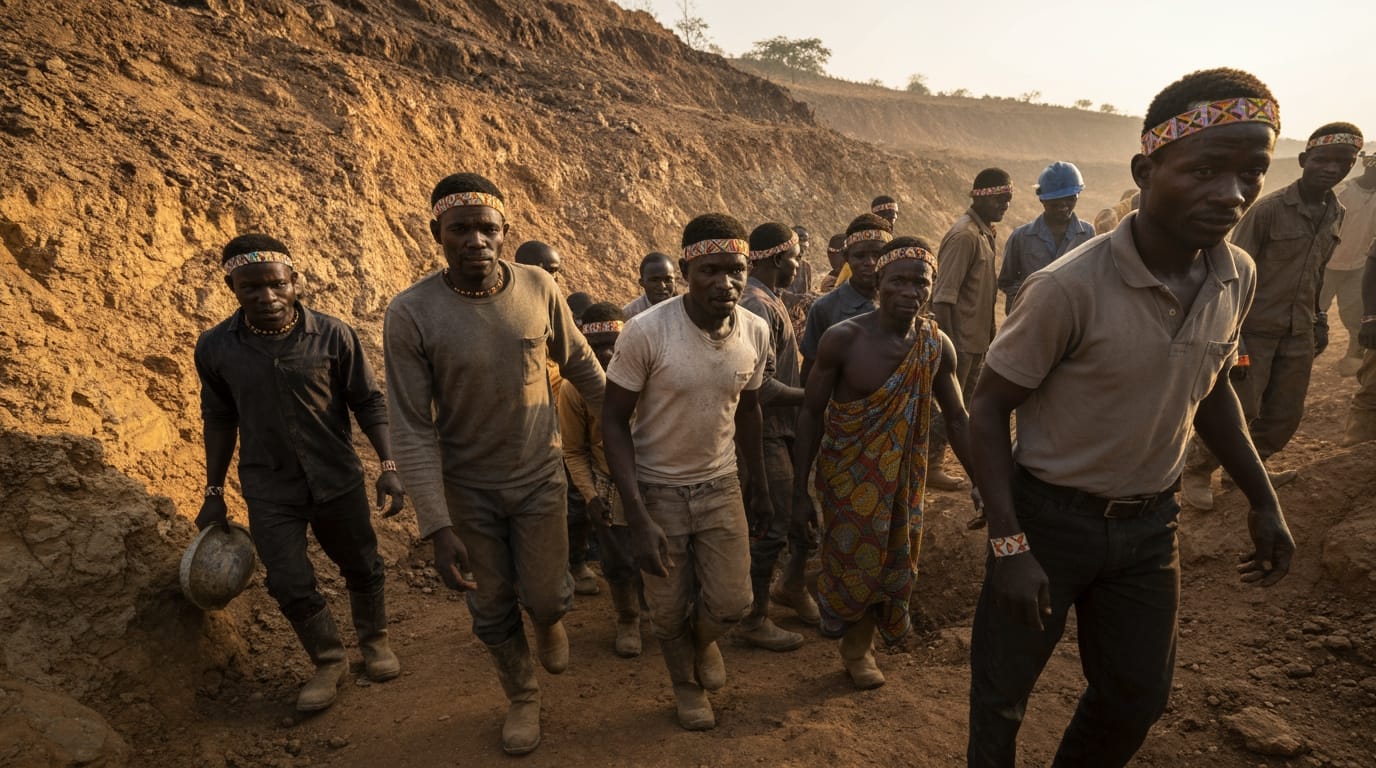
ACCRA – Ghana, Africa's leading gold producer, has ignited a significant debate within the global mining industry by implementing a new sliding-scale gold royalty regime. Effective March 10, 2026, the West African nation transitioned from a flat 5% royalty rate to a progressive system that could see mining companies pay up to 12% of their gold revenues, depending on international market prices. With gold trading above $5,000 per ounce, the maximum 12% rate was immediately activated upon the policy's commencement, more than doubling the previous government take. This bold move, aimed at maximizing revenue from Ghana's substantial mineral wealth, has been met with a mix of nationalistic support and pronounced apprehension from international mining firms and diplomatic missions alike.
Ghana's Golden Ambition: A New Royalty Landscape
Ghana's position as Africa's largest gold producer and the world's sixth-largest underscores the gravity of this policy shift. The nation's gold sector is a cornerstone of its economy, generating over $6 billion in annual export revenue and contributing approximately 12.3% to its Gross Domestic Product in 2022. For years, the country operated under a flat 5% royalty rate on gold production. However, the new framework introduces a dynamic structure where the royalty rate escalates as gold prices climb, reaching its ceiling of 12% once prices surpass $4,500 per ounce. This mechanism is designed to allow the government to capture a more proportional share of the profits during periods of high commodity prices.
The implementation of this progressive system, without a transition period, means that major international operators such as Newmont, AngloGold Ashanti, Gold Fields, and Perseus Mining, which have significant investments in Ghana, are now subject to these elevated rates. In 2025, Ghana recorded a record gold output of 6 million ounces, with a target of 6.5 million ounces for 2026, further emphasizing the potential revenue impact of this change. Beyond gold, the new framework also extends a similar 5-12% sliding scale to lithium extraction, while other minerals maintain a flat 5% rate.
Driving Forces Behind the Policy Shift
The Ghanaian government's rationale for overhauling its gold royalty system is rooted in a desire for greater economic sovereignty and increased revenue generation for national development. Officials argue that with gold prices consistently high—trading above $5,000 per ounce—the state should benefit more substantially from its finite resources. Isaac Tandoh, Director-General of the Minerals Commission, indicated that economic modeling supports the government's position, suggesting that the new system can bolster state income while still allowing mining companies to maintain healthy margins.
This policy aligns with a broader trend observed across West Africa and other resource-rich African nations. Countries like Burkina Faso, Mali, and Côte d'Ivoire have also been revising their mining fiscal regimes to secure a larger share of mineral revenues amidst surging commodity prices. This movement reflects a growing sentiment among host countries to capture "economic rents" – the excess returns generated when commodity prices significantly exceed production costs – and ensure that mineral wealth extraction contributes proportionally to national development. The government also asserts that long-term regulatory stability is a more crucial factor for investors than marginal shifts in operating costs.
Industry Backlash and Investment Concerns
Despite the government's assurances, the royalty hike has triggered strong opposition from the mining industry and international diplomatic circles. Mining companies and the Ghana Chamber of Mines have voiced significant concerns, warning that the increased rates could lead to higher operating costs, diminished project profitability, and a reduced appetite for new investments. Kenneth Ashigbey, CEO of the Ghana Chamber of Mines, cautioned that the higher royalty rate "could dry up new projects and future output." Industry analysis suggests that when combined with existing taxes, such as the 35% corporate income tax, the 3% Growth and Sustainability Levy, and other statutory payments, the new sliding scale could push the overall government take from mining companies to between 60% and 68%. This figure would place Ghana among the highest-taxed mining jurisdictions globally, potentially making it one of Africa's costliest locations for mining operations. Concerns also extend to the government's reported intention not to renew long-term stability agreements, which previously offered companies exemptions from certain tax changes.
The proposed changes have not only agitated the industry but have also drawn rare joint diplomatic intervention. Governments from the United States, China, the United Kingdom, Canada, Australia, and South Africa collectively urged Ghana to reconsider the policy. These nations, home to many of the major mining firms operating in Ghana, expressed fears that the reforms could harm the business environment and reduce the profitability of their companies. Diplomatic missions proposed that the 12% royalty rate should only apply when gold prices exceed $5,000 per ounce, a suggestion that Ghanaian authorities ultimately rejected.
A Balancing Act for Future Prosperity
The implementation of Ghana's new gold royalty regime highlights a fundamental tension: the government's imperative to secure greater national revenue from its natural resources versus the need to maintain an attractive and competitive environment for foreign investment. While the government emphasizes that its economic modeling ensures profitability for companies, industry stakeholders argue that such high tax burdens could deter future capital inflows, potentially shortening mine lifespans and ultimately reducing long-term government revenue. Patrick Boamah, Chairman of Parliament's Subsidiary Legislation Committee, warned that the new royalty regime could lead to job losses and undermine Ghana's competitiveness. He cited an Ernst & Young report that forecasts declining capital inflows and reduced investor confidence if the sliding-scale royalties are implemented without accompanying relief measures.
Conversely, proponents of the new system argue that Ghana's rich gold deposits and established infrastructure make its mining sector inherently attractive, suggesting that companies are unlikely to abandon operations over increased royalties. They view the policy as a necessary and bold step to ensure the country receives its fair share of wealth, especially given the current gold price boom.
As Ghana navigates this critical juncture, the full ramifications of the royalty hike will unfold over time. The success of this policy will depend on the government's ability to demonstrate that the increased revenue translates into tangible national development, while simultaneously managing the concerns of the international mining community and ensuring the continued viability of the sector for both state and investors. The global mining industry will be closely watching Ghana, as its experience could serve as a precedent for other resource-rich nations seeking to recalibrate their relationships with foreign investors.


