Global Community Rallies in Berlin to Address Sudan's Catastrophic Humanitarian Crisis, Pledges Over $1 Billion
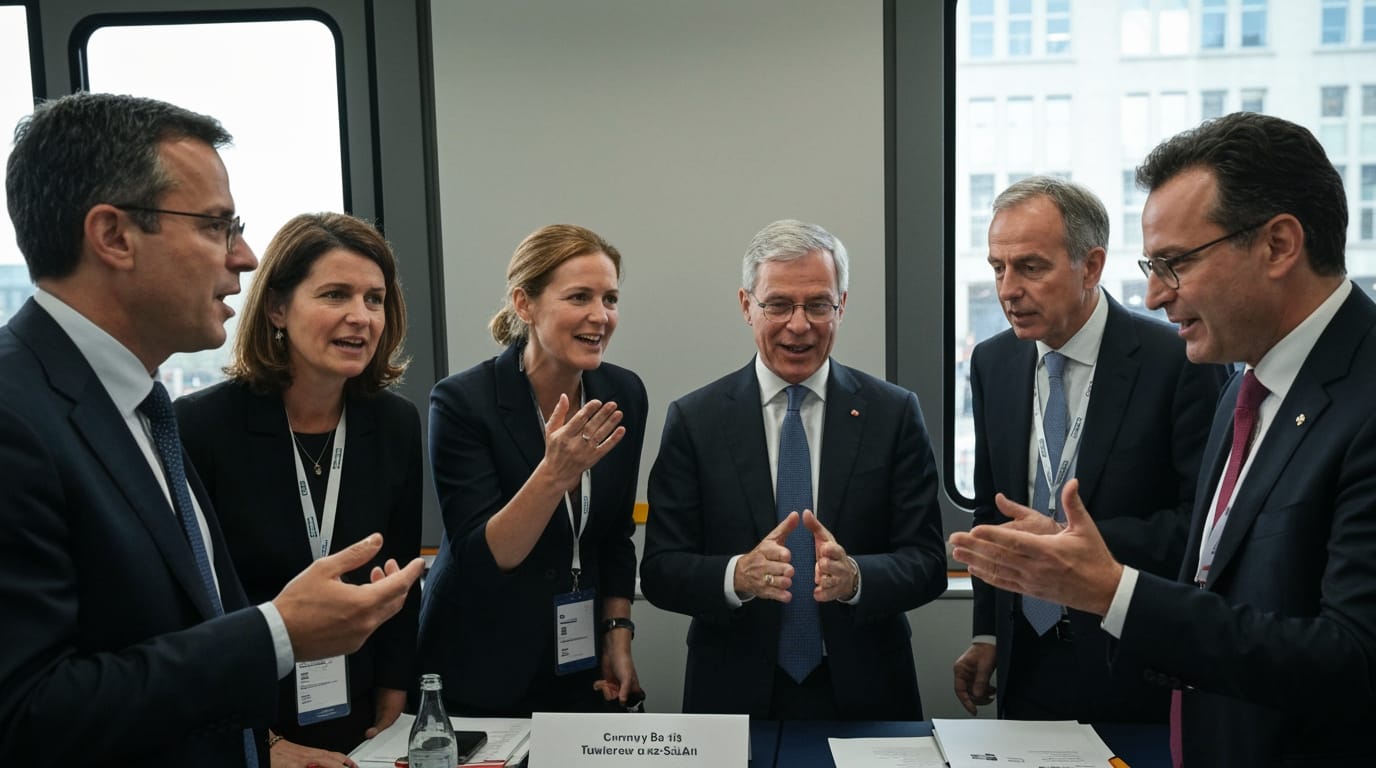
Berlin, Germany – As Sudan's devastating civil war entered its third year on April 15, 2026, an international conference convened in Berlin with an urgent objective: to galvanize global support and secure more than $1 billion in humanitarian funding for a nation teetering on the brink of collapse. The gathering, co-hosted by Germany, the African Union, the European Union, France, the United Kingdom, and the United States, underscored a renewed international effort to confront what the United Nations has described as the world's worst humanitarian crisis. With millions displaced, widespread famine, and a collapsing healthcare system, the conference aimed not only to secure vital financial commitments but also to amplify the voices of Sudanese civilian actors advocating for a peaceful, civilian-led transition.
The two-day International Sudan Conference served as a critical platform to address the dire situation, drawing attention back to Sudan amidst other pressing global crises. German Foreign Minister Johann Wadephul emphasized the difficulty of maintaining focus on Sudan, particularly with ongoing conflicts in Ukraine and Iran, and a perceived decline in U.S. humanitarian aid commitments. Germany itself pledged an additional €20 million (approximately $23.6 million) for Sudan in 2026, building on €155.4 million provided in 2025 for projects within Sudan and neighboring host countries. However, the path to relief remains fraught with political complexities, as the Sudanese government, currently embroiled in conflict, publicly deemed the conference an "unacceptable" interference in its internal affairs, cautioning against engagement with paramilitary groups.
A Crisis Unfolding: Three Years of Conflict and Displacement
The current conflict erupted on April 15, 2023, stemming from a brutal power struggle between the Sudanese Armed Forces (SAF), led by General Abdel Fattah al-Burhan, and the paramilitary Rapid Support Forces (RSF), commanded by General Hemedti. This clash followed a 2021 coup that saw the two factions seize power, derailing Sudan's fragile transition to democracy after the overthrow of long-time dictator Omar al-Bashir. The roots of the conflict, however, run deeper, embedded in decades of ethnic, religious, and political tensions that have plagued Sudan since its independence in 1956, leading to a history marked by numerous coup attempts, prolonged military rule, and devastating civil wars, including the Darfur genocide.
The consequences of this latest conflict have been catastrophic for the Sudanese population. As of April 15, 2026, an estimated 11.6 million people have been forcibly displaced, including over 6 million internally within Sudan, making it one of the largest displacement crises globally. An overwhelming 33.7 million people—roughly one in two Sudanese—are in urgent need of humanitarian assistance. The violence has claimed countless lives, with some estimates suggesting up to 400,000 fatalities since the fighting began, including 61,000 deaths in Khartoum state alone. Civilian infrastructure has been deliberately targeted, hospitals destroyed, and humanitarian aid efforts severely hampered by access constraints, particularly in active conflict zones.
The Looming Specter of Famine and Disease
Beyond the immediate violence, Sudan faces a deepening food security and nutrition crisis that threatens to push millions into famine. An estimated 19 to 21 million people are experiencing high levels of acute food insecurity, with famine conditions already confirmed in several areas, including Al Fasher, Kadugli, and the Zamzam displacement camp in Darfur. The World Food Programme (WFP) reports that 4.2 million young children, pregnant women, and breastfeeding mothers require treatment for malnutrition. This crisis is compounded by a severe shortage of water, medicine, and the near-collapse of the country's healthcare system.
Disease outbreaks, particularly cholera, are compounding the suffering. Since January 2025, Sudan has recorded over 32,000 suspected cholera cases and more than 700 deaths across 17 of its 18 states. Children under five, already weakened by malnutrition, are at a significantly higher risk of succumbing to these preventable waterborne diseases. The combined effects of conflict, displacement, and disease have created an unprecedented humanitarian emergency, forcing international bodies and aid organizations to confront immense challenges in delivering aid to those most in need. Last year's humanitarian response for Sudan was only 40% funded, leaving a massive gap of approximately €2.2 billion and underscoring the critical need for increased international contributions. Humanitarian partners estimate that US$4.2 billion is required in 2025 alone to provide life-saving assistance to 20.9 million of the most vulnerable Sudanese.
A New Approach: Prioritizing Civilian Voices and Long-Term Stability
A distinctive feature of the Berlin conference was its deliberate focus on empowering Sudanese civilian actors. Rather than solely a peace conference involving the warring factions, organizers aimed to strengthen humanitarian action and prioritize the voices of Sudanese civilians who seek a civilian-led transition for their country. Approximately 40 Sudanese representatives from various civil, professional, and youth networks were expected to participate, offering crucial local perspectives and advocating for a future free from military rule. This approach acknowledges that a lasting solution for Sudan must be rooted in the aspirations of its people, moving beyond the entrenched political and military dynamics that have perpetuated cycles of violence.
The Quintet group—comprising the African Union, IGAD, the Arab League, the European Union, and the United Nations—reiterated its commitment to facilitating an inclusive political dialogue to end the war and establish a peaceful transition. This collective stance underscores the international community's recognition that humanitarian aid, while critical, cannot be a standalone solution. It must be coupled with sustained diplomatic efforts to de-escalate violence, protect critical infrastructure, and ensure unhindered humanitarian access, ultimately paving the way for a political settlement that reflects the will of the Sudanese people.
Conclusion: A Long Road Ahead
The Berlin conference represents a vital, albeit challenging, step in addressing Sudan's profound humanitarian crisis. The pledges made, totaling over $1 billion, offer a glimmer of hope for millions facing starvation, disease, and displacement. However, the scale of the crisis demands sustained international attention and significantly more resources. The diplomatic tightrope walk, navigating the complexities of engaging with a humanitarian crisis while respecting national sovereignty and pushing for political change, remains delicate. As the world watches, the effectiveness of these commitments will hinge not only on the delivery of aid but also on the international community's ability to foster genuine dialogue among Sudanese stakeholders and pressure warring parties toward a lasting peace, allowing the nation to finally embark on a path toward recovery and stability.


