Global Energy Divide: Germany Spares Ancient Forest, US Forges Ahead with Arctic Drilling
In a stark illustration of the contrasting priorities shaping global energy and environmental policies, Germany has affirmed its commitment to preserving an ancient woodland from the expansion of coal mining, while the United States has moved forward with significant new oil drilling operations on federal lands. These divergent decisions by two major world economies highlight the complex challenges nations face in balancing energy security, economic development, and urgent climate action.
Germany's Green Shield: The Hambach Forest's Enduring Legacy
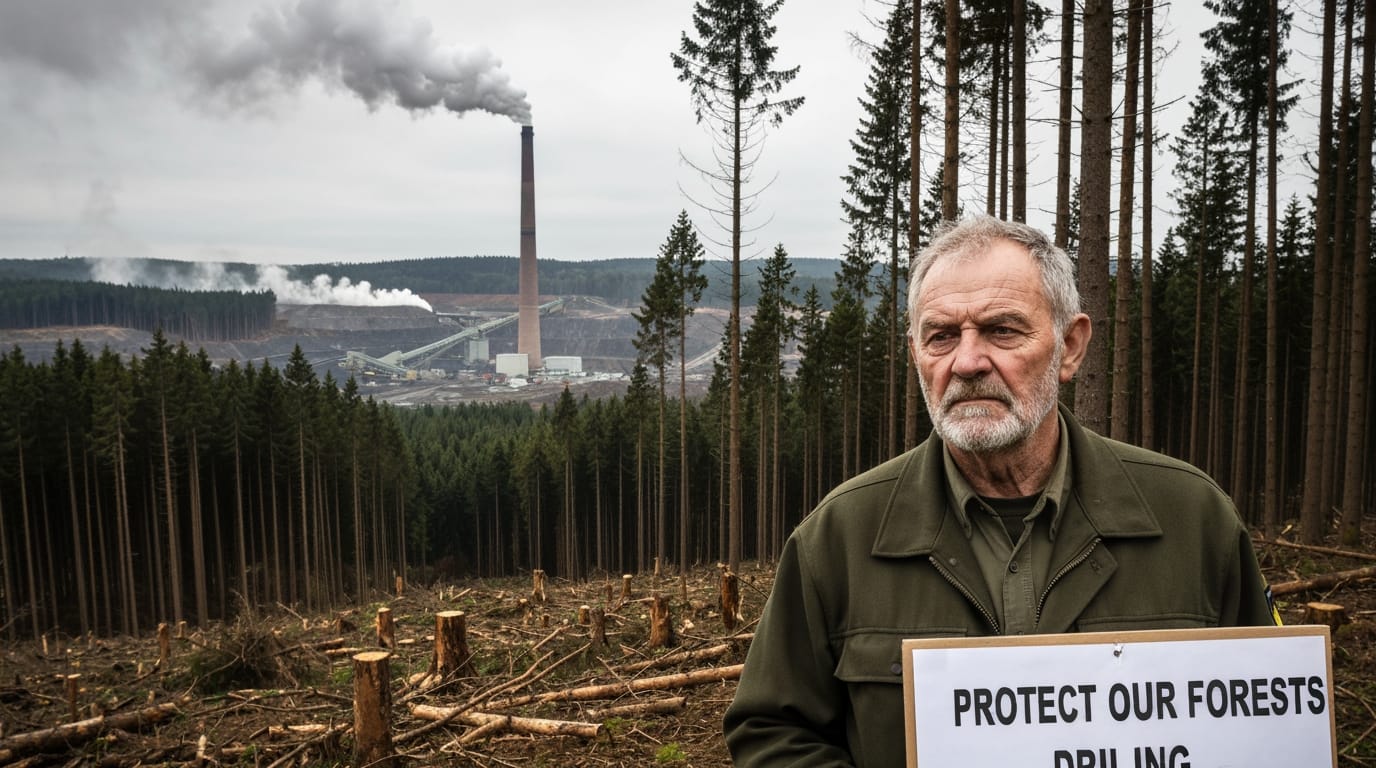
For years, the fate of the Hambach Forest in western Germany became a powerful symbol of the global struggle against fossil fuel extraction. This centuries-old forest, home to diverse flora and fauna including protected bat species, faced obliteration by energy giant RWE for the expansion of a vast lignite (brown coal) mine. However, sustained protests by environmental activists, occupying treehouses and clashing with authorities, brought international attention to the site.
The turning point arrived in 2018 when a German court intervened, issuing a temporary halt to clearing operations. The court sought to determine if the Hambach Forest qualified for protection under European Union environmental rules, specifically citing the presence of protected bat species. This judicial pause, following intense public pressure and legal challenges by environmental groups like Friends of the Earth Germany (BUND), effectively saved the forest from the immediate threat of the excavators.
The preservation of the Hambach Forest dovetailed with Germany's broader strategic shift away from coal. The nation, initially targeting a coal phase-out by 2038, has since accelerated ambitions, particularly in its western states, aiming for an exit as early as 2030. This expedited transition underscores Germany's dedication to its climate goals and renewable energy future. Even amid the recent energy crisis, which saw some lignite plants temporarily kept in operation until 2024 to secure supply, the long-term trajectory remains firmly set on renewables. Beyond its borders, Germany has also pledged to double its support for global forest protection, aiming to contribute €2 billion by 2025 to initiatives designed to halt deforestation worldwide. Domestically, after several years of being a net carbon emitter due to droughts, Germany's forests rebounded in 2025, once again acting as a net carbon sink.
America's Arctic Push: The Willow Project and Expanded Drilling
Across the Atlantic, the United States has pursued a different course, particularly evident in the recent approvals for new oil and gas development. Despite President Joe Biden's campaign pledges to curb new fossil fuel leasing, his administration has approved a substantial number of drilling permits on public lands, reportedly outpacing the previous administration's rate during comparable periods.
A focal point of this expansion is the controversial Willow Project in Alaska's National Petroleum Reserve (NPR-A). Approved in March 2023, the project, led by ConocoPhillips, permits up to three drill sites and 199 wells, with projections of producing up to 180,000 barrels of oil per day at its peak. Located in a sensitive Arctic wetland, Willow has drawn fierce opposition from environmental organizations and some Alaska Native communities who warn of its significant greenhouse gas emissions—estimated at 260 million tons over its lifespan—and severe impacts on local wildlife, including caribou, and the subsistence lifestyles of Indigenous populations. Critics argue that the project undermines President Biden's climate agenda and risks creating a "carbon bomb" in the Arctic.
In a move aimed at balancing these decisions, the Biden administration simultaneously announced intentions to restrict future oil and gas development across nearly 16 million acres in Alaska, including portions of the Arctic Ocean and NPR-A. However, this "compromise" has been viewed by environmental groups as insufficient, contending that the long-term climate damage from projects like Willow outweighs the benefits of new conservation areas.
Further reflecting an ongoing debate over federal land use, recent discussions in June 2026 have centered on proposed changes to federal oil and gas leasing rules. These proposals, which would effectively reverse enhanced accountability measures put in place in 2024, aim to make it easier and cheaper for companies to lease public lands for drilling. This includes lowering minimum federal bond requirements for operators, which were increased in 2024 to ensure companies, rather than taxpayers, cover the costs of well cleanup.
A Tale of Two Energy Transitions
These contrasting approaches underscore fundamental differences in national energy philosophies and political landscapes. Germany's trajectory is deeply influenced by a powerful environmental movement, a strong public consensus for climate action, and a strategic embrace of renewable energy as both an environmental imperative and an economic opportunity. The nation's lignite industry, though historically significant, is being systematically dismantled, with substantial financial support allocated for the transition of mining regions.
In the United States, the picture is more complex. While the Biden administration has committed to ambitious climate goals and invested in clean energy infrastructure, it also navigates pressures related to energy independence, fluctuating global oil prices, and significant domestic demand for fossil fuels. The approval of projects like Willow, despite environmental opposition, reflects a calculus that includes job creation, state revenues, and a perceived legal obligation related to existing leases. The debates surrounding proposed rollbacks to leasing regulations further illustrate the ongoing tension between environmental protection and industry interests on federal lands.
Implications for a Warming World
The divergent paths taken by Germany and the United States carry significant implications for global climate efforts. Germany's pivot away from coal and its robust forest protection initiatives contribute positively to global decarbonization goals and biodiversity preservation. The decision to save Hambach Forest resonated internationally, demonstrating that concerted efforts can halt environmentally destructive projects.
Conversely, the expansion of drilling in the US, particularly in ecologically sensitive areas like the Arctic, raises concerns about exacerbating climate change and undermining international commitments. The substantial greenhouse gas emissions projected from projects like Willow present a challenge to the world's collective ability to limit global warming. While new conservation measures in Alaska provide some counterpoint, the approval of large-scale fossil fuel extraction projects sends a mixed signal to the international community regarding the pace and sincerity of climate action from a leading emitter.
These contrasting narratives from two global powers illustrate the fragmented and often contradictory nature of the world's response to the climate crisis. While one nation takes decisive steps to protect natural carbon sinks and accelerate its exit from fossil fuels, another continues to unlock new reserves, navigating a complex web of economic, political, and environmental pressures. The collective impact of these choices will ultimately determine the trajectory of the global energy transition and the future of a warming planet.