U.S. Rail Renaissance Faces Uphill Battle Against Dominance of Cars and Planes
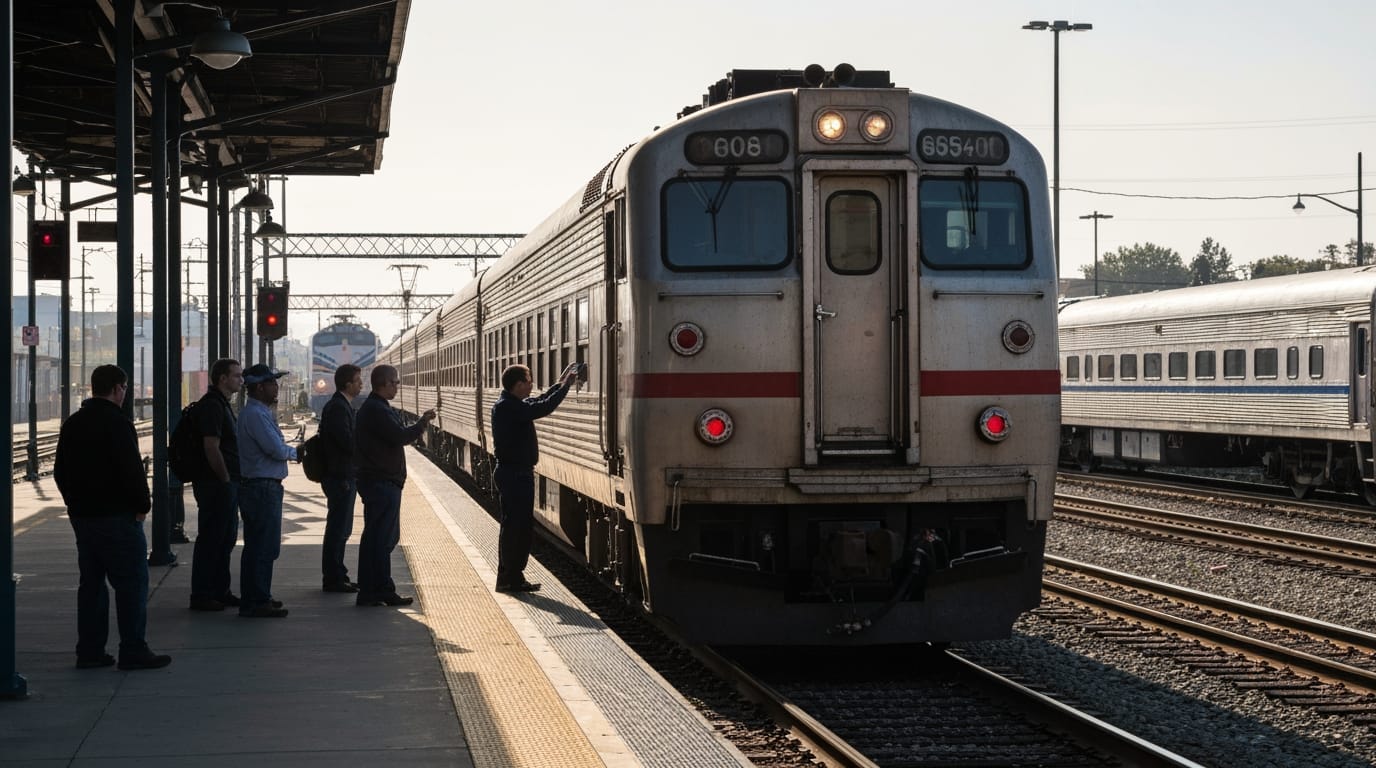
Despite renewed government investment and growing interest, the United States' passenger rail system continues to navigate a challenging landscape, struggling to significantly diminish the deep-seated dominance of automobiles and air travel. While a "Golden Age of American rail" has been proclaimed by some, with billions allocated to modernization and expansion, the sheer scale of car and air travel means rail's footprint remains comparatively small, highlighting persistent hurdles in infrastructure, equipment, and deeply ingrained travel habits.
The Ambition of a Rail Revival
Recent years have seen a significant push to revitalize and expand the nation's rail network. In April 2026, the U.S. Department of Transportation announced a substantial $2.04 billion investment to modernize the rail infrastructure through the Consolidated Rail Infrastructure and Safety Improvements (CRISI) program. This funding aims to upgrade tracks, improve signaling, and enhance safety at road crossings. This initiative is part of an even broader commitment, with an additional $6.7 billion specifically earmarked for the bustling Northeast Corridor, America's busiest passenger rail stretch.
This surge in funding is rooted in the Bipartisan Infrastructure Law (IIJA) of 2021, which represents the largest investment in transportation since the creation of the interstate highway system. The IIJA allocated billions for rail improvements, including $66 billion in advanced appropriations. Since 2017, the CRISI program alone has channeled nearly $6 billion into building safer rail infrastructure.
Amtrak, the nation's primary intercity passenger rail provider, has been a central beneficiary and driver of this renewed interest. Operating across 21,000 miles and connecting over 500 destinations in 46 states, Amtrak reported a record 32.8 million passenger trips in fiscal year 2024, marking a 7% increase in total operating revenue from the previous year. Furthermore, Amtrak saw an 8.3% increase in passenger-miles in 2025 compared to 2019. The Corridor ID program, also introduced under the IIJA, has further propelled future planning, awarding $8.2 billion for projects and identifying 69 corridors for potential new service.
The Overwhelming Shadow of Road and Sky
Despite these promising developments and impressive growth figures for rail, the reality remains that automobiles and air travel overwhelmingly dominate the American transportation landscape. In 2022, personal vehicles accounted for a staggering 86.8% of all trips and 82.8% of person-miles traveled. Looking at more recent data, highway travel registered 4.99 trillion passenger-miles in fiscal year 2024, dwarfing Amtrak's figures by more than 760 times. Domestic air travel, while experiencing its own post-pandemic recovery with a 7.5% increase in 2025 over 2019, still carried 796.6 billion passenger-miles in fiscal year 2024, which is 122 times the volume transported by Amtrak.
To put this disparity into sharper perspective, Amtrak's 6.3 billion passenger miles in 2024 represented a mere 0.8% of the 772 billion domestic passenger miles covered by air travel. This enduring gap underscores the significant challenge rail faces in altering deeply entrenched travel behaviors and market shares.
Deep-Rooted Obstacles to Rail Expansion
The reasons behind rail's persistent struggle to compete with cars and planes are multifaceted, stemming from historical developments, infrastructural limitations, and regulatory complexities. One of the most significant challenges for passenger rail is the prevalent practice of sharing tracks with private freight railroads. Unlike many European and Asian countries where high-speed passenger trains operate on dedicated lines, the shared network in the U.S. frequently leads to passenger train delays and limits scheduling flexibility.
Compounding this is the aging state of much of the existing rail infrastructure, which often requires extensive repair or replacement. Beyond the tracks themselves, the availability of rolling stock presents another bottleneck. The nation faces a shortage of modern trains, exacerbated by an aging fleet, inconsistent access to necessary equipment, and a fragmented procurement system that hinders efficient expansion. This results in many routes being slower and less frequent than what would be competitive with other modes of transport. The U.S. continues to lag behind other developed nations in establishing a comprehensive high-speed rail network.
Financial and political hurdles also play a substantial role. Passenger rail has historically received less funding compared to highways and air travel. Major high-speed rail projects have been plagued by "ballooning costs" and face considerable political opposition, making sustained, long-term development difficult. The fragmented governance structure, with infrastructure ownership and funding distributed across federal, state, and local entities, further complicates coordinated planning and execution, especially when contrasted with the more centralized approaches seen elsewhere. Moreover, the dispersed, suburban nature of much of the American population makes it challenging to justify new rail projects purely on the basis of consistent daily ridership that concentrated urban centers might provide.
The Undeniable Benefits and Future Potential
Despite the uphill climb, the economic and environmental benefits of expanding passenger rail are significant and widely acknowledged. Investing in rail has a powerful economic ripple effect: every $1 billion invested in high-speed rail is estimated to create 24,000 jobs. More broadly, every $1 invested in public transportation is reported to generate $5 in economic returns. These investments can foster regional economic development by improving connectivity, increasing tourism, and providing better mobility for workers and businesses. Amtrak's interconnected services, for instance, are estimated to contribute between $7 billion and $8 billion to the national GDP annually.
From a safety perspective, passenger rail offers a considerably safer alternative to road travel, with a death rate of just 0.03 deaths per 100 million passenger miles, compared to 0.80 deaths for automobiles. Trains are, in fact, 17 times safer than personal cars.
Environmentally, rail is recognized as one of the greenest modes of ground transportation. It plays a crucial role in reducing carbon emissions. The rail sector, while carrying 8% of the world's passengers and 7% of global freight, accounts for only 2% of Earth's total transport energy demand, with three-quarters of passenger rail activity powered by electricity. Increased rail ridership also holds the potential to alleviate road congestion and reduce highway maintenance costs, saving millions.
While freight rail in the U.S. operates as a robust and efficient system, often surpassing its European counterparts, the challenge lies in harmonizing its needs with those of passenger services on shared infrastructure. Freight rail traffic itself saw positive growth in the first 24 weeks of 2026, with cumulative carloads increasing by 3.2% and intermodal units by 3%.
Charting the Course Ahead
The "boom" in U.S. rail is real in terms of investment and burgeoning interest, yet it exists within a stark reality where cars and planes remain the undisputed monarchs of American travel. The current efforts represent a critical juncture for passenger rail, attempting to overcome decades of underinvestment and policy decisions that prioritized other modes of transport. To truly unlock its potential, the nation must confront the structural challenges of shared tracks, upgrade an aging fleet, and develop a more streamlined approach to funding and procurement. As investments continue to flow and demand for more sustainable and efficient travel options grows, the future of U.S. passenger rail will depend on its ability to evolve beyond its current limitations and carve out a more substantial role in the nation's transportation network.