Global Markets Tumble Ahead of Trump's "Liberation Day" Tariffs
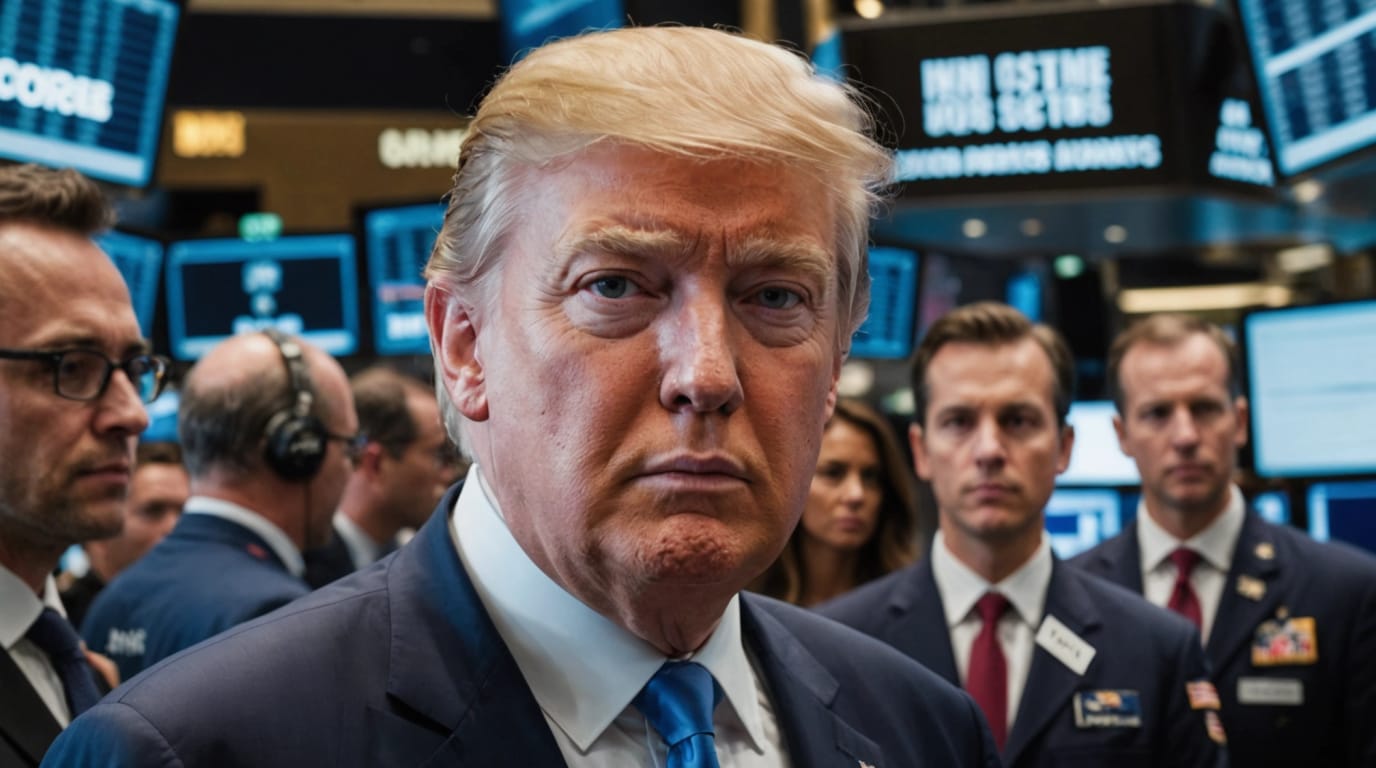
Global stock markets are experiencing a significant downturn as President Donald Trump's self-proclaimed "Liberation Day" approaches, with new tariffs expected to be implemented on Wednesday. From Wall Street to Wellington, New Zealand, investors are expressing concerns that these tariffs will exacerbate inflation and hinder global economic growth.
Market Overview
The S&P 500 in New York fell by 0.6% following a substantial loss on Friday, positioning it for a nearly 6% quarterly loss, potentially the worst in almost three years. The Nasdaq composite also experienced a sharp decline of 1.6%, driven by slides in major tech stocks like Tesla and Nvidia. However, the Dow Jones Industrial Average showed some resilience, edging up by 0.1%.
This downturn mirrors a global sell-off. In Asia, Japan's Nikkei 225 index dropped by 4%, while South Korea's Kospi sank by 3%. European markets also felt the impact, with France's CAC 40 falling by 1.6%. Even New Zealand's NZX 50 experienced a slight dip of 0.1%.
Tariffs and Trade Tensions
The impending tariffs, which Trump says are designed to match trade barriers imposed by other countries on the U.S., are the primary driver of market anxiety. The specific details of these tariffs remain unclear, but Trump has indicated that they are intended to bring more manufacturing jobs back to the United States.
These measures build upon existing tariffs on aluminum, steel, and vehicles, as well as increased levies on goods from China. The potential for "reciprocal" tariffs, where the U.S. imposes equivalent taxes on countries that tax U.S. goods, has further heightened concerns.
Sector Impact
Technology stocks have been particularly hard hit by the market downturn. The Nasdaq-100 plunged 2.4% on Monday morning, with companies like Tesla, Palantir, Nvidia, Amazon, and Alphabet all experiencing significant losses.
The automotive industry is also facing pressure due to the expected tariffs on imported vehicles and car parts. Toyota's stock, for example, fell by 6.8% in Tokyo.
Safe Haven Assets
As stock markets decline, investors are turning to safer investments. Gold prices have risen, briefly exceeding $3,160 per ounce. Prices for Treasury bonds have also climbed, causing their yields to fall. The yield on the 10-year Treasury fell to 4.22% from 4.27% late Friday and from roughly 4.80% in January.
Expert Analysis
Kathleen Brooks, research director at trading platform XTB, noted that the market is experiencing "some capitulation" ahead of the tariff announcement. She highlighted fears about inflation and the potential for tariffs to hurt economic growth. Brooks also pointed out that U.S. assets are being particularly affected, with U.S. stock markets falling more than European markets and the dollar weakening against other major currencies.
Conclusion
The global stock market decline reflects growing uncertainty surrounding President Trump's trade policies. The impending tariffs, dubbed "Liberation Day" by the White House, have sparked fears of increased inflation, slower economic growth, and a potential global recession. While the long-term impact of these policies remains to be seen, investors are bracing for potential economic disruption.


