Global Military Spending Reaches Unprecedented $2.7 Trillion, Fueling Geopolitical Tensions Worldwide
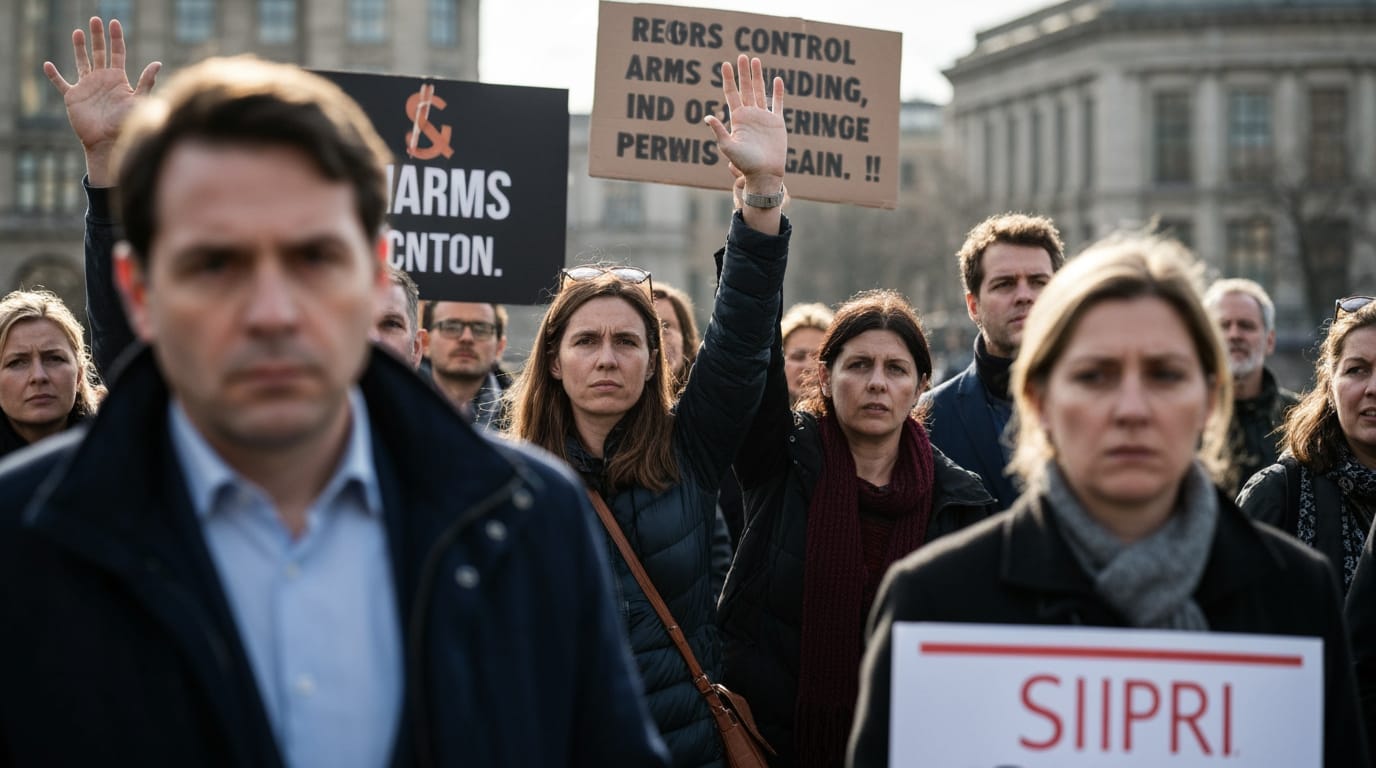
STOCKHOLM — Global military expenditure surged to a record-breaking $2.7 trillion in 2024, marking the tenth consecutive year of increase and the steepest year-on-year rise since at least the end of the Cold War. Data released by the Stockholm International Peace Research Institute (SIPRI) in April 2025 reveals a world grappling with escalating conflicts and heightened geopolitical tensions, with spending climbing across all five geographical regions for the second year in a row. This unprecedented militarization reflects a global landscape where nations are increasingly prioritizing military strength amidst a deteriorating peace and security environment, raising profound questions about the long-term implications for international stability and sustainable development.
A Decade of Escalation: The Global Spending Spree Intensifies
The 9.4 percent real-terms increase in global military expenditure in 2024 pushed the total to its highest level ever recorded by SIPRI. This continuous upward trajectory, representing a 37 percent rise between 2015 and 2024, underscores a significant shift in national priorities toward defense. The world military burden, defined as military spending as a percentage of global gross domestic product (GDP), consequently rose to 2.5 percent in 2024. For countries actively engaged in major or high-intensity armed conflicts, this burden was even more pronounced, averaging 4.4 percent compared to 1.9 percent in non-conflict nations.
The comprehensive nature of this spending surge is particularly striking. For the second consecutive year, all five of SIPRI's defined geographical regions—Europe, Asia and Oceania, the Middle East, the Americas, and Africa—experienced increases in military expenditure. Europe witnessed a substantial 17 percent increase in 2024, reaching $693 billion, largely driven by the ongoing war in Ukraine. Asia and Oceania's military spending, which has risen by 46 percent since 2015, saw its total amount to $629 billion in 2024, with China alone accounting for half of this regional expenditure. The Middle East's estimated military expenditure grew by 15 percent in 2024, while the Americas and Africa also saw increases of 19 percent and 11 percent respectively since 2015. This synchronized global increase highlights a widespread response to perceived and actual security threats.
The Major Powers at the Helm of Rising Budgets
The bulk of this record spending is concentrated among a handful of major global players. The United States, China, Russia, Germany, and India constituted the top five military spenders in 2024, collectively accounting for 60 percent of the world's total.
The United States remained the undisputed leader in military expenditure, allocating an estimated $997 billion in 2024. This figure represents 37 percent of the global total and is 3.2 times greater than that of the next biggest spender, China. American spending has been influenced by geopolitical rivalry and a push for military modernization, particularly in response to an assertive China and global hotspots.
China, with an estimated military budget of $314 billion in 2024, saw a 7.0 percent increase from the previous year. Its sustained military buildup continues to reshape regional security dynamics in the Indo-Pacific, with tensions in the area prompting other nations to increase their own defense spending.
Russia's military spending soared by 38 percent in 2024 to an estimated $149 billion, representing 7.1 percent of its GDP. SIPRI indicates that Russia has fully transitioned into a wartime economic posture, dedicating significant resources to its arms industry to fund new weapon systems for the conflict in Ukraine. Ukraine itself became the eighth largest military spender globally in 2024, with its expenditure increasing to $64.7 billion, a staggering 34 percent of its GDP, as it continued to defend against invasion.
Elsewhere, Germany entered the top five spenders in 2024, reflecting a broader trend among European NATO members to significantly increase their military budgets. India secured the fifth spot, with its military expenditure growing by 1.6 percent to $86.1 billion. In the Middle East, Israel's military spending increased by 65 percent in 2024, primarily driven by its large-scale offensive in Gaza.
NATO member states collectively reached $1506 billion in military spending in 2024, accounting for 55 percent of global spending. Significantly, 18 of the 32 NATO members met or surpassed the alliance's target of dedicating 2 percent of GDP to defense, a considerable rise from just 11 countries in 2023 and three in 2014.
The Far-Reaching Implications and the Cost of Conflict
This persistent surge in military expenditure carries profound and often detrimental implications, extending beyond immediate security concerns to impact global peace, sustainable development, and economic stability. United Nations Secretary-General António Guterres, in his report "The Security We Need: Rebalancing Military Spending for a Sustainable and Peaceful Future," warned that increasing military spending does not guarantee peace but rather fuels arms races, deepens mistrust among nations, and destabilizes international relations.
The diversion of such vast resources to military uses directly impacts progress towards the Sustainable Development Goals (SDGs), the world's blueprint for a more equitable future. For instance, a one percent increase in military spending in low- and middle-income countries has been linked to an almost equal reduction in public health services, potentially jeopardizing critical health programs. The opportunity cost of this spending is immense: a billion dollars invested in the military creates significantly fewer jobs than the same amount in education or healthcare. Studies suggest that reinvesting just 15 percent of global military spending could be sufficient to cover the annual costs of climate change adaptation in developing countries.
Economically, the International Monetary Fund (IMF) has noted that while defense spending booms might offer short-term growth, they often lead to increased fiscal deficits, public debt, and greater import dependence. Two-thirds of these spending surges are financed through higher deficits, resulting in an average debt increase of 7 percentage points within three years. Furthermore, the arms industry has directly benefited from this global instability, with the world's top 100 defense companies reporting record revenues of $679 billion in 2024.
A Call for Re-evaluation Amidst a Volatile World
The continuous rise in global military spending paints a stark picture of a world increasingly reliant on military solutions to complex challenges. While driven by legitimate security concerns in many instances, particularly in regions afflicted by conflict, this trajectory also risks creating a dangerous feedback loop, where heightened tensions lead to increased spending, which in turn can further destabilize international relations.
As world leaders confront a volatile security landscape, the call for a re-evaluation of priorities grows louder. The stark trade-offs between military expenditures and investments in critical areas like diplomacy, sustainable development, and public welfare necessitate a more human-centered and multidimensional approach to security. Without a concerted effort to address the underlying causes of conflict and foster genuine cooperation, the world risks perpetuating a cycle of militarization that diverts precious resources from building a more peaceful and sustainable future.


