Iran War Deadline Ignites Fierce Trump-Congress Showdown
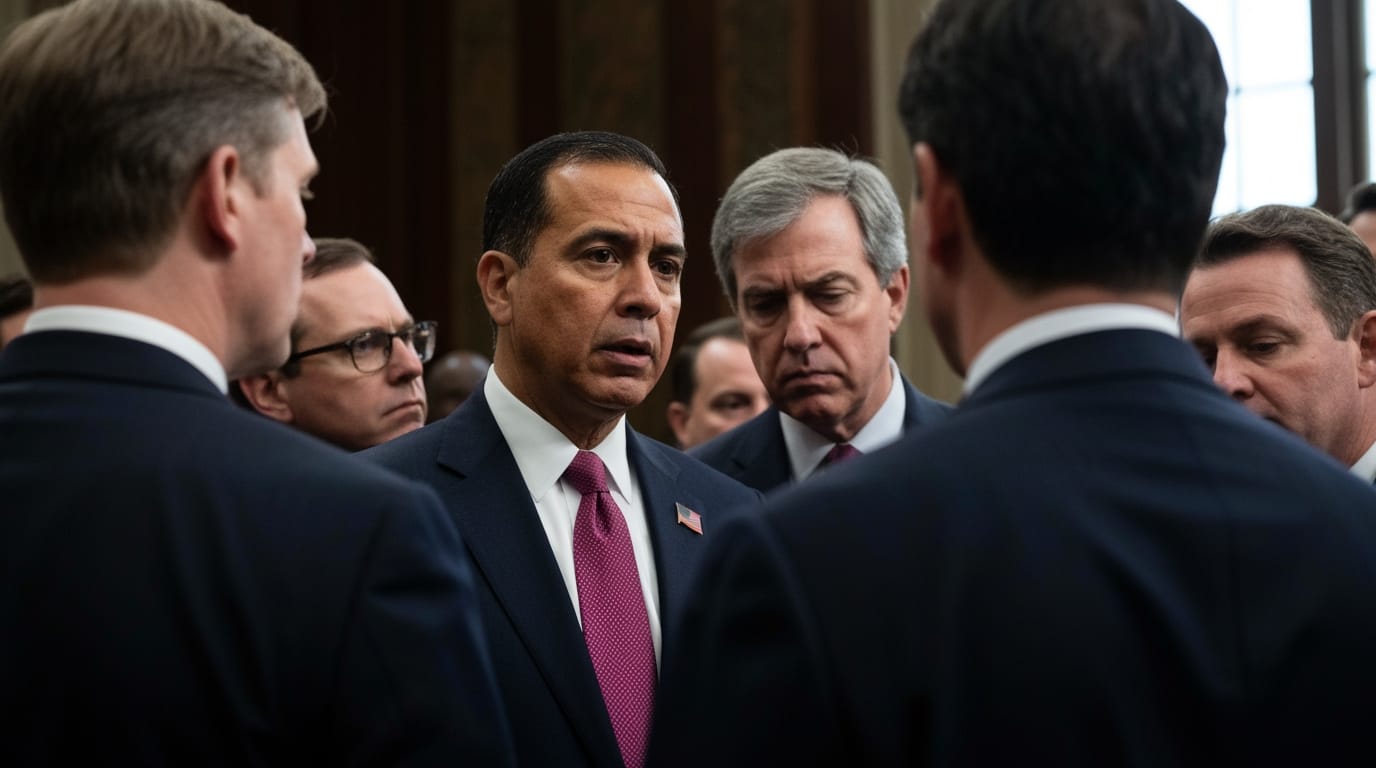
Washington, D.C. – A looming May 1 deadline for U.S. military action in Iran has precipitated a profound constitutional clash between President Donald Trump and a divided Congress, amplifying tensions over the executive's war powers. As "Operation Epic Fury," a joint U.S.-Israeli military campaign against Iranian targets, approaches its 60-day mark without explicit congressional authorization, lawmakers are scrambling to assert their oversight, setting the stage for a critical legal and political showdown in the nation's capital. The impasse highlights fundamental questions about the balance of power in declaring and sustaining military engagements.
Operation Epic Fury: Objectives and Escalation
The current military actions against Iran, dubbed "Operation Epic Fury," commenced on February 28, 2026, with U.S. and Israeli forces launching strikes against Iranian targets. The Trump administration has articulated clear objectives for the campaign, primarily aimed at degrading Iran's nuclear program, dismantling its missile capabilities, annihilating its navy, and severing its support for regional proxy forces. President Trump has consistently stated his resolve to prevent Iran from obtaining nuclear weapons, framing the operations as necessary to protect U.S. bases and advance national interests.
This military engagement follows a period of escalating tensions between Washington and Tehran, marked by the Trump administration's "maximum pressure" campaign initiated during his first term, which included withdrawing from the 2015 Iran nuclear deal (JCPOA) and imposing extensive sanctions on Iran's economy. While a temporary ceasefire has been announced and extended, tensions remain acutely high, particularly concerning the critical Strait of Hormuz, a vital global energy corridor. President Trump has issued stark warnings, threatening to resume attacks and "obliterate" Iranian power plants if his demands are not met. His administration formally notified Congress of the military action on March 2, initiating a 60-day countdown under federal law.
The War Powers Resolution: A Constitutional Flashpoint
At the heart of the current dispute is the 1973 War Powers Resolution, a post-Vietnam era law designed to curb a president's ability to wage prolonged military campaigns without congressional consent. This resolution mandates that a president must terminate military operations after 60 days unless Congress either declares war or passes a specific authorization for the use of military force. A provision allows for a one-time 30-day extension, but solely for the safe withdrawal of forces, not for continuing combat operations.
With the 60-day clock ticking since the formal notification to Congress on March 2, the deadline for congressional action or presidential decision falls between April 29 and May 1, 2026. This impending date has transformed into a critical inflection point, forcing both the executive and legislative branches to confront their constitutional responsibilities regarding military conflict. While previous administrations have often challenged or circumvented the War Powers Resolution, its timelines are now converging with the realities of an active and potentially expanding conflict.
Congress's Stalled Efforts to Reassert Authority
In response to the U.S. military strikes, members of Congress, primarily Democrats but including some Republicans, have repeatedly attempted to invoke the War Powers Resolution to restrain President Trump's authority. Since the beginning of "Operation Epic Fury," at least five separate War Powers Resolutions have been brought to a vote in the Senate, all of which have failed. The most recent Senate vote, on April 22, saw a resolution defeated 46-51, with Senator Rand Paul of Kentucky being the sole Republican to vote in favor of limiting presidential powers, while Democratic Senator John Fetterman of Pennsylvania sided with Republicans.
Similarly, the House of Representatives has also seen efforts to restrict the president's war powers falter. On April 16, a resolution aimed at preventing further military action against Iran narrowly failed in the House by a vote of 213-214. These votes largely reflect a partisan divide, with most Republicans continuing to back the president's strategy, despite growing discontent among some within the party. Critics in Congress, such as Senator Tim Kaine (D-Va.) and Representative Ro Khanna (D-Calif.), have vociferously argued that the Constitution grants Congress the sole power to declare war and have warned against the dangers of an unauthorized, open-ended conflict. They emphasize the need for congressional approval to legitimize and strategically guide any long-term military engagement.
The Impending Decision and its Far-Reaching Implications
As the May 1 deadline approaches, President Trump faces several critical choices. He could seek explicit congressional authorization for continued military action, request a 30-day extension to facilitate troop withdrawal, or potentially adopt an expansive interpretation of his authority as Commander-in-Chief and continue operations without explicit legislative approval. The White House has maintained that the administration's objectives are clear and that military operations are systematically dismantling Iran's ability to threaten the U.S. and its allies. However, the legal and political ramifications of bypassing Congress are significant.
The political pressure on Republicans to either support or challenge the president is intensifying. While the bulk of Republican senators have thus far aligned with the administration, a growing number have indicated they might reconsider their stance if the conflict continues past the 60-day mark without congressional approval. Senator John Curtis (R-Utah), for instance, has stated he would not support "ongoing military action beyond a 60-day window without congressional approval." Democrats, led by Senate Minority Leader Chuck Schumer, have vowed to force weekly votes on war powers resolutions until more Republicans break ranks, arguing that continuing the war without congressional consent would further entangle the U.S. in a costly conflict.
Conclusion: A Defining Moment for War Powers
The looming May 1 deadline represents more than just a procedural benchmark; it is a defining moment for American foreign policy and the separation of powers. The ongoing struggle between the executive and legislative branches over the Iran conflict will inevitably shape the future of U.S. engagement in the Middle East and redefine the scope of presidential authority in initiating and sustaining military operations. As Washington holds its breath, the outcome of this showdown will determine not only the trajectory of the confrontation with Iran but also the delicate balance of war powers that has long been a cornerstone of American democracy.


