Global Powers Rally Against Resurgent Ebola Threat in DRC and Uganda
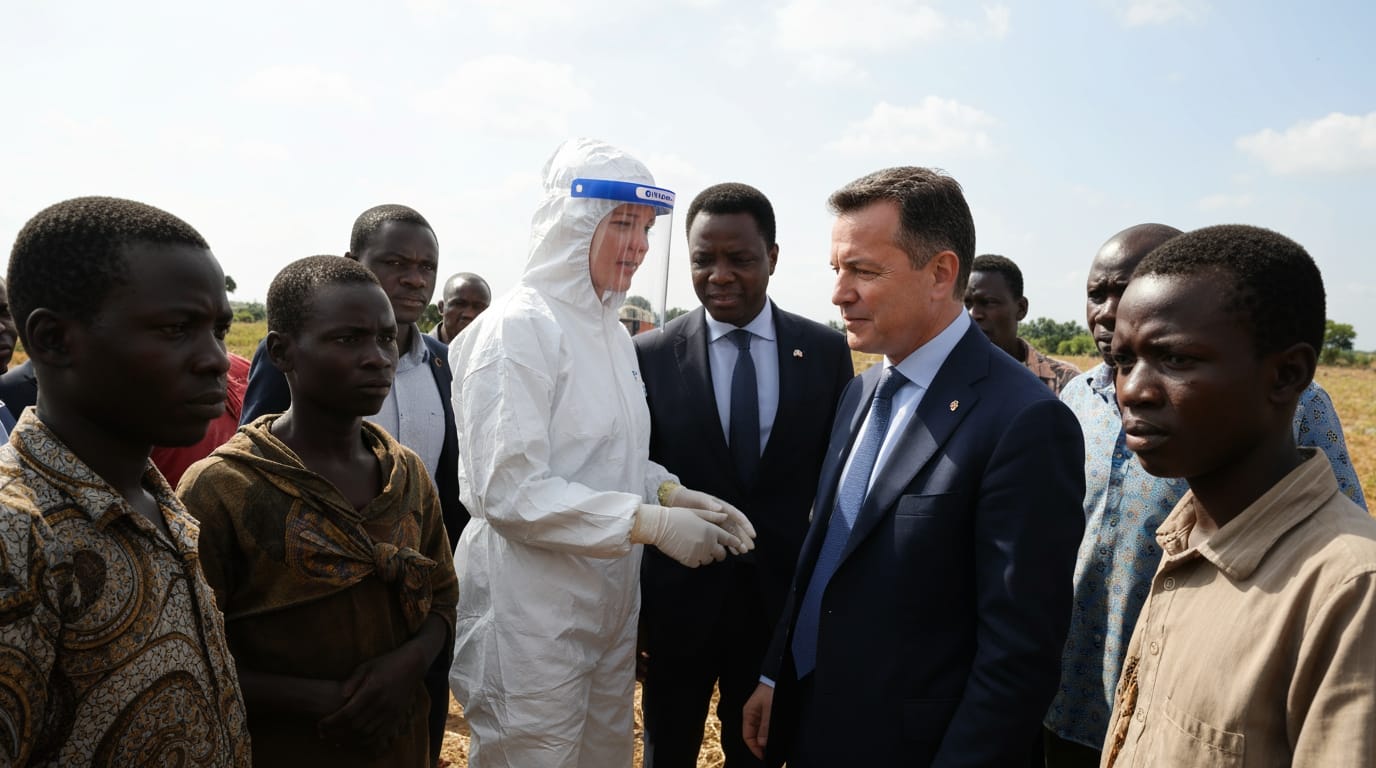
EVIAN, FRANCE – JUNE 17, 2026 – The international community has mobilized a significant, coordinated response to a rapidly escalating Ebola outbreak in the Democratic Republic of Congo (DRC) and neighboring Uganda, marked by substantial financial pledges and logistical support from the European Union and G7 nations. As the highly virulent Bundibugyo strain spreads through conflict-affected regions, global leaders are underscoring the urgent need for unified action to prevent a wider humanitarian catastrophe.
A New Battle Against an Evolving Threat
The latest Ebola outbreak, which began in May 2026, originated in the Ituri Province of the Democratic Republic of Congo, quickly spreading to North Kivu, South Kivu, and across the border into Uganda. This marks the DRC's 17th such epidemic, emerging just five months after the conclusion of a previous outbreak. The World Health Organization (WHO) declared the situation a Public Health Emergency of International Concern (PHEIC) on May 16, 2026, signaling the serious cross-border risk and the potential for wider international transmission.
A critical concern in this current crisis is the identification of the Bundibugyo ebolavirus strain. This particular strain presents a significant challenge because existing vaccines and treatments, largely developed for the more common Zaire strain, are not fully effective against it. As of June 10, 2026, the DRC reported 321 revised confirmed cases and 48 deaths, with additional confirmed cases in Uganda. However, humanitarian organizations like Médecins Sans Frontières (MSF) and the International Rescue Committee (IRC) have warned that the official figures likely underestimate the true scale of the outbreak due to difficulties in detection and reporting in the affected areas.
European Union Mobilizes Extensive Aid
The European Union has moved swiftly to provide critical humanitarian assistance and reinforce preparedness efforts in the affected regions. Initially, the European Commission allocated an additional €15 million in humanitarian funding to support the response in the DRC and Uganda in May 2026. This commitment has since been augmented, with Commissioner for Preparedness and Crisis Management, Hadja Lahbib, announcing a further €16.5 million in additional EU support, bringing the total for emergency humanitarian aid in the Great Lakes Region and Uganda to over €115 million for 2026.
A crucial component of the EU's response is the "EU Humanitarian Air Bridge" operation, organized in collaboration with UNICEF. This initiative has already transported nearly 100 tonnes of vital supplies to eastern DRC, including medicines, protective equipment, infection-control materials, and tents for frontline teams, with five more flights planned to further bolster aid delivery. Beyond immediate relief, the EU has also invested significantly in long-term solutions, channeling €73.7 million into the Coalition for Epidemic Preparedness Innovations (CEPI) to advance research for health emergencies, including broadly protective filovirus vaccines. An additional €7.4 million has been allocated to support clinical trial readiness for vaccines and treatments. This comprehensive approach reflects the EU's understanding that health threats transcend borders, necessitating robust preparedness and a coordinated international response.
G7 Unifies Global Response Efforts
At their summit in Evian, France, G7 leaders issued a unified call for a strong and coordinated global response to address the health security risks posed by the re-emerging Ebola outbreak. Recognizing the severity of the situation, particularly with the Bundibugyo strain, the G7 pledged to mobilize $518 million as part of a Continental Preparedness and Response Plan aimed at supporting African nations in preparing for, detecting, and responding to the outbreak. The G7 leaders highlighted that their member countries have already contributed over two-thirds of the funding raised this year for the response.
Individual G7 nations have also made substantial commitments. The United States, for instance, has rapidly deployed over $370 million in health and humanitarian resources to the region, with an additional commitment of up to $500 million specifically for Ebola response efforts. Furthermore, the U.S. has provided $650 million in broader humanitarian support for the Great Lakes region. The G7 emphasized the critical importance of strengthening coordination among national authorities, implementing effective contact tracing, infection prevention and control, quarantine, and border surveillance procedures. Leaders stressed the need for rapid deployment of vaccines, therapeutics, and technical expertise, alongside robust disease surveillance and cross-border collaboration to contain the virus. They also committed to facilitating the development and effective delivery of dedicated vaccines, diagnostics, and treatments tailored to combat this specific outbreak in the coming months. To galvanize broader support, the G7 called on countries outside the group to dedicate resources to tackling this global threat and announced that the United States would convene a G20 Foreign Ministers' meeting to discuss further collective action and secure additional financial backing.
Navigating a Labyrinth of Challenges
The current Ebola outbreak unfolds in an extremely challenging environment, compounding the difficulties of containment and response. The epicenter of the outbreak is situated in isolated, conflict-affected areas in eastern DRC, where ongoing armed conflict complicates medical access, logistical operations, and the implementation of public health measures. Insecurity not only endangers healthcare workers but also fosters community mistrust, leading to resistance against response efforts and making crucial activities like contact tracing and safe burials difficult.
Poor healthcare infrastructure, marked by limited access to personal protective equipment (PPE) and weak infection-control capacity, further jeopardizes the lives of frontline health workers. The International Rescue Committee, which has been responding to Ebola in the DRC since 2018, highlighted that the outbreak is occurring in a region already grappling with collapsing health services, widespread hunger, and mass displacement, pushing millions to the brink of humanitarian catastrophe. Reports from organizations like MSF indicate that response efforts are being outpaced by the spread of the disease, with significant gaps persisting in surveillance, diagnosis, contact tracing, and community engagement. The fact that existing medical countermeasures are not fully effective against the Bundibugyo strain adds another layer of complexity, demanding accelerated research and development.
A Race Against Time and Disease
The renewed Ebola outbreak in the Democratic Republic of Congo and Uganda represents a critical public health challenge, demanding unwavering international resolve and sustained cooperation. The concerted efforts of the European Union and G7 nations, marked by substantial financial commitments, emergency aid, and a focus on research and development for targeted countermeasures, reflect a recognition of the severe risks posed by this particular strain and the complex humanitarian context. While immediate funding and logistical support are crucial for containment, the long-term success of the response will hinge on overcoming deep-seated challenges such as insecurity, community mistrust, and inadequate health infrastructure. The international community, through organizations like WHO, UNICEF, MSF, and IRC, along with national governments, must continue to prioritize comprehensive strategies that integrate public health interventions with broader humanitarian aid and peacebuilding efforts. The ongoing spread of the Bundibugyo strain underscores that the fight against Ebola is a continuous race against time, requiring constant vigilance, adaptability, and a shared commitment to global health security.


