Global Semiconductor Industry Faces Critical Helium Shortage Amid Iran War Escalation
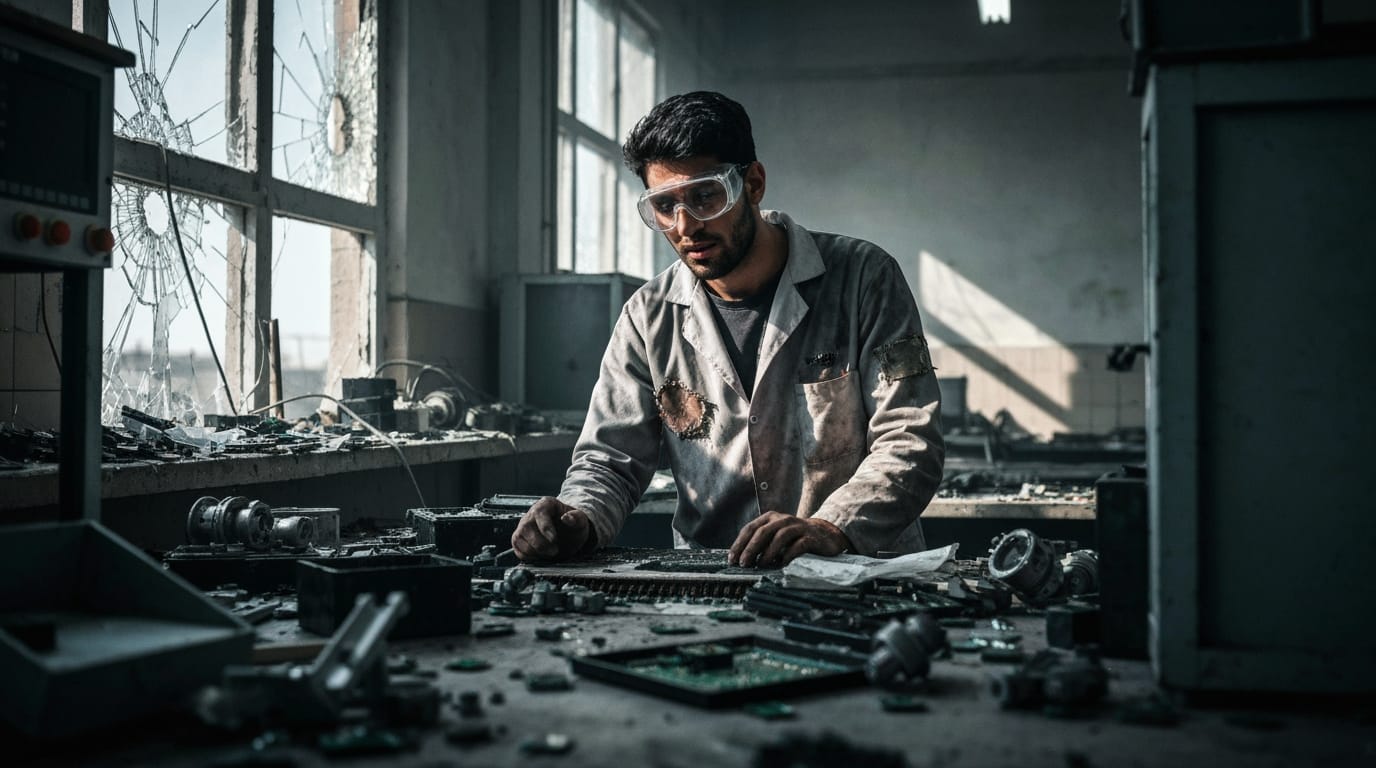
DUBAI, UAE – A burgeoning geopolitical crisis in the Middle East has ignited a severe disruption in the global helium supply, sending ripples of concern through the semiconductor industry and threatening the production of the advanced microchips vital to modern technology. Iranian drone strikes on Qatar's Ras Laffan Industrial City, a pivotal hub for liquefied natural gas (LNG) production, forced an abrupt halt to operations on March 2, 2026, triggering an immediate and significant contraction in the world's helium supply. As helium is a critical, non-substitutable component in the fabrication of cutting-edge semiconductors, the ongoing conflict is poised to escalate into a profound challenge for an already strained global tech supply chain.
The Invisible Crisis Takes Hold: Qatar's Pivotal Role
The cessation of operations at Qatar's Ras Laffan facility, which is among the world's largest LNG plants, has directly impacted global helium availability. Qatar stands as the world's second-largest helium producer, historically contributing approximately one-third of the global supply. Helium is not typically mined independently but rather extracted as a byproduct during the processing of natural gas, particularly LNG. Therefore, when the Iranian strikes compelled the shutdown of LNG production at Ras Laffan, the world's helium output simultaneously plummeted.
This abrupt halt has removed an estimated 5.2 million cubic meters of helium from the market each month, triggering immediate shortages and significantly tightening a market already vulnerable to supply shocks. Compounding the issue, the Strait of Hormuz, a crucial chokepoint for global energy shipments, has been effectively shut, further impeding the transportation of any available helium. Experts indicate that even if the conflict were to cease immediately, restoring helium deliveries to normal levels could take weeks to several months due to the complex logistics of restarting production and clearing shipping backlogs. The unique properties of helium, which cause it to evaporate if not used within approximately 45 days, mean that long-term stockpiling is impractical, leaving little spare capacity to absorb such a sudden disruption. Consequently, spot helium prices have already reportedly doubled since the conflict began, with some market segments witnessing weekly price increases of 35 to 50 percent.
Helium's Indispensable Role in Microchip Manufacturing
While often associated with party balloons, helium plays a far more critical, albeit less visible, role in high-tech industries, particularly in the manufacturing of semiconductors. The gas is an indispensable element in multiple stages of chip fabrication, especially for advanced nodes (5 nanometers and below) that power everything from artificial intelligence infrastructure to smartphones.
Helium's exceptional cooling capabilities are paramount in semiconductor production. It is used to rapidly cool silicon wafers during etching and lithography processes, which are vital for creating the intricate circuitry on microchips. Maintaining stable thermal and vacuum conditions within advanced fabrication equipment is crucial for precision, and helium's inertness and high thermal conductivity make it uniquely suited for this task. It also plays a key role in cooling the backside of wafers and is widely employed for leak detection in complex process tools and gas pipelines within fabrication plants. Industry bodies consistently warn that even minor disruptions to helium supply, lasting just a few days, can lead to a slowdown or complete halt in semiconductor production, largely because there is no viable substitute for helium at the scale required for advanced chip manufacturing.
Global Supply Chain Vulnerabilities and Economic Ripple Effects
The impact of this helium shortage is particularly acute for Asian chipmakers, who are heavily reliant on imports from Qatar. South Korea and Taiwan, home to industry giants like Samsung, SK Hynix, and Taiwan Semiconductor Manufacturing Company (TSMC), appear most vulnerable, having imported approximately 64.7 percent of their helium from Qatar in 2025. While major chip manufacturers have indicated that current operations remain normal due to existing inventories and manageable supply, the medium-term outlook presents significant risks if the disruption persists. Asian chipmakers reportedly have a buffer of about three months before a deficit of the gas begins to severely impact their operations.
This current situation echoes the 2022 helium and neon shortage triggered by the conflict in Ukraine, but analysts suggest the scale and scope of this Middle East-driven supply chain hiccup could be even more far-reaching. Although the cost of helium typically represents a small fraction (around 0.5% to 1%) of overall semiconductor production costs, making chipmakers relatively immune to modest price spikes, the operational risk of a sustained shortage is far more critical. A prolonged lack of helium could force chipmakers to prioritize the production of higher-margin components, such as advanced AI chips, over less profitable ones, potentially exacerbating the memory chip crunch and impacting a wider array of electronic devices.
Geopolitical Tensions and the Future of Critical Materials
The helium shortage underscores a growing vulnerability in global supply chains: the increasing susceptibility of critical raw materials to geopolitical events. Helium is just one of many essential materials, from rare earths to specialty gases, whose supply chains are concentrated in a few geographic locations and are therefore prone to disruption from regional conflicts or political instability.
The United States remains the world's largest helium producer, alongside other significant contributors like Russia and Algeria. However, the global market's reliance on Qatar highlights the interconnectedness and fragility inherent in modern manufacturing. This incident is prompting renewed calls for greater diversification of supply sources and increased investment in helium recycling and reclamation technologies within fabrication plants. Some companies, particularly in regions like Japan, have already diversified their helium sources, sourcing from the U.S. and maintaining strategic stockpiles. The need to treat helium not merely as a consumable but as a strategic industrial input is gaining traction, with an emphasis on building resilience against future shocks.
The ongoing conflict in the Middle East serves as a stark reminder that the stability of global technological advancement is intricately linked to complex geopolitical dynamics. What may seem like an abstract conflict far removed from daily life has very tangible consequences for the foundational components of the digital world. The helium shortage, triggered by the war, poses a significant test for the semiconductor industry's resilience and capacity for innovation in securing its critical material supply lines. The world watches as the ramifications of this invisible crisis unfold, potentially reshaping the landscape of global tech production for years to come.