Gold's Golden Ascent: A Sustainable Rally or a Bubble on the Brink?
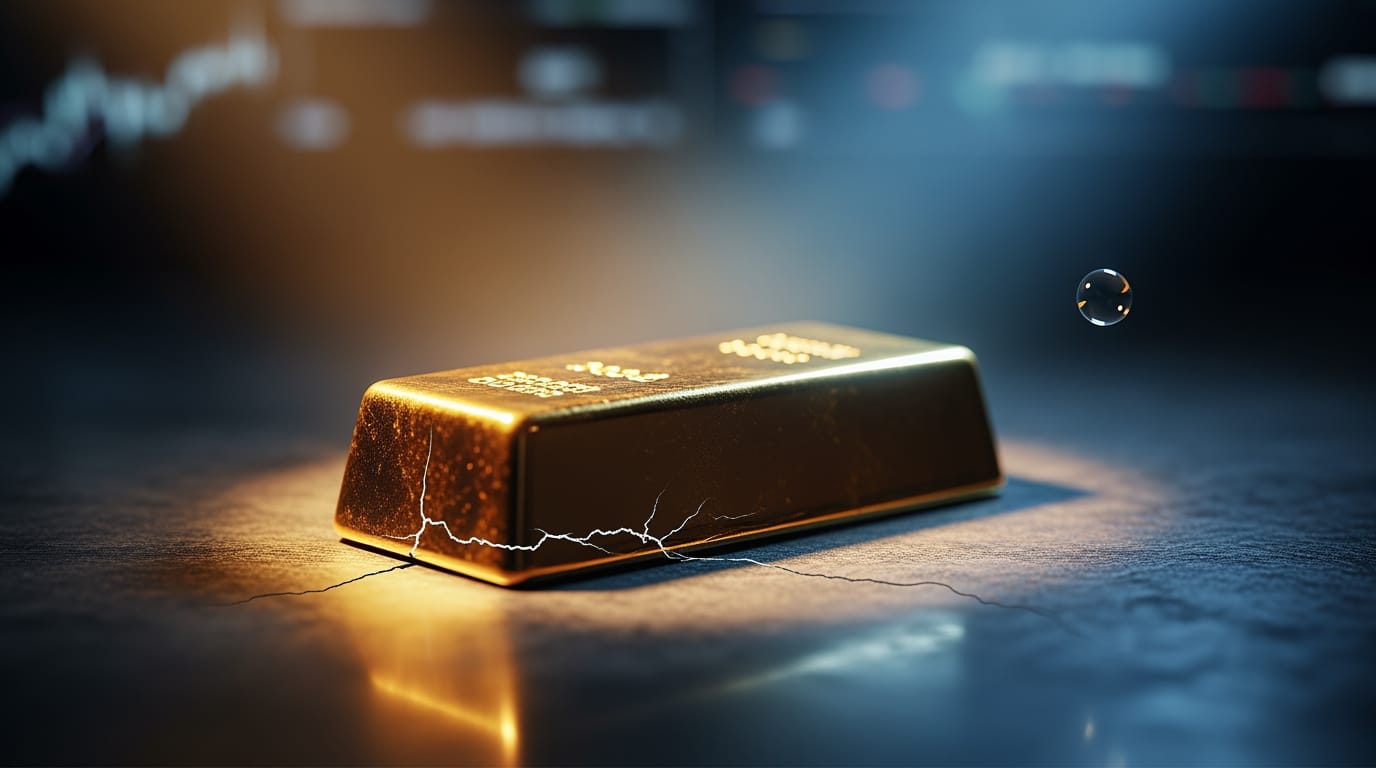
Gold prices have experienced an extraordinary surge over the past two years, repeatedly breaking historical records and capturing the attention of investors worldwide. As the precious metal continues its upward trajectory, reaching unprecedented levels, a crucial question emerges: Is this a sustainable rally driven by fundamental shifts in the global economy, or are investors witnessing the inflation of a speculative bubble poised to burst? The debate among financial analysts and economists is vigorous, with compelling arguments on both sides defining the complex landscape of the current gold market.
The Unprecedented Surge and Its Immediate Catalysts
The current gold rally marks a significant period in the metal's history, defying traditional economic correlations and setting new benchmarks. In 2024, gold prices surpassed the $2,900 per ounce mark for the first time in February and peaked at $3,500 per ounce in April. This momentum carried into 2025, with gold rising to $4,220.73 per troy ounce as of December 5, 2025, reflecting a 60.28% increase over the preceding year. The metal even hit an all-time high of $4,381.58 in October 2025. Several immediate factors have fueled this remarkable ascent.
Geopolitical instability stands out as a primary driver. Heightened geopolitical risks, including U.S. tariffs, unpredictable trade policies, and global conflicts, have pushed investors towards gold's traditional safe-haven status. Economic uncertainty, characterized by recession probabilities, ongoing inflation concerns, and the need for a "debasement hedge" against currency devaluation, further amplified gold's appeal. While a weaker U.S. dollar typically enhances gold's attractiveness to non-dollar holders, the recent rally has seen both the dollar and gold strengthening in tandem at times, indicating a broader systemic shift. Moreover, investor expectations regarding central bank monetary policy, particularly the anticipation of Federal Reserve interest rate cuts, have played a significant role, making non-yielding gold more appealing compared to other assets.
The Enduring Pillars: Central Banks and Investor Demand
Beyond immediate market reactions, underlying structural demand from central banks and diverse investor segments provides a robust foundation for the gold market. Central banks globally have been consistent and significant buyers of gold, with purchases projected to reach around 900 tonnes in 2025. This trend is largely driven by a strategic move to diversify away from U.S. dollar reserve holdings, influenced by concerns over the stability of the U.S. dollar and evolving geopolitical alliances. This diversification strategy has seen global central bank gold holdings increase to nearly 36,200 tonnes, accounting for almost 20% of official reserves, up from approximately 15% at the end of 2023.
Investor demand has also been robust, particularly through exchange-traded funds (ETFs) and other investment vehicles. Gold is increasingly viewed as an optimal hedge against a combination of inflation, growth risks, and policy uncertainties. The metal's low correlation with other asset classes positions it as a reliable store of value and an insurance policy during market downturns. Interestingly, younger demographics are also contributing to this demand, turning to gold as an investment amidst a lackluster performance in traditional assets like real estate and stocks in some regions. This layered demand, from institutional players to individual investors, reinforces gold's role not just as a commodity but as a critical financial asset in uncertain times.
Is It a Bubble? The Debate Unfolds
Despite the strong fundamentals, the rapid and substantial increase in gold prices has inevitably sparked debate about whether the market is entering bubble territory. Proponents of the "bubble" theory point to several indicators. Nicky Shiels, head of Precious Metals Investment Strategy at MKS PAMP Group, suggests the gold market is "overheated" and has become a target for speculation, similar to the run-up in U.S. and AI stocks. Rapid, sharp price increases over short periods are often considered a classic warning sign of a bubble. Furthermore, some analysts argue that the current surge cannot be entirely justified by conventional drivers alone and has broken traditional correlations, such as gold's inverse relationship with real bond yields, implying an overextension beyond its "fair value." Speculative positioning in gold futures markets has also reached crowded levels, reminiscent of past market peaks. Amit Goel of Pace360 has even characterized the current rally as a "reflationary bubble," predicting a significant correction of up to 35% from its peak.
Conversely, many experts argue against the bubble narrative, asserting that the rally is grounded in enduring macroeconomic and geopolitical realities. J.P. Morgan Research maintains a "structural bull case" for gold, citing persistent recession probabilities and ongoing trade and tariff risks. They, along with Sprott Asset Management, believe the current gold cycle is still in its early phases, driven by long-term, systemic factors such as high national debt, expansive fiscal policies, and structural economic deficits. The ongoing efforts by central banks to diversify away from the U.S. dollar represent a sustained, fundamental demand, not mere speculation. Gold's inherent scarcity and role as a hedge against inflation and a tangible store of value continue to make it an attractive asset, especially when confidence in fiat currencies and traditional financial systems wanes. This perspective suggests that the current price appreciation is a rational response to an increasingly complex and uncertain global economic environment, rather than an irrational exuberance.
Historical Parallels and Potential Outcomes
To better understand the current landscape, it is useful to examine historical gold price movements, particularly past crashes. Gold has experienced significant fluctuations and downturns throughout history. The 1980 gold price collapse, for instance, saw prices plummet after peaking at $850 per ounce, largely due to high interest rates implemented by the U.S. Federal Reserve to combat inflation, coupled with market speculation and the stabilization of geopolitical tensions. Similarly, the early 1990s witnessed a decline driven by global economic recovery and a strong U.S. dollar, while the 1997-1999 Asian Financial Crisis contributed to a dip through asset liquidations and central bank gold sales. More recently, gold prices saw a significant drop in 2013, influenced by the tapering of quantitative easing by the Federal Reserve, which signaled a return to more normalized monetary policy.
If the current gold rally were to prove to be a bubble and subsequently burst, the consequences could be substantial. Such an event could lead to significant financial losses for investors who bought at the peak, erode household wealth, and potentially destabilize local and global markets, particularly in economies with substantial gold reserves. Furthermore, a sharp decline could undermine public trust in financial institutions and even the concept of financial stability itself. However, history also suggests that such downturns can create opportunities, allowing investors with liquidity to acquire gold at significantly reduced prices and potentially reorient investments toward more productive sectors once the market recalibrates.
Looking Ahead: Forecasts and Strategic Allocations
Looking ahead, most financial institutions and analysts anticipate continued strength in gold prices, although with varying degrees of optimism. J.P. Morgan Research projects gold to average $3,675 per ounce by the fourth quarter of 2025, potentially rising to $4,000 per ounce by the second quarter of 2026. Deutsche Bank has increased its 2026 forecast to $4,450 per ounce, expecting a trading range of $3,950–$4,950. Ventura is even more bullish, forecasting prices between $4,600 and $4,800 for 2026, driven by sustained central bank buying, persistent inflation, and U.S. economic concerns. A Goldman Sachs survey in November 2025 revealed that 36% of institutional investors believe gold could reach $5,000 per ounce by the end of 2026.
In light of this outlook, financial advisors are increasingly recommending a strategic allocation to gold within diversified portfolios. HDFC Securities, for example, suggests investors allocate 5-10% of their portfolios to precious metals like gold and silver, emphasizing gold's ability to hedge against geopolitical conflict, market volatility, and deteriorating fiscal conditions. The underlying "positive structural backdrop" for gold, marked by continued strong investor and central bank demand, is expected to support a sustained rally, even amid short-term fluctuations.
Conclusion
The gold market is currently navigating a complex confluence of forces, from geopolitical tensions and economic uncertainties to robust central bank accumulation and increasing investor demand. While some voices caution that the rapid price appreciation exhibits characteristics of an "overheated" market or a potential bubble, many analysts point to fundamental, long-term drivers that suggest a more sustainable, structural bull run. Gold's enduring role as a safe haven and a hedge against inflation continues to make it an attractive asset in an unpredictable global landscape. As the yellow metal enters 2026, the question remains not just whether its price will continue to climb, but also how investors will balance the allure of its recent performance with the historical lessons of market exuberance. Ultimately, while the path ahead may involve volatility, the consensus leans towards continued appreciation for gold, solidifying its place as a cornerstone of wealth preservation and portfolio diversification in the modern financial era.