Great Barrier Reef Again Spared 'In Danger' Listing, But Future Remains Precarious
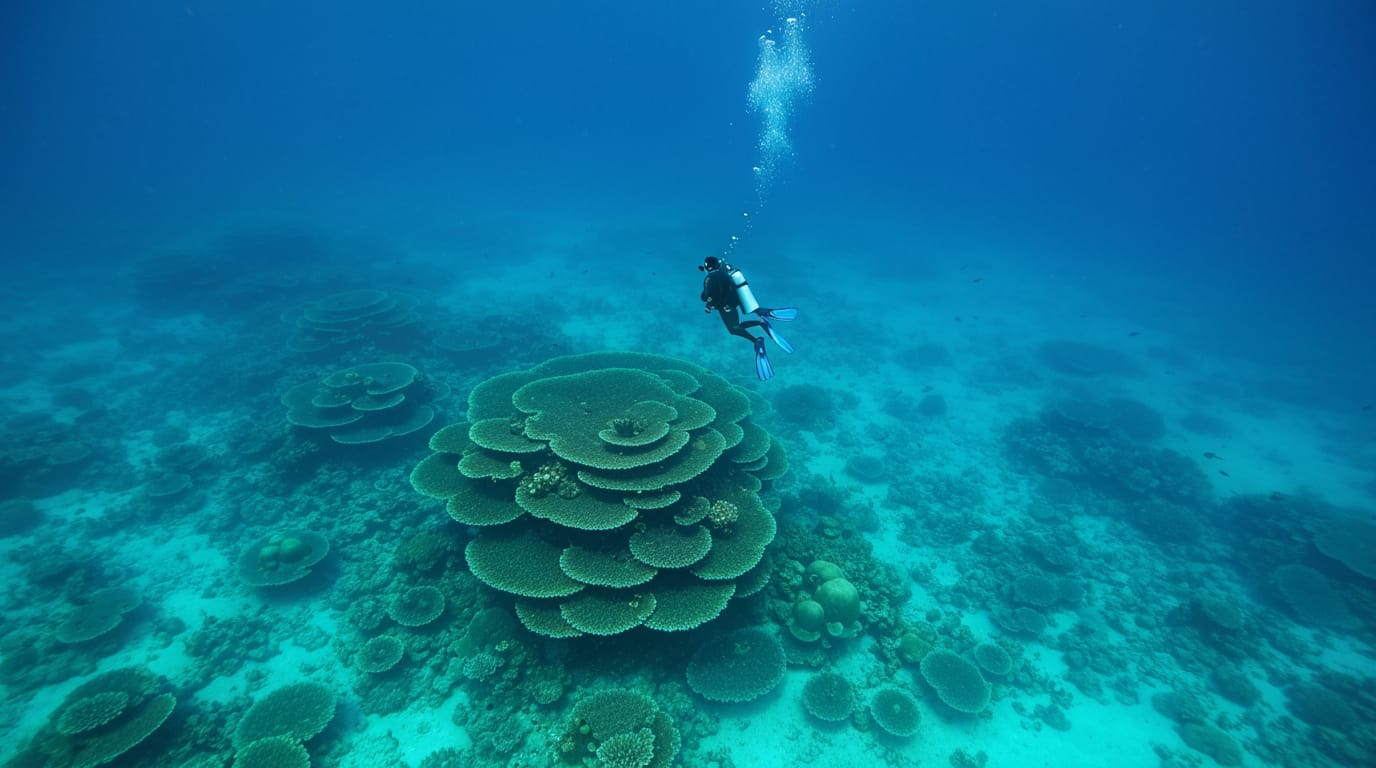
PARIS, FRANCE – Australia's iconic Great Barrier Reef has once more averted a declaration as a World Heritage site "in danger" by the United Nations' cultural body, UNESCO, a decision welcomed by Canberra but met with ongoing concern from environmental advocates and scientists. The draft decision, announced Saturday, July 4, 2026, marks another chapter in the reef's contentious relationship with the global conservation watchdog, underscoring both Australia's intensified efforts and the formidable challenges still confronting the world's largest coral ecosystem.
The United Nations Educational, Scientific and Cultural Organization's (UNESCO) World Heritage Committee ultimately opted to maintain the reef's existing World Heritage status, declining to place it on the "in danger" list for a site of its scale. This outcome follows years of close scrutiny and considerable lobbying efforts by the Australian government, which has consistently argued against the "in danger" label, citing potential damage to the reef's vital tourism industry. However, the reprieve is not without conditions. UNESCO's interim ruling explicitly calls for Australia to provide an updated progress report on the reef's health by 2028, highlighting persistent "utmost concern" regarding mass coral bleaching and the broader impacts of climate change. Water quality was specifically singled out as a critical issue, with a demand for further assessment of dredging sediment dumping in the region.
A History of Scrutiny and Last-Minute Reprieves
The Great Barrier Reef, inscribed on the World Heritage List in 1981 for its "outstanding universal value," has been under intensified international observation for over a decade. Discussions around a potential "in danger" listing first gained significant traction in 2011, culminating in UNESCO recommending the listing in 2021. This recommendation was primarily driven by the escalating threat of climate change, evidenced by three severe mass coral bleaching events between 2016 and 2020, compounded by deteriorating water quality in inshore ecosystems. Australia has been aware of the need for stronger management actions to address these threats to avoid such a designation.
Placing a site on the "in danger" list is intended as a critical alarm, prompting nations to enhance conservation efforts, as demonstrated by the successful removal of the Belize Barrier Reef from the list after improved government action. The debate surrounding the Great Barrier Reef's status reflects a tension between acknowledging the scientific consensus on its degradation and the potential economic ramifications of a downgrade. Conservation groups like the Australian Marine Conservation Society (AMCS) have consistently viewed these repeated reprieves as "yellow cards," suggesting that while progress may be noted, UNESCO remains unconvinced that Australia's actions are sufficient to secure the reef's long-term future.
Persistent Threats Undermine Reef Health
Despite the latest decision, the Great Barrier Reef continues to grapple with a multitude of severe threats, with climate change remaining the most overarching and insidious challenge. The reef has experienced six mass coral bleaching events since 2016, including one in 2024-2025, which saw substantial declines in hard coral cover due to above-average water temperatures. UNESCO itself acknowledges that while the reef's resilience is evident, its capacity to recover from such increasingly frequent and intense events is "increasingly compromised" and of "utmost concern."
Beyond global warming, local pressures continue to degrade the ecosystem. Poor water quality, stemming from polluted runoff containing pesticides and fertilizers from agricultural land clearing, remains a significant concern. Coastal development, dredging, and sediment dumping also contribute to localized stress. Further compounding these issues are threats from unsustainable fisheries management, overfishing, and outbreaks of coral-eating Crown-of-Thorns starfish. The International Union for Conservation of Nature (IUCN) has reiterated its assessment of the Great Barrier Reef's conservation status as "critical," the most severe classification available, underscoring the gap between diplomatic outcomes and ecological reality.
Australia's Multi-Billion Dollar Protection Strategy
In response to international pressure and the intrinsic value of the reef, the Australian government, in partnership with the Queensland government, has implemented the "Reef 2050 Long-Term Sustainability Plan." This comprehensive framework aims to protect and manage the reef until 2050, guiding actions across various sectors. The plan, which has been regularly updated to integrate the latest scientific knowledge, focuses on limiting climate change impacts, reducing land and water-based pollution, and promoting sustainable use.
Australia's Environment and Water Minister, Murray Watt, stated that the country's protective efforts are yielding results, with more than $5 billion invested in conservation and protection since 2014. Recent allocations include $91.8 million from the May budget directed towards improving water quality, monitoring programs, and pioneering coral-spawning techniques designed to aid reef recovery from bleaching. The Queensland government has committed over $1 billion since 2015 towards reef protection, including significant funding for water quality programs. Additionally, legislative changes have been enacted to tighten restrictions on native vegetation clearing in reef catchments, and capital dredge material disposal has been banned in the Great Barrier Reef Marine Park. These efforts involve extensive collaboration with Traditional Owners, local communities, conservation groups, and research organizations.
Economic Lifeline and Lingering Doubts
The economic significance of the Great Barrier Reef to Australia cannot be overstated. It generates over A$9 billion annually and supports approximately 77,000 jobs, primarily through its vibrant tourism sector. The prospect of an "in danger" listing has always been viewed by the Australian government as a potential deterrent for international visitors, threatening this crucial economic contribution.
However, for many scientists and environmental campaigners, the decision not to list the reef as "in danger" suggests that political and economic considerations might be outweighing the stark ecological warnings. They contend that, despite Australia's considerable investment and management plans, "significant gaps remain" in addressing the reef's fundamental threats, particularly its contributions to global greenhouse gas emissions through fossil fuel exports. Critics argue that real progress demands more ambitious climate policies and a stronger stance against activities that exacerbate environmental stress on the reef, such as the continued approval of new coal mines and gas drilling, and even practices like coral harvesting for aquariums.
The Great Barrier Reef's current status represents a delicate balance: a recognition of Australia's ongoing conservation efforts paired with an insistent international demand for more robust action. While it has once again avoided the most severe UNESCO designation, the imperative to protect this natural wonder from the inexorable pressures of climate change and local pollution remains an urgent, ongoing global responsibility. The next progress report in 2028 will undoubtedly bring renewed scrutiny to Australia's commitment to safeguarding its irreplaceable underwater jewel.


