Greenland Crisis Sparks European Call for Independence at Davos
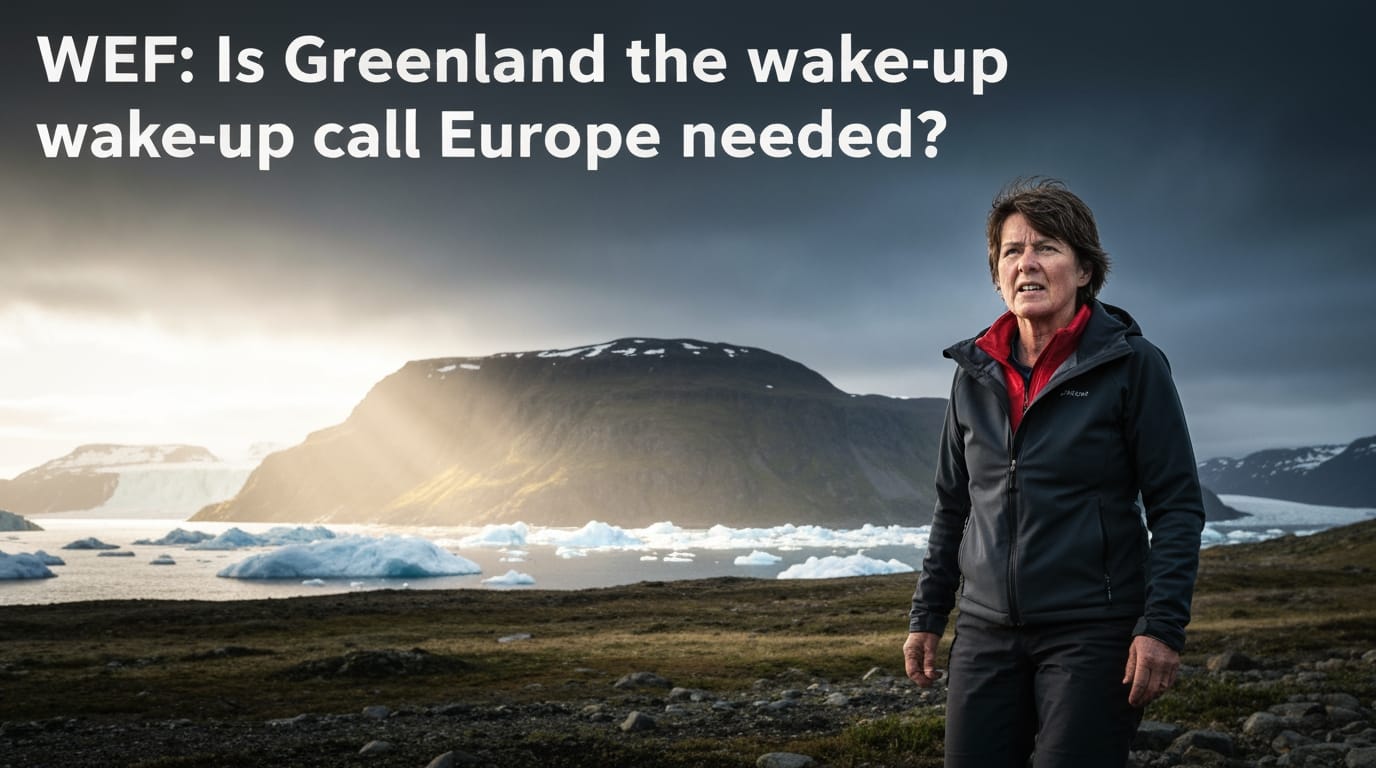
DAVOS, Switzerland — The annual World Economic Forum (WEF) in Davos, typically a platform for global cooperation and economic strategy, has been dramatically reshaped into an emergency diplomatic summit following renewed U.S. demands concerning Greenland. This escalating situation has prompted a unified, forceful response from European leaders, who are interpreting the crisis as a critical moment for the continent to assert its independence and redefine its geopolitical standing. The confrontation has cast a stark light on the vulnerabilities and strategic imperatives facing Europe, transforming the Arctic island into a potent symbol of a shifting world order.
The Davos Confrontation: A Test of Sovereignty
The heart of the diplomatic maelstrom at Davos stems from former President Trump's aggressive push to acquire Greenland, reiterating his conviction that the vast Arctic territory is "imperative for National and World Security." His social media pronouncements, including an AI-generated image of a U.S. flag being planted in Greenland, signaled an unwavering intent to secure the island "one way or the other," further escalating tensions. European leaders convened at the WEF expressed profound concern and firm condemnation of these actions. French President Emmanuel Macron, speaking at the forum, decried what he termed "new imperialism or new colonialism," stressing the importance of "respect to bullies" and the "rule of law to brutality." He also criticized the perceived "useless aggressivity" of tariff threats, asserting that such actions were fundamentally unacceptable, especially when used to leverage territorial sovereignty.
Greenland's Status and Europe's Unflinching Stance
Greenland, an autonomous constituent country within the Kingdom of Denmark, finds itself at the center of this international dispute. Its sovereignty is viewed as non-negotiable by European leaders, who have rallied in full solidarity with Denmark. European Commission President Ursula von der Leyen underscored this position, stating that the sovereignty and integrity of Greenland's territory are inviolable. The Prime Minister of Greenland, Jens-Frederik Nielsen, from Nuuk, downplayed the likelihood of military force but acknowledged the potential for consequences in the wider world if escalation were to occur, given Greenland's status within NATO. Danish Prime Minister Mette Frederiksen also conveyed that Denmark had consistently sought cooperation and had "never sought conflict." This collective European stance emphasizes adherence to international norms and the rejection of unilateral territorial claims, particularly against a NATO ally.
Tariffs, Threats, and a Redefined Transatlantic Alliance
Adding another layer of complexity to the crisis are the U.S. threats of imposing tariffs on European nations that oppose the acquisition of Greenland. Trump indicated a 10 percent tariff on imports from several European countries, with a potential increase to 25 percent if a deal was not reached by June 1. This move was met with strong rebukes from European leaders, particularly Ursula von der Leyen, who characterized the proposed additional tariffs as a mistake, especially between longstanding allies. She recalled a trade deal agreed upon the previous July, stating that "a deal is a deal" and emphasizing that when friends shake hands, it must mean something. Von der Leyen warned against allowing relations to spiral downwards and vowed an "unflinching, united, and proportional response" from the EU if necessary. This direct challenge to existing trade agreements and diplomatic protocols signals a potentially significant re-evaluation of the transatlantic alliance, forcing Europe to consider its own economic and security frameworks independent of U.S. pressure.
The Imperative for a New European Independence
The crisis surrounding Greenland has served as a powerful catalyst for Europe to accelerate its pursuit of greater independence. Statements from European leaders at Davos consistently highlighted the necessity for Europe to forge its own path in a rapidly changing global landscape. Ursula von der Leyen explicitly articulated this vision, noting that if the current seismic shifts are permanent, then Europe too must change permanently. She emphasized seizing this opportunity to construct a "new independent Europe," a concept she had introduced previously but which now garnered a broader consensus given the immediate geopolitical pressures. This push for independence extends beyond military security and economic policy, encompassing a strategic approach to issues like Arctic security, where Europe is fully committed. The situation has spurred discussions on strengthening Europe's internal cohesion, potentially through initiatives like a new truly European company structure, or "EU Inc.," designed to streamline operations across the Union.
Conclusion: A Pivotal Moment for Europe
The dispute over Greenland at the World Economic Forum has undeniably presented Europe with a profound "wake-up call." It has brought into sharp focus the imperative for the continent to assert its sovereignty, uphold international law, and consolidate its independent strategic identity. Far from being merely a territorial squabble, the events at Davos have become a crucible for Europe's future, demonstrating a collective resolve to resist external pressures and chart a course toward a more self-reliant and unified continent on the global stage. The discussions and strong declarations from European leaders signal a pivotal moment in the transatlantic relationship and the broader geopolitical balance, underscoring that the principles of international law and national sovereignty remain cornerstones of the European vision for the future.