Greenland Reaffirms Sovereignty as European Allies Rally Against U.S. Acquisition Threats
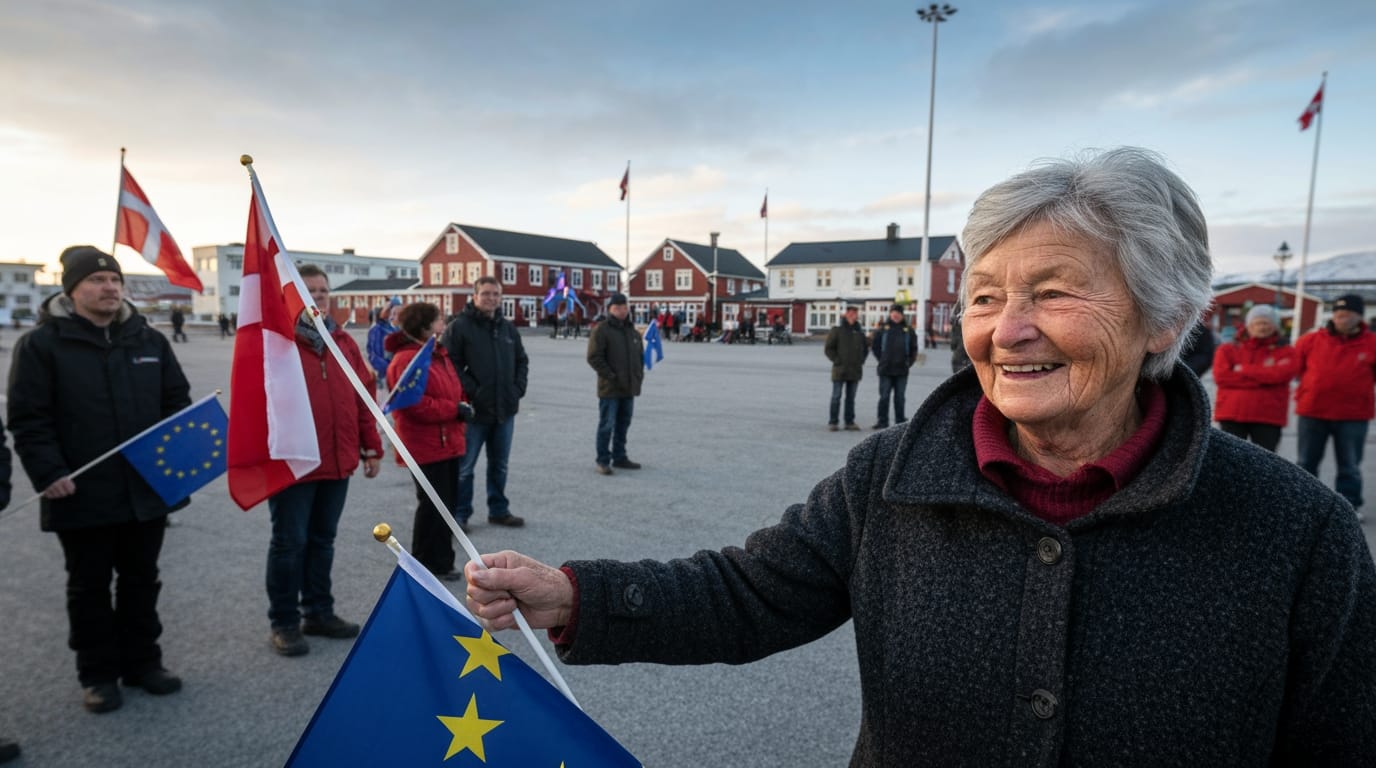
In a significant display of international solidarity, Greenland and its European allies have firmly pushed back against renewed overtures from former U.S. President Donald Trump regarding the acquisition of the vast Arctic island. Leaders across Europe, alongside Denmark, issued a unified statement this week, emphasizing Greenland's inherent right to self-determination and underscoring the foundational principles of international law amidst escalating geopolitical tensions. The collective rebuke comes after Trump reiterated his desire for the United States to gain control of the strategically vital territory, citing national security concerns and its immense natural resources.
This latest episode marks a potent reaffirmation of sovereignty for Greenland, an autonomous territory within the Kingdom of Denmark, and signals a concerted effort by European nations to uphold international norms against what they perceive as a challenge to global stability. The dispute has illuminated not only Greenland’s crucial geopolitical role but also the unwavering commitment of its allies to defend established principles of territorial integrity and mutual respect among nations.
The Return of the "Real Estate Deal"
The idea of the United States acquiring Greenland resurfaced with notable intensity following comments from former President Trump, who had previously expressed interest in purchasing the island during his first term in 2019. More recently, Trump renewed these calls, arguing that the U.S. "needs Greenland" for national security, citing its strategic location and potential to counter rising threats from China and Russia in the Arctic. His administration's rhetoric, at times, suggested a worldview where "strength" and "force" govern international relations, rather than traditional diplomatic norms and international law. This sentiment was underscored by Stephen Miller, a White House deputy chief of staff, who reportedly suggested that military intervention might not be necessary given Greenland's small population and questioned Denmark's historical claim to the territory.
Trump’s renewed focus on Greenland was perceived by many as directly linked to a recent U.S. military operation in Venezuela, which reportedly heightened concerns among European and Greenlandic officials about Washington's intentions and potentially aggressive foreign policy. The former president also appointed Louisiana Governor Jeff Landry as a special envoy to Greenland, tasked with "leading the charge" for the island, further solidifying the U.S.'s acquisition ambitions. This persistent American interest is not unprecedented, with historical records indicating several prior attempts by the U.S. to purchase Greenland dating back to the 19th and 20th centuries, including an offer from President Harry S. Truman in 1946.
Greenland's Resolute Stand: "Enough is Enough"
Greenland's response to these renewed proposals has been unequivocally clear: the territory is not for sale, and its future rests solely with its people. Prime Minister Jens-Frederik Nielsen, speaking for the self-governing Arctic nation, articulated a firm rejection of any suggestions of annexation or external pressure. "Threats, pressure, and talk of annexation do not belong anywhere between friends," Nielsen stated, adding, "Enough is enough. No more pressure. No more hints. No more fantasies about annexation."
Nielsen emphasized Greenland's openness to dialogue but stressed that any discussions must occur through proper diplomatic channels and with unwavering respect for international law and the principle of territorial integrity. He highlighted Greenland's status as a self-governing entity within the Kingdom of Denmark and its commitment to determining its own destiny. The Prime Minister underscored the importance of a respectful and loyal relationship with the United States, acknowledging the long-standing security cooperation, particularly through NATO. This decisive stance from Nuuk reiterated Greenlanders' collective desire for self-determination and their refusal to be treated as a mere commodity in geopolitical bargaining.
A Unified European Front for Sovereignty
The former U.S. President's renewed push for Greenland triggered a robust and unified response from European leaders, who quickly rallied behind Denmark and Greenland. A joint statement was issued by the leaders of France, Germany, Italy, Poland, Spain, and the United Kingdom, alongside Danish Prime Minister Mette Frederiksen, explicitly affirming that "Greenland belongs to its people" and that "It is for Denmark and Greenland, and them only, to decide on matters concerning Denmark and Greenland."
Danish Prime Minister Frederiksen had previously issued strong warnings, stating that any U.S. military action against a NATO ally like Denmark over Greenland would signify "the end of NATO" and the post-World War II security framework. European leaders echoed these sentiments, emphasizing that security in the Arctic must be achieved collectively with NATO allies, including the United States, by upholding the principles of the UN Charter, including sovereignty, territorial integrity, and the inviolability of borders. The European Union also publicly reaffirmed its commitment to national sovereignty, expressing full support for Denmark and expecting all international partners to respect this fundamental principle. Polish Prime Minister Donald Tusk underscored the gravity of the situation, warning that threats or pressure between NATO members would undermine the alliance itself, stating, "No member should attack or threaten another member of the North Atlantic Treaty Organisation."
Greenland's Geostrategic Importance and Future Aspirations
Greenland's immense geostrategic value lies at the heart of this international debate. Positioned between Europe and North America, the island is crucial for monitoring and controlling the Arctic region, serving as a critical site for U.S. ballistic missile defense systems and a key area for countering Russian and Chinese influence. The Arctic is increasingly seen as a vital arena for global competition due to emerging shipping routes made more accessible by melting ice, and its vast, untapped natural resources.
Greenland possesses substantial deposits of critical minerals, including rare earth elements, uranium, zinc, and precious metals, which are essential for high-tech industries, advanced military technologies, and the global "green transition." With China dominating the global supply chain for many of these critical materials, the U.S. views Greenland as a strategic alternative to reduce its dependence. However, resource extraction in Greenland faces challenges due to its harsh environment, remoteness, and local environmental concerns, with the Greenlandic government having previously banned uranium mining in 2021.
As a self-governing territory, Greenland has long harbored aspirations for greater economic self-sufficiency and eventual independence from Denmark, a goal that could shift the balance of power in the Arctic. While heavily reliant on Danish subsidies, Greenland seeks to boost its economy through diverse industries beyond fishing, which currently constitutes 95% of its exports. Denmark has also committed significant investment, pledging 42 billion Danish crowns in 2025 to boost its military presence in the Arctic, partly to address U.S. concerns about Greenland's defense capabilities.
The recent reaffirmation of solidarity from European nations serves as a powerful testament to the international community's commitment to respecting sovereignty and adhering to international law. It underscores that while Greenland holds undeniable strategic and economic allure, its future remains a decision for its people and the Kingdom of Denmark, free from external pressures or threats of annexation. The episode has reinforced the delicate balance of power in the Arctic and highlighted the enduring importance of multilateral cooperation in navigating complex geopolitical landscapes.


