Greenland Rejects Renewed U.S. Overtures, Firmly Declaring: "Not For Sale"
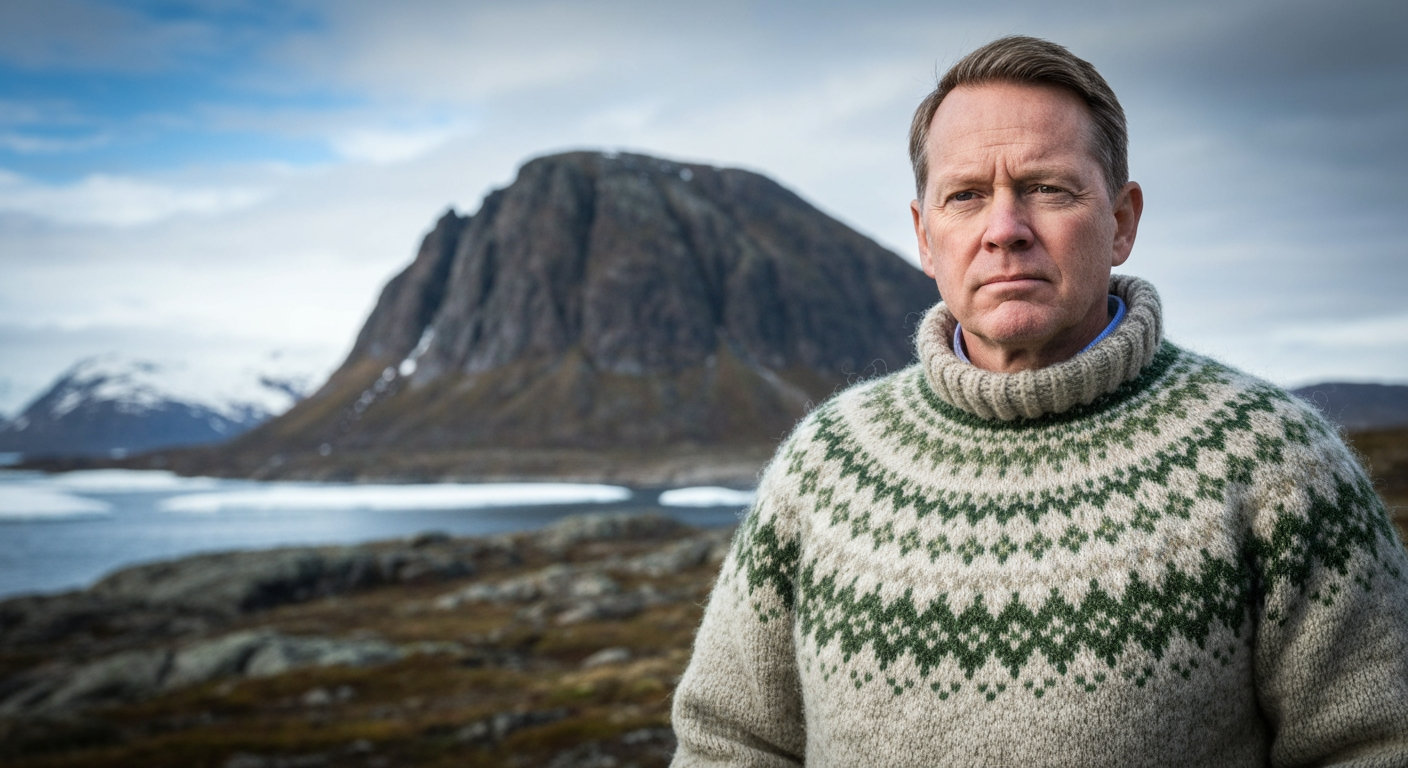
Greenland's leadership has once again unequivocally rejected any notion of the United States acquiring the vast Arctic territory, reaffirming its sovereignty amidst renewed suggestions from former U.S. President Donald Trump. Prime Minister Múte Egede of Greenland stated emphatically that the island nation "is not for sale and will never be for sale," underscoring a consistent stance that spans decades of American interest. This latest refusal highlights the growing assertiveness of Greenland in managing its own future and its complex geopolitical significance in a rapidly changing global landscape.
A Resounding 'No' from Nuuk
The recent pronouncements from Prime Minister Egede came in response to renewed rhetoric from former President Trump, who suggested the ownership and control of Greenland were an "absolute necessity" for U.S. national security. This follows Trump's initial public interest in purchasing Greenland during his first term in 2019, an idea that was met with widespread international amusement but also indignation from both Greenland and Denmark. Danish Prime Minister Mette Frederiksen famously dismissed Trump's 2019 inquiry as "absurd," a sentiment echoed by Greenlandic leaders then and now. White House officials have indicated that the administration views deterring Russian and Chinese aggression in the Arctic region as a key interest, and have explored various options, though diplomacy remains the stated first approach. However, Greenlandic and Danish authorities maintain that decisions regarding Greenland's future rest solely with its people.
Centuries of American Overtures
The United States' interest in Greenland is not a recent phenomenon, but rather a recurring theme in its foreign policy, stretching back over 150 years. The idea of acquiring Greenland first surfaced in the 1860s under President Andrew Johnson's administration, following the U.S. purchase of Alaska from Russia. Secretary of State William Seward, a key figure in the Alaska acquisition, also eyed Greenland, recognizing its potential natural resources such as coal. While no formal offer was made at that time, a land swap involving Greenland was proposed under President William Howard Taft in 1910, which Denmark rejected.
The most significant historical attempt came in 1946, in the wake of World War II and the nascent Cold War, when President Harry S. Truman formally offered Denmark $100 million in gold for the island. Denmark, though recovering from wartime occupation, firmly rejected the offer, opting instead to expand U.S. military access to the island. This led to the establishment of key military installations like Pituffik Space Base (formerly Thule Air Base), which integrated Greenland into the U.S. early-warning radar and missile defense network, a presence that continues today under bilateral agreements. These historical precedents underscore a consistent American perception of Greenland as a strategic asset, even as Denmark and Greenland have consistently rebuffed outright acquisition.
The Strategic Jewel of the Arctic
The persistent U.S. interest in Greenland stems from the island's unique and escalating strategic importance, particularly in the context of Arctic geopolitics. Greenland is the world's largest island, positioned at the intersection of North America, Europe, and the Arctic, making it a critical hub for military security and movement across the northern Atlantic. Its location helps form the "GIUK Gap" (Greenland, Iceland, United Kingdom), a crucial anti-submarine warfare chokepoint in the North Atlantic, important for monitoring and potentially restricting naval movements.
As geopolitical competition intensifies with Russia and China in the Arctic, the U.S. seeks to prevent rivals from gaining a foothold in the region. Russia's increased military activity in the Arctic and China's growing interest, including its self-proclaimed status as a "Near-Arctic State," have amplified concerns in Washington. Greenland also possesses vast untapped natural resources, including significant deposits of rare earth elements, precious metals such as gold and platinum, base metals like zinc and copper, and energy resources like oil and gas. Many of these rare earth elements are vital for modern technologies, including batteries, wind turbines, and advanced military equipment, creating an incentive for secure supply chains. Furthermore, as Arctic ice recedes due to climate change, new shipping routes like the Northwest Passage and the Transpolar Sea Route are becoming increasingly viable, potentially reshaping global trade and making Greenland a key player in international navigation and maritime management.
Greenland's Quest for Self-Determination
Despite the recurring external interest, Greenland remains steadfast in its pursuit of self-determination. As an autonomous territory within the Kingdom of Denmark, Greenland has achieved significant self-governance. Since the 1979 Home Rule Act and the subsequent 2009 Self-Government Act, Greenland's government and parliament manage most domestic affairs, including education, health, and natural resource development. The 2009 Act explicitly recognizes the Greenlandic people's right to self-determination and the option to declare full independence from Denmark.
While a majority of Greenlanders reportedly favor eventual independence, the economic realities present a complex challenge. The territory relies heavily on an annual subsidy from the Danish government, amounting to approximately $600 million, which constitutes about half of its public revenue. This economic dependence is a primary factor complicating an immediate move towards full independence. Greenland's economy is primarily driven by fisheries, but the government is actively exploring diversification, particularly through responsible development of its mineral resources and tourism, as well as considering "green growth" strategies like exporting meltwater. The focus is on building a sustainable economy to underpin greater autonomy, rather than being acquired by another nation. For Greenlanders, the consistent message is clear: their land is not a commodity for sale, but a homeland whose future must be decided by its people.
Arctic Echoes and the Future of Diplomacy
The persistent American overtures and Greenland's firm rejections highlight the broader geopolitical complexities emerging in the Arctic. European leaders and Canada have consistently voiced support for Denmark and Greenland's sovereignty, emphasizing that decisions about the region's future must respect international law and the will of its inhabitants. Any unilateral actions or coercive pressures are seen as potentially damaging to transatlantic alliances, including NATO, of which both the U.S. and Denmark are founding members.
As the Arctic gains increasing global attention due to climate change and its strategic implications, Greenland remains a focal point for international interest. Its abundant resources, strategic location along emerging trade routes, and role in global climate research underscore its growing importance. However, the unequivocal stance from Greenland's leadership and its Danish counterparts reinforces a fundamental principle: national sovereignty and the self-determination of a people are not negotiable assets in a real estate deal. The path forward for the U.S. and other interested global powers appears to be one of diplomatic engagement, cooperation, and respect for Greenland's evolving autonomy, rather than attempts at acquisition.
Related Articles


The Regulatory Maze: Why Taming Social Media Harms Remains an Elusive Quest
The digital public square, once heralded as a beacon of connection and information, has increasingly become a battleground rife with misinformation, hate speech, cyberbullying, and threats to mental health. Despite...


Gamescom 2026: Industry Thrives Amid Record Success, Grapples with AI's Transformative Power
COLOGNE, GERMANY – Gamescom 2026, the world's largest video game trade fair, concluded its latest edition with resounding success, demonstrating the enduring vitality and economic strength of the global gaming industry....

Volkswagen's Defining Moment: Restructuring Talks Poise to Reshape German Automotive Landscape
Wolfsburg, Germany – Europe's largest automaker, Volkswagen, stands at a critical juncture, facing what its CEO, Oliver Blume, has termed a "more than critical" situation. Intense internal discussions, dubbed "crunch...