Guatemala Declares Nationwide State of Siege Amid Escalating Gang Violence
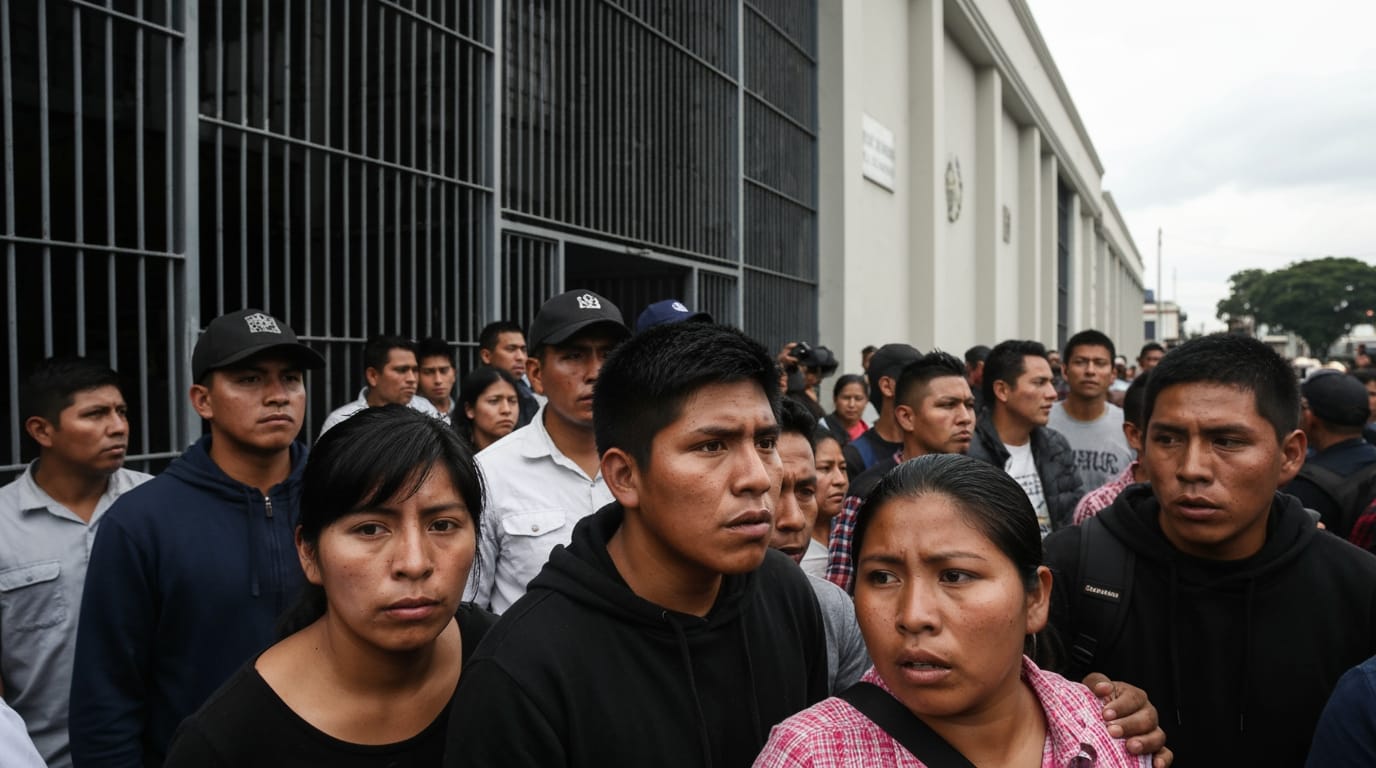
GUATEMALA CITY – Guatemala's President Bernardo Arévalo de León has declared a 30-day nationwide state of siege following a surge in gang violence that resulted in the deaths of at least seven police officers and a widespread crisis within the country's prison system. The drastic measure, announced Sunday, January 18, 2026, aims to bolster state authority against powerful criminal organizations and restore public order across the Central American nation.
The presidential decree comes in the wake of a weekend of intense unrest, triggered by coordinated attacks on security forces and a series of prison riots where gang members took dozens of individuals hostage. The escalating violence underscores the deep-seated challenges facing Guatemala, a country long grappling with high crime rates and the pervasive influence of criminal groups. The state of siege, while intended to restore stability, also raises questions regarding the balance between security measures and civil liberties in a nation with a complex history of internal conflict.
Prisons Erupt, Officers Fall in Coordinated Assaults
The immediate catalyst for the state of siege was a harrowing sequence of events that began with a coordinated uprising within three of Guatemala's maximum-security prisons. Inmates, identified primarily as members of the notorious Barrio 18 gang, seized control of facilities, taking 46 people hostage, including prison guards and a psychiatrist. These actions were reportedly a protest against recent decisions by prison administrators to strip certain privileges from incarcerated gang leaders.
As security forces moved to regain control of the detention centers, particularly the Renovación prison in Escuintla, approximately 47 miles southwest of the capital, a wave of retaliatory violence erupted outside prison walls. Armed gang members launched assaults across Guatemala City, targeting National Civil Police officers. These attacks tragically claimed the lives of at least seven officers and left ten others wounded, with one gang member also killed in the clashes. Interior Minister Marco Antonio Villeda confirmed the arrests of seven gang members, the confiscation of two rifles, and the seizure of two vehicles following the police response, emphasizing a firm stance against negotiation with criminals.
A Nation Under Emergency Powers
President Arévalo, portraying the widespread attacks as a deliberate attempt by criminal elements to terrorize security forces and the populace, asserted that his administration would not "kneel before these criminals". The state of siege, effective immediately, grants the government expanded powers to combat gang violence. Under Guatemalan law, such a declaration can temporarily suspend certain constitutional rights, including freedoms of movement, assembly, and protest, while also allowing security forces to conduct arrests and interrogations without immediate court orders.
The measure, set to last for 30 days, is intended to deploy the full force of the state, encompassing both the police and the army, to address the rampant gang activity. While the declaration requires subsequent approval from the opposition-controlled Congress, it takes effect immediately. In a direct response to the security concerns, the Ministry of Education canceled school classes nationwide for Monday, and the U.S. Embassy in Guatemala issued a security warning for its citizens, advising them to avoid crowds. Despite these extraordinary measures, President Arévalo stressed that the state of siege should not disrupt the normal daily lives of Guatemalan citizens.
The Enduring Scourge of Organized Crime
Guatemala has long been plagued by high levels of violent crime, consistently ranking among the most dangerous countries in Latin America. Organized criminal groups, predominantly the Mara Salvatrucha (MS-13) and Barrio 18, exert significant influence, particularly in urban centers like Guatemala City and Escuintla. These gangs finance their operations primarily through widespread extortion, drug dealing, and other illicit activities, contributing substantially to the country's homicide rate. Reported incidents of extortion have seen significant increases in recent years, demonstrating the gangs' tightening grip on various sectors of society.
The nation's overcrowded prison system further exacerbates the problem, with facilities often operating far beyond capacity. This overcrowding, coupled with corruption and weak institutional control, has historically allowed gang leaders to maintain command over their operations from behind bars, coordinating criminal activities and even dictating conditions within the prisons themselves. The recent declaration by both Guatemala and the United States of Barrio 18 as a terrorist organization highlights the severe threat these groups pose to national security and stability.
A Precedent of Emergency Measures
States of siege are not unprecedented in Guatemala. Historically, similar measures have been implemented in response to various threats, including drug trafficking, land disputes, and other forms of social unrest. For instance, a state of siege was declared in 2019 in several eastern provinces following the killing of three soldiers by suspected drug traffickers, and another in 2022 in indigenous communities due to a century-old land dispute that erupted in violence. While these emergency declarations provide the government with tools to address immediate crises, they have also, at times, drawn scrutiny from human rights organizations concerned about potential abuses of power and the curtailment of civil liberties.
The current state of siege under President Arévalo's administration marks a critical juncture in Guatemala's ongoing battle against entrenched criminal networks. The government's decisive action, while prompted by severe violence, signals a firm resolve to confront the power of gangs that have long challenged state authority. The coming weeks will determine the effectiveness of these expanded security measures in bringing stability and security to a populace weary of endemic crime, while also balancing the protection of fundamental rights under a state of exception. The challenge remains for the administration to dismantle the gang structures and their influence, both inside and outside prison walls, to foster a more secure and just future for Guatemala.


