Guinea's Junta Leader Declared President Amidst Controversy Following Post-Coup Election
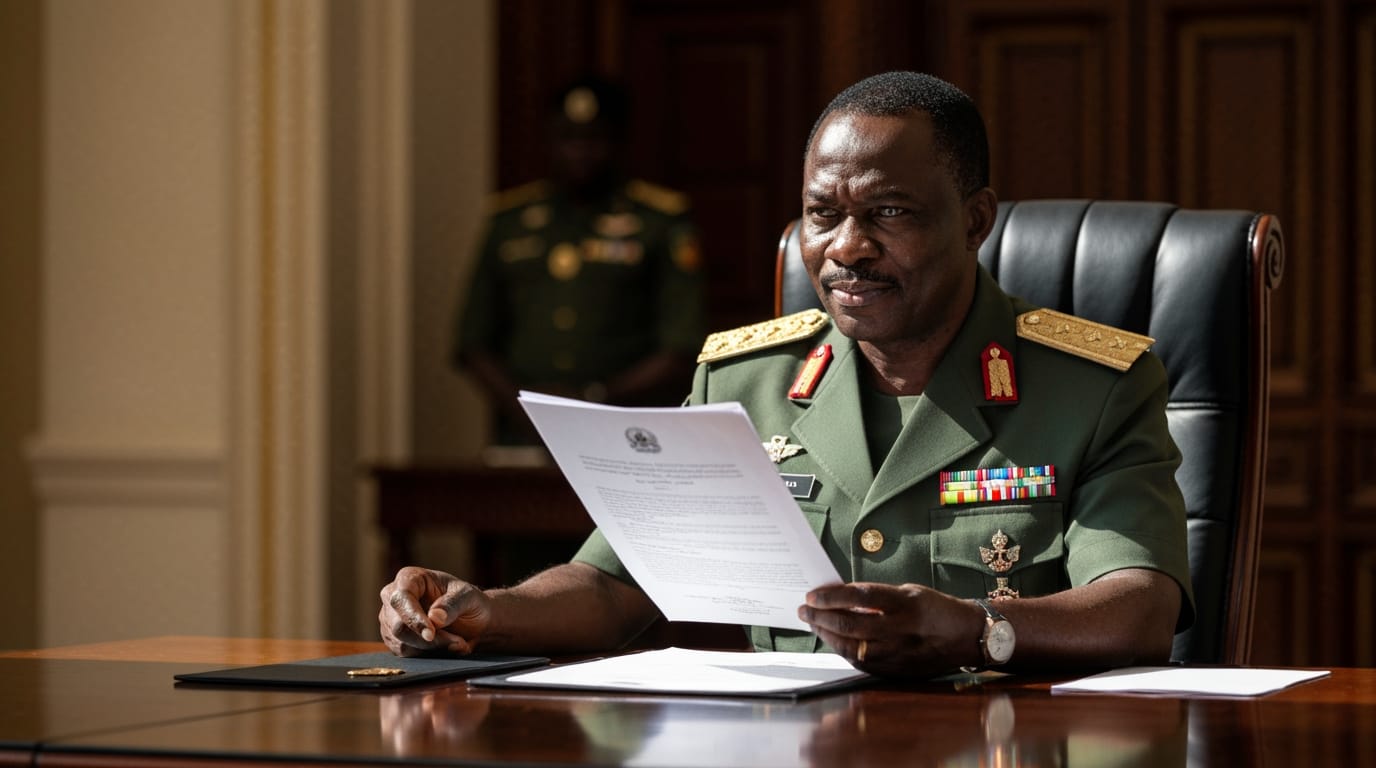
CONAKRY, Guinea – General Mamady Doumbouya, the military strongman who seized power in a 2021 coup, has been declared the winner of Guinea's presidential election, securing an overwhelming 86.72% of the vote in the first round. Provisional results announced late Tuesday by the General Directorate of Elections cement Doumbouya's position as the nation's leader, marking the culmination of a four-year transitional period that has drawn both cautious engagement and sharp criticism from international observers and domestic opposition alike. The swift victory, with a reported voter turnout of 80.95%, comes despite Doumbouya's initial pledge not to seek elected office after overthrowing the previous government, raising profound questions about the integrity of the democratic process and the future of civilian rule in the resource-rich West African nation.
From Coup Commander to Elected President
General Doumbouya, a former French legionnaire and commander of Guinea's special forces, orchestrated the September 5, 2021 coup that deposed then-President Alpha Condé. Condé, Guinea's first democratically elected leader, had stirred widespread discontent by controversially seeking a third term after a constitutional change. Upon seizing control, Doumbouya dissolved the constitution and government, promising a return to civilian rule and explicitly stating that members of the military junta, including himself, would not contest future elections. This initial vow was seen by some as a commitment to a genuine transition, though skepticism persisted among critics.
The path to the recent election began to clarify with a controversial referendum held in September 2025. This referendum approved a new constitution that notably allowed military figures to run for the presidency and extended presidential terms from five to seven years. Critics widely interpreted this constitutional rewrite as a strategic move to pave the way for Doumbouya's presidential ambitions, effectively overturning his earlier promise. The adoption of this new constitution, approved by 89.39% of votes cast, according to official results, enabled Doumbouya to formally declare his candidacy for the December 28 election.
A Contested Electoral Landscape
The presidential election itself was marked by a significantly altered political landscape, which many analysts contend tilted heavily in favor of the incumbent general. Key opposition leaders were either barred from participating due to technicalities or had gone into exile following a reported clampdown on dissent. More than 50 political parties were reportedly dissolved in the preceding year, further weakening any organized opposition. This systematic exclusion of prominent political figures left General Doumbouya facing eight lesser-known candidates, none of whom mounted a substantial challenge.
The National Front for the Defence of the Constitution, a prominent civil society movement, strongly criticized the electoral process, describing it as an "electoral charade" and asserting that a significant portion of Guineans had chosen to boycott the vote. Despite these claims, the General Directorate of Elections reported a high turnout, which opposition representatives have questioned, citing subdued attendance at polling stations in opposition strongholds. The official results show former education minister Yéro Baldé placing a distant second with 6.51% of the votes, underscoring the overwhelming nature of Doumbouya's victory.
Implications for Governance and Regional Stability
General Doumbouya's electoral victory concludes a transitional period that began with the 2021 coup and was initially slated for 24 months under an agreement with the Economic Community of West African States (ECOWAS). However, this timeline experienced repeated delays, deepening public doubts about the military's commitment to a swift return to civilian rule. The election, widely perceived by critics as a means to legitimize Doumbouya's continued hold on power, places Guinea in a complex position within a West African region increasingly grappling with a resurgence of military takeovers.
Guinea's decision to pursue electoral legitimization, while maintaining diplomatic engagement with ECOWAS, contrasts with the confrontational approach taken by neighboring Mali, Burkina Faso, and Niger, which have withdrawn from the regional bloc. This strategic positioning could influence regional stability frameworks and the approach to democratic transitions across the continent.
Economic Hopes and Social Realities
Guinea is endowed with immense natural resources, boasting the world's largest reserves of bauxite and significant untapped iron ore deposits, including the Simandou project. Economic development, particularly leveraging these mineral assets, has been a key pillar of Doumbouya's narrative since the coup. The Simandou project, a mega-mining initiative, is viewed as central to the junta's plans for infrastructural and economic revitalization.
However, despite this mineral wealth, half of Guinea's 15-million-strong population lives in poverty and faces record levels of food insecurity. Doumbouya's administration has campaigned on a platform of stability and economic development, seeking to address these deep-seated challenges. The extent to which this electoral outcome will translate into tangible improvements for the average Guinean remains a critical question. Critics have pointed to restrictions on press freedom and a crackdown on civil society during the transition, fostering an environment where dissenting voices are suppressed.
Conclusion
General Mamady Doumbouya's declaration as Guinea's new president, following an election marked by a significantly weakened opposition and procedural changes that facilitated his candidacy, casts a long shadow over the nation's democratic aspirations. While the vote formally concludes a four-year transitional period, it simultaneously opens a new chapter fraught with questions about political freedom, institutional legitimacy, and the true trajectory of civilian rule. The international community, having initially condemned the coup and pressed for a swift return to constitutional order, now faces the challenge of navigating a landscape where military power has seemingly been legitimized through the ballot box, with potentially far-reaching implications for democratic governance across West Africa.


