Gulf States Uneasy Over Iran Strike Prospects, Fearing Regional Cataclysm
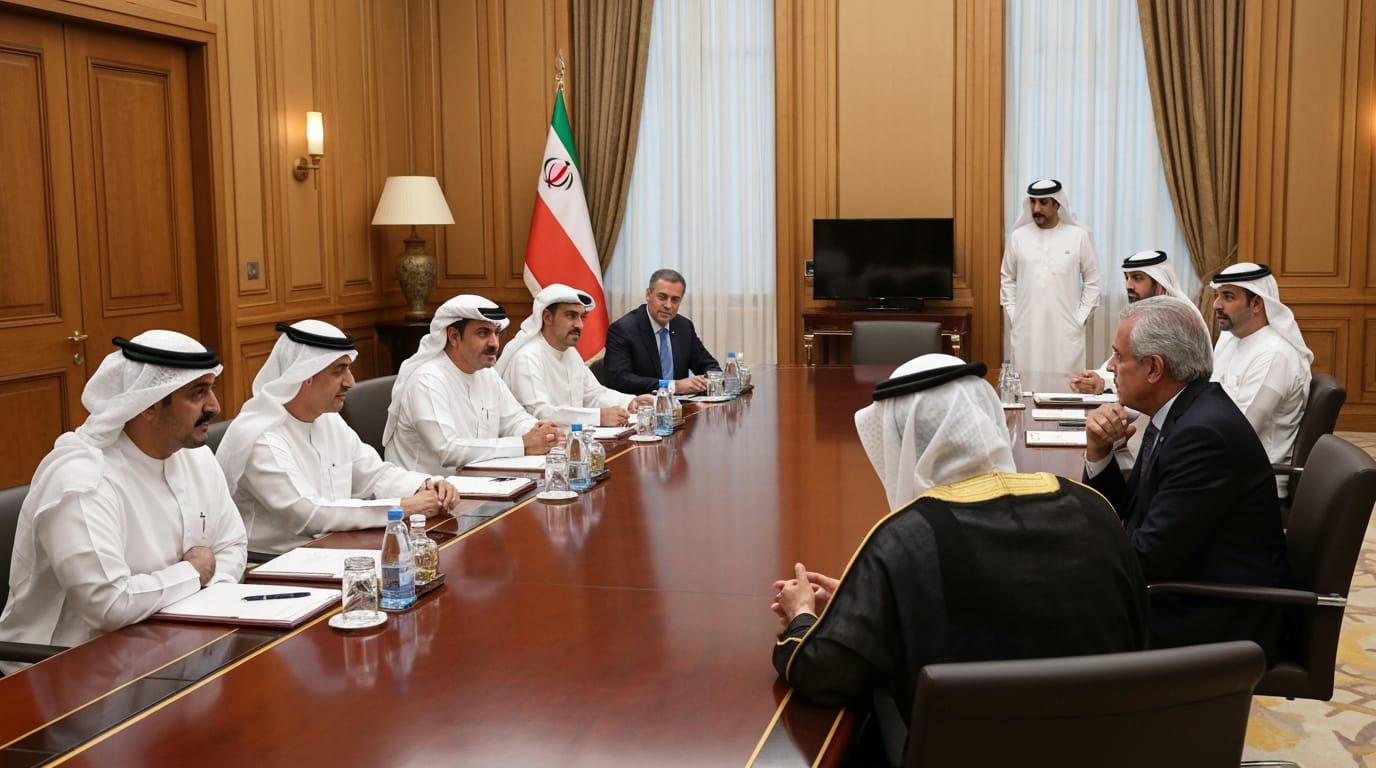
The prospect of a military strike against Iran continues to generate profound apprehension among Gulf Cooperation Council (GCC) states, which view such an action as a dangerous catalyst for widespread instability and economic devastation across an already volatile region. Despite long-standing rivalries and deep-seated political differences with Tehran, key Arab nations have actively cautioned against military intervention, citing a confluence of geopolitical, economic, and security risks that could unravel years of delicate diplomatic efforts and jeopardize their own strategic interests. Their unified message to international powers underscores a clear preference for de-escalation and stability over confrontation.
The Economic Lifeline Under Threat
At the forefront of Gulf states' concerns are the potentially catastrophic economic repercussions of a conflict with Iran. The Arabian Gulf is the lifeblood of global energy markets, with the Strait of Hormuz serving as a critical chokepoint through which approximately 15 million barrels of seaborne crude and about 20% of global liquefied natural gas (LNG) volumes transit daily. Any disruption to this vital waterway, whether through direct Iranian action or collateral damage, could send shockwaves through the world economy.
Gulf capitals explicitly warned of the immense danger to global energy security, emphasizing that a military confrontation could trigger Iranian retaliation against their sophisticated oil and gas infrastructure, including offshore platforms, processing facilities, and export terminals. Such attacks could severely disrupt oil deliveries from Arab Gulf states, potentially taking millions of barrels of oil per day offline. Beyond immediate energy supply shocks, an escalating conflict would inject significant economic uncertainty, undermining ambitious long-term transformation agendas such as Saudi Vision 2030, which rely on regional stability and predictable economic conditions. The inherent energy market volatility and trade disruptions would threaten core economic goals across the GCC, impacting capital flows, tourism, and overall investment.
Moreover, while some might envision a temporary oil price hike benefiting producers, the long-term outlook is fraught with peril. A normalized Iran, free from sanctions, could re-enter energy markets at scale, intensifying competition for market share and exposing oil-dependent exporters like Saudi Arabia and Kuwait to revenue volatility. Qatar's dominance in Asian LNG contracting could also face pressure as Iranian gas resources are further developed. The Gulf states, therefore, prioritize the uninterrupted flow of hydrocarbons and regional trade stability above any short-term gains from conflict-driven price spikes.
The Specter of Regional Instability and Proxy Escalation
Beyond economic fears, Gulf states harbor profound anxieties about the geopolitical fallout from a strike on Iran. The region is already a complex web of alliances, proxy conflicts, and simmering tensions. A military intervention against Iran could dramatically escalate existing proxy wars in Yemen, Syria, Iraq, and Lebanon, transforming localized disputes into a wider regional confrontation. This risk of conflict spillover into neighboring territories is a primary concern.
A major worry is the direct targeting of American military bases and personnel located within Gulf territories. Iran's ambassador to Saudi Arabia warned that any flare-up of tensions could have serious consequences for the entire Middle East, and Iran's defense minister previously indicated that countries assisting U.S. military actions would be considered legitimate targets. This places host nations, such as Qatar (home to Al Udeid Air Base) and Bahrain (hosting a significant U.S. naval presence), in a perilous position. Reports indicate that Saudi Arabia, Qatar, and Oman have directly informed the White House of their opposition to any military action and Saudi Arabia has explicitly stated it would not permit its airspace to be used for strikes against Iran.
Furthermore, the potential for a strike to trigger the disintegration of Iranian state institutions is a significant source of unease. Such a scenario could lead to cross-border security chaos, the proliferation of weapons, and the increased influence of regional militias, fundamentally altering the security landscape for decades. The prospect of mass refugee flows straining already fragile political and economic systems, along with the rise of separatist movements among Iran's ethnic minorities (such as Arabs, Baluchs, and Kurds), also presents acute security risks that could lead to wider regional contagion. For most of Iran's neighbors, the continuity of the Iranian regime, however imperfect, is seen as preferable to the unpredictability and chaos of its collapse.
A Preference for Pragmatism and Diplomacy
The Gulf states' reluctance to endorse military action against Iran stems from a pragmatic assessment of regional security and a clear preference for diplomatic solutions. Recent years have seen concerted efforts toward de-escalation, including a Saudi-Iranian détente that sets a precedent for hedging against direct confrontation. Dialogue and joint regional action are viewed as the most effective ways to preserve stability and avoid broader conflict. Foreign ministers from Saudi Arabia, Qatar, and Oman have reportedly been in close communication with Tehran, emphasizing efforts aimed at regional stability and strengthening security.
There is also a shared understanding that external military punishment for internal repression could set a dangerous precedent, potentially impacting their own authoritarian systems. Moreover, a violent collapse of the Islamic Republic could drastically shift the regional balance of power in favor of Israel, which many Gulf states view with suspicion, especially given Saudi Arabia's efforts to diversify its strategic options beyond sole reliance on the U.S. security umbrella. The Gulf states prioritize strategic restraint and collective risk management, aiming to contain spillover effects rather than testing the limits of deterrence. The central danger, from their perspective, often lies in miscalculation rather than deliberate escalation.
Conclusion
The Gulf states' unified apprehension regarding a military strike on Iran highlights a complex regional dynamic where immediate security and economic stability often override long-standing political antagonisms. Their consistent calls for dialogue, their refusal to facilitate military action from their territories, and their profound concerns over economic devastation and regional destabilization underscore a collective desire to avoid a wider conflagration. For these nations, the costs of a military conflict with Iran are simply too high, threatening not only their prosperity but also the very fabric of regional order. This shared anxiety emphasizes the imperative for continued diplomatic engagement and a nuanced understanding of interconnected regional security interests.


