Gunman Neutralized After Southern Thailand School Hostage Crisis, Reigniting National Gun Violence Debate
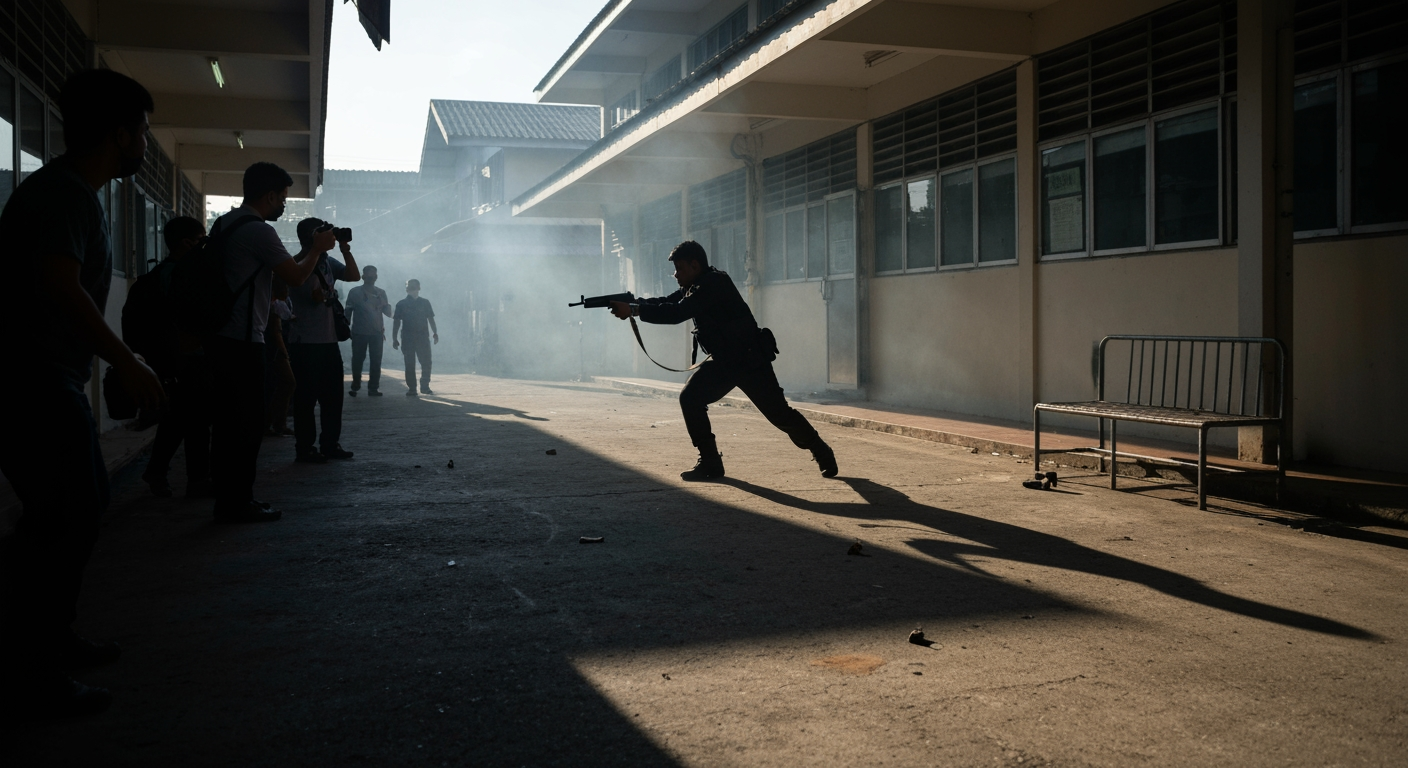
HAT YAI, THAILAND – A gunman was apprehended by police today after he opened fire at a school in southern Thailand, injuring at least one staff member and holding teachers and students hostage in an alarming incident that concluded with all hostages safely freed. The rapid resolution of the crisis at Patongprathankiriwat School in Songkhla Province brings a temporary sense of relief but casts a renewed spotlight on Thailand's persistent struggle with gun violence and its devastating impact on innocent lives.
Crisis Unfolds at Patongprathankiriwat School
The tranquility of Patongprathankiriwat School, located in the Hat Yai district near the Malaysian border, was shattered when an unidentified gunman entered the premises. Eyewitness reports indicate the assailant sought a specific teacher. When unable to locate the individual, the gunman discharged his weapon, striking a school staff member, whose condition has not yet been fully disclosed. The situation quickly escalated into a tense hostage standoff, with teachers and students trapped inside the school building as authorities converged on the scene.
Police, responding swiftly to the emergency, engaged the perpetrator. Their decisive action led to the gunman being shot and subsequently detained, effectively ending the dangerous encounter. All individuals held captive were successfully released, though initial reports confirmed at least three injuries in total. The precise motive behind the gunman's actions and his connection to the school or the teacher he sought remains under investigation, but the incident has left the local community shaken and fearful.
A Nation Grapples with Unchecked Violence
Today’s events in Songkhla echo a troubling pattern of violence that has plagued Thailand, particularly incidents involving firearms in public and educational settings. While mass shootings were once considered rare, the nation has witnessed a series of high-profile tragedies, challenging its perception as a safe and peaceful country. The incident at Patongprathankiriwat School, though fortunately resolved without mass casualties, underscores the vulnerability of educational institutions and the need for enhanced security measures and preventative strategies.
This latest school attack inevitably draws comparisons to the horrific Nong Bua Lamphu massacre, which occurred in October 2022. That day, a former police officer unleashed an unspeakable wave of violence at a children's nursery in northeastern Thailand, resulting in the deaths of dozens, predominantly young children. The scale and brutality of the Nong Bua Lamphu incident sent shockwaves globally and ignited urgent calls for addressing the roots of such extreme violence.
The Shadow of Nong Bua Lamphu
The Nong Bua Lamphu massacre remains Thailand's deadliest mass killing by a single perpetrator in modern history. On October 6, 2022, Panya Khamrab, a 34-year-old former police officer who had been dismissed from the force earlier that year due to drug-related offenses, launched a rampage that claimed 36 lives and injured 10 others. The attack began at a children's nursery in the Uthai Sawan subdistrict, where Khamrab, armed with a legally purchased 9mm semi-automatic pistol, a shotgun, and a knife, brutally targeted staff and children.
Accounts from the scene painted a grim picture: Khamrab shot his way into the facility, attacking four or five staff members, including an eight-months-pregnant teacher, before turning his violence on the children who were mostly asleep. The bodies of 19 boys and three girls were discovered in the nursery alone, with overall casualties including 24 children, some as young as two years old. In a final act of despair, Khamrab later killed his wife and son before taking his own life.
The nation plunged into a period of mourning, marked by royal visits and national ceremonies to honor the victims. The sheer loss of life, particularly among innocent children, left an indelible scar on the national psyche and spurred widespread introspection about mental health support, drug enforcement, and the accessibility of firearms, especially to individuals with troubled backgrounds.
Thailand's Gun Conundrum
Thailand faces a complex challenge regarding gun control. The country has one of the highest rates of civilian gun ownership in Southeast Asia, with estimates suggesting over 10 million privately-owned guns in circulation – enough to arm nearly one in every seven people. While Thai law requires guns to be purchased from licensed dealers and for specific reasons, and obtaining a permit can be a lengthy and expensive process, systemic issues persist.
A significant concern is the easy access to firearms for current and former members of the military and police, who often acquire weapons through government channels. The perpetrators of both the Nong Bua Lamphu massacre and the 2020 Nakhon Ratchasima mass shooting (where a soldier killed 29 people) were individuals with law enforcement or military backgrounds, highlighting a critical loophole in the nation's gun regulations. Furthermore, once a permit is obtained, it often lasts indefinitely without renewal, contributing to a large number of weapons remaining in circulation.
Beyond the legal market, a thriving illicit gun trade exacerbates the problem, making firearms readily available. The combination of high ownership rates, challenges in enforcement, and accessibility to individuals who may pose a risk, contributes to Thailand's elevated gun homicide rates. Events like today's school incident and the Nong Bua Lamphu tragedy serve as stark reminders that the consequences are often borne by the most vulnerable members of society.
Moving Forward: A Call for Action
The incident at Patongprathankiriwat School, though contained, serves as a poignant reminder that Thailand's journey to curb gun violence is far from over. The trauma inflicted upon the students, teachers, and staff involved will undoubtedly resonate deeply within the community, adding to the collective grief and anxiety that persists from previous mass casualty events. While the immediate response by law enforcement today was effective in preventing a wider tragedy, the recurrence of such incidents demands a more comprehensive and proactive approach.
Discussions must continue on how to strengthen gun control laws, improve mental health services, particularly for former and active service personnel, and enhance security measures in public spaces, especially schools. The ongoing threat of gun violence requires a united effort from government, law enforcement, and communities to protect its citizens and ensure that educational environments remain sanctuaries for learning and growth, rather than sites of terror. The nation watches closely to see if this latest incident will finally galvanize the systemic changes necessary to safeguard its future.
Related Articles


Ratko Mladić, "Butcher of Bosnia" and Convicted War Criminal, Dies at 84
THE HAGUE, Netherlands – Ratko Mladić, the former Bosnian Serb military commander known as the "Butcher of Bosnia" and convicted of genocide, war crimes, and crimes against humanity, has died at the age of 84. Serbian...

Long-Awaited 9/11 Mastermind Trial Set for 2028, Decades After Attacks
GUANTANAMO BAY, Cuba – Nearly a quarter-century after the devastating terror attacks of September 11, 2001, a military judge has finally set a trial date for Khalid Sheikh Mohammed, the alleged mastermind behind the...