Haiti Navigates Deep Uncertainty as Transitional Council's Mandate Expires
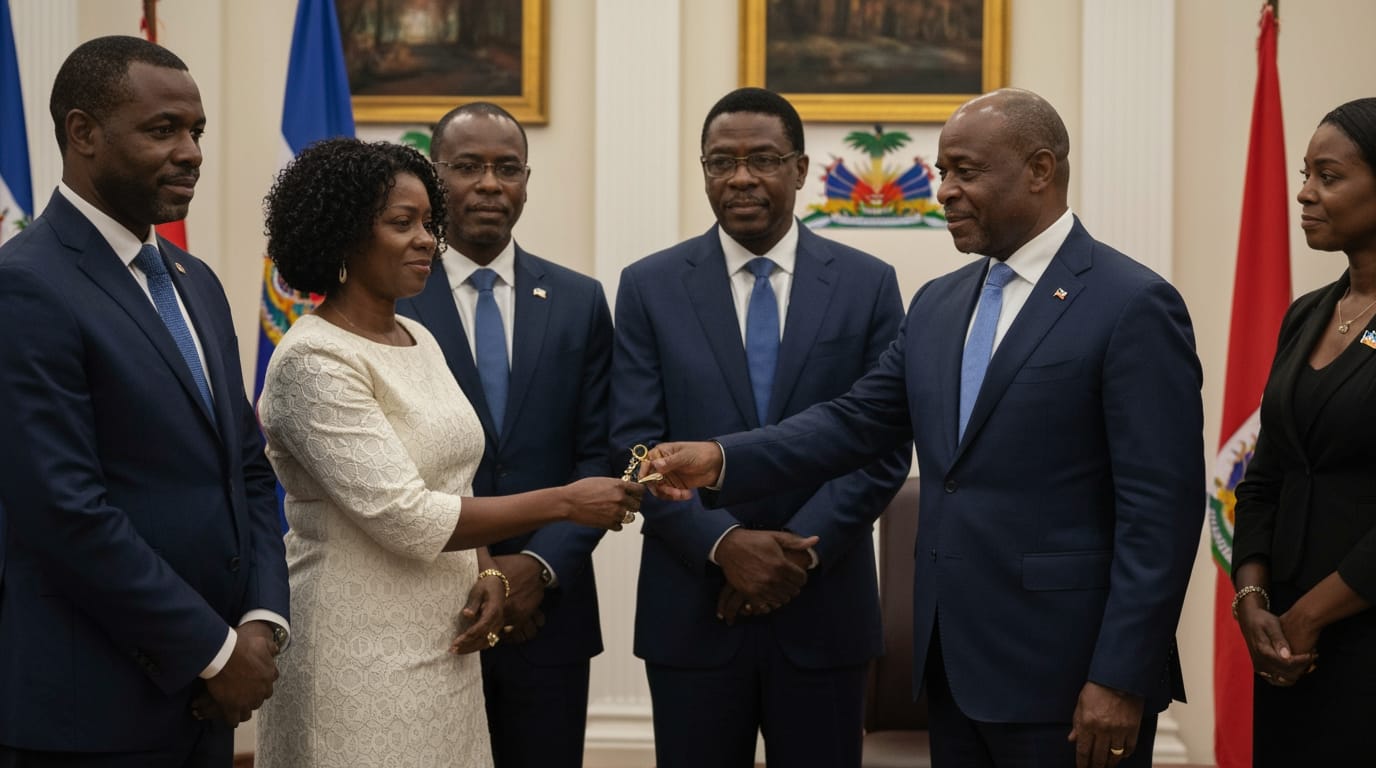
PORT-AU-PRINCE, Haiti – Haiti faces profound political uncertainty today, February 7, 2026, as the mandate of its nine-member Transitional Presidential Council (TPC) officially expires, leaving the nation in a precarious leadership void amidst escalating gang violence and a deepening humanitarian crisis. The departure of the TPC places immense pressure on Prime Minister Alix Didier Fils-Aimé, who must now contend with an even more fragmented political landscape as the country struggles to regain stability and chart a path toward long-delayed democratic elections.
The End of an Interim Era
The Transitional Presidential Council was inaugurated on April 25, 2024, tasked with the critical responsibility of governing Haiti following the resignation of then-Prime Minister Ariel Henry. Henry, who had led the country since the 2021 assassination of President Jovenel Moïse, stepped down in March 2024 amid intense pressure from armed gangs and the international community, agreeing to resign once a transitional body was established. The TPC's primary objectives included exercising presidential functions, appointing a new prime minister and cabinet, and laying the groundwork for future elections. However, its two-year mandate, set to conclude today, February 7, 2026, has ended with limited progress on these fronts, largely overshadowed by persistent insecurity and internal discord.
Throughout its tenure, the TPC faced significant hurdles, often criticized for infighting, political gamesmanship, and a perceived inability to effectively address the nation's overwhelming challenges. Internal divisions became particularly apparent in recent weeks, with some council members reportedly attempting to remove Prime Minister Alix Didier Fils-Aimé from office just before their own mandate concluded. These efforts underscore the fragility of Haiti's political structures and the deep-seated power struggles that continue to impede meaningful governance. The council's failure to establish the necessary security conditions ultimately rendered holding elections by the initial February deadline "materially impossible."
Prime Minister Fils-Aimé's Precarious Position
With the Transitional Presidential Council's mandate now expired, Prime Minister Alix Didier Fils-Aimé finds himself at the helm of a government navigating an exceptionally turbulent period. Fils-Aimé was appointed by the TPC, and his leadership has been viewed by some as Washington's preferred choice for running the government. However, his position has been consistently challenged, both by the pervasive influence of armed gangs and by factions within the now-defunct transitional body itself. The efforts to oust him, even as the TPC's term was winding down, highlight the severe lack of political consensus and stability crucial for effective governance.
The Prime Minister's immediate tasks include confronting a state of near-total collapse in several key sectors. He is responsible for steering the country through its worst security crisis in decades, fostering economic recovery, and attempting to prepare for elections that have been repeatedly postponed. The support of the international community, including the United States, remains a critical factor in his ability to maintain authority and pursue a path toward stability. However, without the direct backing of a unified transitional body, the legitimacy and operational capacity of his administration face intensified scrutiny.
Haiti's Enduring Crisis: A Deepening Abyss
Haiti's political leadership struggles against a backdrop of unparalleled social and humanitarian distress. The nation has endured a prolonged period of instability, characterized by chronic political upheaval, natural disasters, and widespread poverty. Since the assassination of President Moïse in 2021, gang violence has spiraled dramatically, with criminal groups consolidating control over vast swathes of the capital, Port-au-Prince, estimated to be around 90 percent.
The humanitarian fallout from this violence is staggering. From January to November 2025 alone, over 8,100 people were killed, a 20 percent increase from the previous year. Kidnappings and sexual violence have also surged, severely impacting civilian populations. The escalating conflict has displaced over 1.4 million Haitians internally, representing approximately 12% of the population, with many living in desperate conditions. More than 6 million people, nearly half of the country's population, require urgent humanitarian assistance, and 5.7 million face severe levels of acute food insecurity. The healthcare system is on the verge of collapse, with only 37 out of 100 inpatient facilities in Port-au-Prince remaining functional as of late 2025. The widespread violence and breakdown of public services have created what the United Nations Secretary-General António Guterres described as "a perfect storm of suffering."
The Elusive Path to Elections
Despite the urgent need for a legitimate, elected government, the path to holding free and fair elections in Haiti remains fraught with challenges. The Provisional Electoral Council (CEP) has outlined a new timeline, with the first round of presidential and legislative elections now tentatively scheduled for August 30, 2026, and a potential second round on December 6, 2026. A new president is anticipated to be inaugurated by February 7, 2027.
However, the CEP itself has stressed that the successful implementation of this electoral calendar is contingent upon several critical prerequisites, including the establishment of acceptable security conditions and the availability of necessary financial resources. Given the current environment, where gangs exert immense control and state institutions are weak, significant skepticism surrounds the feasibility of these dates. Experts warn that achieving meaningful security gains before August 2026 will be an uphill battle. The deployment of a multinational security support mission, led by Kenya and authorized by the UN Security Council, commenced after repeated delays in June 2024, but its effectiveness in restoring order remains a subject of ongoing concern.
A Nation at a Crossroads
The expiration of Haiti's Transitional Presidential Council's mandate on February 7, 2026, marks a critical juncture for the beleaguered Caribbean nation. While intended to bridge a period of profound political instability, the TPC's departure leaves a vacuum of formal interim leadership, intensifying the existing challenges for Prime Minister Alix Didier Fils-Aimé and his cabinet. The intertwined crises of rampant gang violence, a devastated economy, and an unprecedented humanitarian catastrophe demand immediate and coordinated action.
The international community, having played a significant role in advocating for and establishing the transitional arrangements, faces renewed pressure to support Haiti in stabilizing its security situation and fostering the conditions necessary for democratic governance. Without a concerted effort to address the root causes of instability and rebuild state capacity, the aspirations for a peaceful transition and the long-delayed elections risk being further undermined, perpetuating a cycle of suffering for the Haitian people. The future of Haiti hinges on whether the current leadership, with international backing, can forge a credible path toward security, political consensus, and ultimately, a democratically elected government.


