Sanae Takaichi Poised for Resounding Victory in Snap Election, Cementing Historic Rise as Japan's First Female Prime Minister
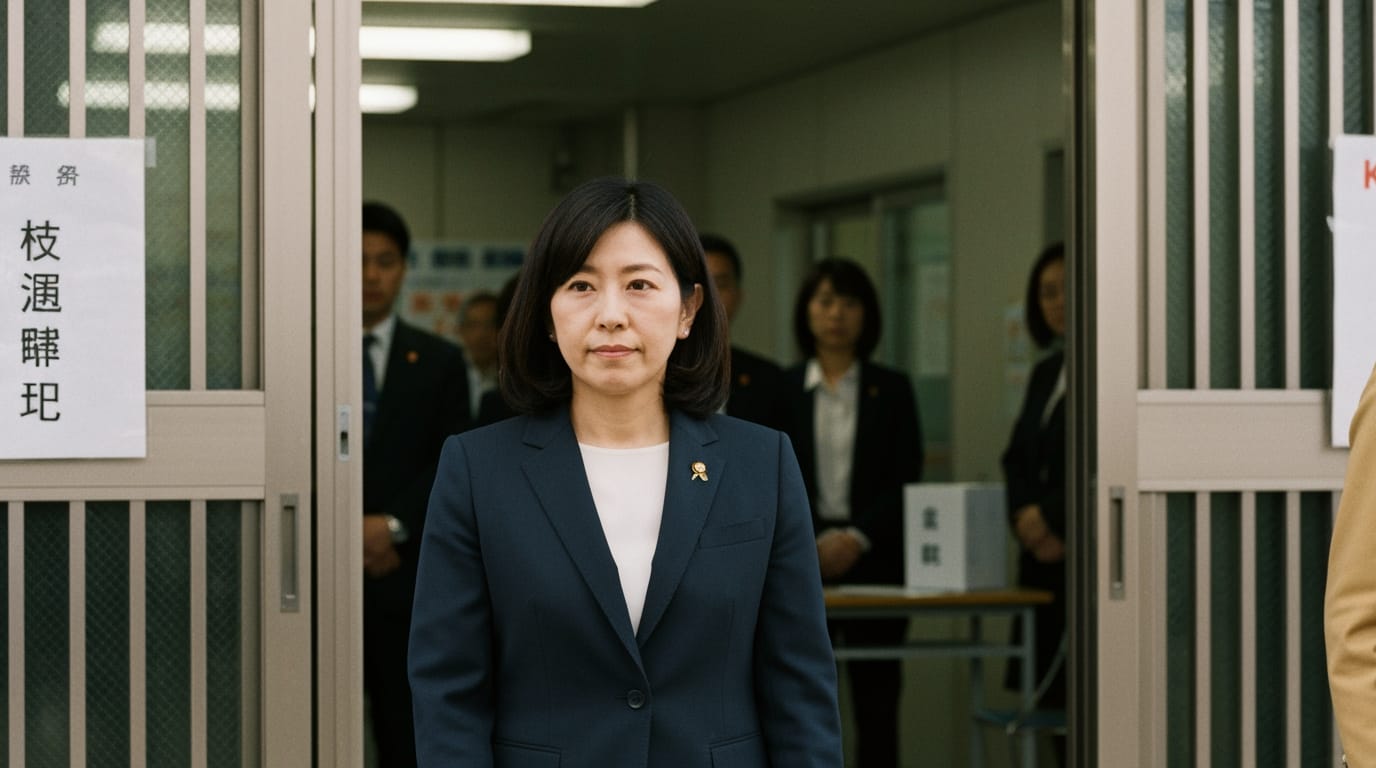
TOKYO – Just months after ascending to become Japan's first female Prime Minister, Sanae Takaichi stands on the cusp of a commanding victory in a snap general election, with polls predicting her Liberal Democratic Party (LDP) and its coalition partner will secure a significant majority. This anticipated electoral success not only solidifies her groundbreaking leadership but also signals a potential further entrenchment of conservative policies in the world's third-largest economy. As ballots are cast, the nation watches closely to see if the "Iron Lady" of Japanese politics will translate her recent party triumph into a dominant mandate from the wider electorate.
Takaichi's journey to the pinnacle of Japanese politics has been marked by persistent ambition and a steadfast adherence to her conservative principles. Her anticipated victory in this general election comes on the heels of a pivotal LDP leadership contest in October 2025, where she broke a long-standing barrier to become the party's first female president. This triumph, which paved her way to the premiership, followed a period of considerable turmoil for the ruling LDP, grappling with significant electoral setbacks and a damaging political funding scandal that eroded public trust.
The Historic Ascent: From Party Unrest to Premier
Sanae Takaichi's rise to power culminated in her victory in the October 2025 Liberal Democratic Party presidential election. This contest was triggered by the resignation of Prime Minister Shigeru Ishiba, whose short tenure was marred by the LDP-Komeito coalition's severe losses in the 2024 House of Representatives and 2025 House of Councillors elections, leading to the party losing its majority in both chambers. The crisis within the LDP, coupled with public discontent over failed economic policies and corruption allegations, created a vacuum that Takaichi, a long-serving politician and protégé of the late Prime Minister Shinzo Abe, was determined to fill.
Her path to leadership was not without its challenges. Takaichi had previously contested the LDP leadership in 2021, where she was eliminated in the first round, finishing third behind eventual winner Fumio Kishida. She made another attempt in the 2024 leadership election, securing first place in the initial round but ultimately losing to Shigeru Ishiba in a runoff. However, her persistence paid off in 2025. In the first round of voting, Takaichi led with 31.07% of the vote, securing her place in a runoff against Shinjiro Koizumi. She ultimately defeated Koizumi, garnering 54.25% of the runoff vote, thus making history as the LDP's first female president. Following this party victory, she was elected Prime Minister by the National Diet on October 21, 2025. Her successful bid was seen by some as the LDP's strategic move to embrace ultra-right-wing ideologies in an attempt to win back voters who had been gravitating towards emergent populist parties.
The "Iron Lady's" Ideological Blueprint
Often dubbed Japan's "Iron Lady" for her conservative stance and admiration for former British Prime Minister Margaret Thatcher, Takaichi's political platform is distinctly right-leaning. A staunch advocate for a stronger military, she supports revising Article 9 of Japan's pacifist Constitution, a long-held ambition within conservative circles. Her foreign policy is characterized by a pro-Taiwanese stance and a commitment to strengthening the US-Japan alliance, while also being described as a "China hawk." Takaichi's past visits to the controversial Yasukuni Shrine, which honors Japan's war dead including convicted war criminals, have drawn criticism internationally and domestically, further solidifying her image as a wartime history revisionist.
Economically, Takaichi aligns with policies reminiscent of "Abenomics," advocating for fiscal expansion and structural reforms to stimulate growth. She has called for increased fiscal spending for economic growth, promotion of nuclear fusion and cybersecurity, and tougher policies on immigration. On social issues, her views are notably conservative: she opposes same-sex marriage, the recognition of separate surnames for spouses, and female succession to the Japanese imperial throne. Despite her traditional social views, Takaichi has also spoken about her struggles with menopausal symptoms and emphasized the importance of educating men about female health to better support women in both academic and professional settings.
Campaign Momentum and Public Appeal
The current snap general election, called by Prime Minister Takaichi in 2026, appears to be a strategic move to capitalize on her honeymoon period and secure a stronger public mandate. Opinion polls suggest her Liberal Democratic Party will comfortably regain a majority in the powerful 465-member lower house, potentially achieving a two-thirds majority with its coalition partner. This would mark the LDP's best result since 2017, a feat achieved by her mentor, Shinzo Abe.
Beyond her policy positions, Takaichi has cultivated a unique public persona that resonates with a significant portion of the electorate. Despite her ultraconservative image, she has garnered substantial support, particularly among younger voters, with recent polls indicating around 90% approval from those under 30 and an overall popularity standing at approximately 60%. This phenomenon, dubbed "Sana-mania," revolves around her personality, outfits, and even her preferred pink pen. Voters are reportedly attracted to her clear, decisive way of speaking and her "bright, positive" energy. Unlike many of her male predecessors, Takaichi reportedly shuns late-night political gatherings and expensive restaurants, preferring home comforts and early morning meetings with aides, a trait that might appeal to an electorate weary of traditional political practices. Her humble upbringing, with a police officer mother and car company employee father, also sets her apart from many LDP elites who often hail from more privileged backgrounds.
Implications for Japan's Future Trajectory
A strong victory for Sanae Takaichi and the LDP in this snap general election carries significant implications for Japan's future. Domestically, it is expected to solidify a conservative trajectory for the nation, with potential accelerated efforts towards constitutional revision, particularly concerning military capabilities. Her economic policies, rooted in "Abenomics," aim to drive growth through fiscal measures, though some economists express caution regarding her proponent stance on expansionary fiscal policy, noting concerns about widening income gaps and potential inflation. Her social conservatism is likely to continue influencing debates on issues such as same-sex marriage and imperial succession.
On the international stage, Takaichi's leadership, characterized by a "China hawk" stance and strong US-Japan alignment, could lead to a more assertive and robust Japanese foreign policy, particularly in response to regional tensions, such as those concerning Taiwan. Her remarks suggesting Japan's potential involvement if China takes military action against Taiwan have already inflamed diplomatic tensions with Beijing. Her victory could also see Japan taking a harder line on immigration, a sensitive issue given the country's declining birthrate and aging population.
As Japan navigates complex geopolitical and economic landscapes, Sanae Takaichi's historic rise and anticipated electoral triumph mark a significant turning point. Her administration will be closely watched, both at home and abroad, as she seeks to implement her conservative vision for a "strong and prosperous" Japan, balancing domestic reforms with a more assertive presence on the global stage. The outcome of this snap election will not only define her mandate but also cast a long shadow over the direction of Japanese politics for years to come.


