Hawaii's Bold Bet: Can the Aloha State Break Free from Oil's Grip?
HONOLULU, HAWAII – Perched in the vast expanse of the Pacific Ocean, the Hawaiian Islands have long grappled with an inherent paradox: breathtaking natural beauty powered by a deep dependence on imported fossil fuels. For decades, the archipelago’s energy security and economic stability have been tethered to the volatile global oil markets, making it home to the nation's highest electricity prices. However, a groundbreaking legislative mandate to achieve 100% clean energy by 2045 has set Hawaii on an ambitious, challenging, yet potentially transformative path toward energy independence and sustainability.
An Island Economy Hooked on Oil
Hawaii's geographical isolation, while a source of its unique allure, has historically made it heavily reliant on imported petroleum for virtually all its energy needs, from transportation to electricity generation. In recent years, a significant portion of the state's electricity generation, approximately 67% in 2023, still originated from petroleum, a stark contrast to the national average of less than 1%. This reliance meant that as recently as 2014, importing oil cost the state an estimated $4.5 billion annually, or about $3,200 for every resident, with every cent leaving the local economy. This translates directly to the highest electricity prices in the United States, averaging $0.41 per kilowatt-hour as of September 2024, compared to significantly lower national rates. The imported oil often originates from distant foreign countries, exposing Hawaii to supply chain disruptions, price volatility, and geopolitical instabilities. Beyond the economic burden, the transport and combustion of these fossil fuels pose considerable environmental risks, including greenhouse gas emissions and potential marine pollution from offshore fuel transport.
The Audacious Goal: 100% Clean Energy by 2045
Recognizing the unsustainable nature of its energy status quo, Hawaii became the first U.S. state to commit to a 100% renewable energy mandate, aiming for its electricity sector to be fully powered by clean sources by 2045. This pioneering legislative move in 2015 established a bold vision to break free from fossil fuel dependency and leverage the state's abundant natural resources. The aggressive timeline underscores a commitment not only to environmental stewardship but also to enhancing energy security and fostering local economic resilience. This ambitious target has positioned Hawaii as a global leader and a living laboratory for renewable energy integration on an isolated grid.
Harnessing the Elements: Renewable Solutions Taking Root
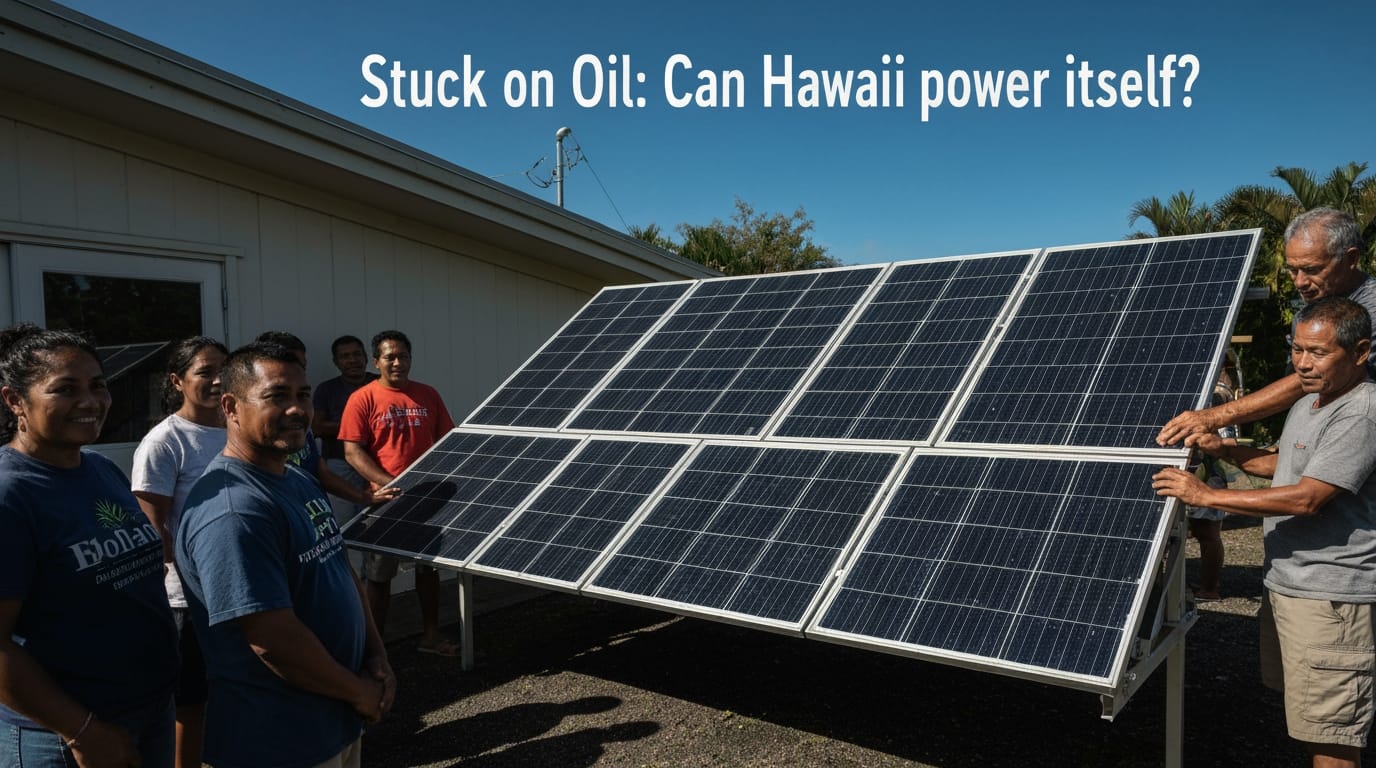
The Aloha State is blessed with diverse and potent renewable energy resources, which are now being vigorously developed to meet its 2045 goal. Solar power, particularly rooftop photovoltaic systems and utility-scale solar farms, is a major component of the strategy, capitalizing on Hawaii's abundant sunshine. Wind energy is also expanding, with turbines dotting landscapes and contributing significantly to the renewable portfolio. The volcanically active Big Island is uniquely positioned to harness geothermal energy, which is considered a foundational, consistent power source that could become the "backbone" of its energy system. Additionally, biomass and hydroelectric power play smaller yet crucial roles in the energy mix.
Significant strides have already been made. As of 2021, renewable energy sources constituted 34.5% of the electricity generated on Oahu, Maui, and the island of Hawaii. The state also marked a historic milestone with the closure of its last coal-fired power plant in September 2022, effectively eliminating a significant source of emissions and imported fuel. Islands like Kauai have been particularly aggressive in their transition, demonstrating what is possible through concerted effort. The Kauai Island Utility Cooperative (KIUC) has been a "laboratory for innovation," implementing utility-scale battery systems to integrate renewables and maintain grid stability, proving the viability of high renewable penetration on an isolated grid. KIUC's efforts include hundreds of small solar systems and significant utility-scale projects, alongside the development of small hydro systems and biomass plants.
Navigating the Complexities of Transition
Despite the impressive progress, Hawaii's journey to 100% clean energy is fraught with complex challenges. Integrating a high percentage of intermittent renewable sources like solar and wind onto a relatively small, isolated grid demands substantial modernization of infrastructure. This includes deploying advanced battery storage systems to smooth out power fluctuations and ensure continuous supply, as demonstrated by KIUC. The planning for an inter-island undersea power cable is also underway, which could allow for sharing renewable resources across islands and enhance overall grid stability.
Land use for large-scale solar and wind farms presents another hurdle, requiring careful balancing of environmental concerns, agricultural needs, and community desires. Permitting processes and securing community acceptance for new energy projects can be lengthy and contentious, often delaying implementation. Furthermore, the very nature of an island grid means there is no continental backup, emphasizing the critical need for robust energy storage and smart grid technologies to maintain reliability. While the use of fossil fuels for electricity generation has declined, the transportation sector, largely reliant on imported liquid fuels, remains a significant challenge for decarbonization.
A Blueprint for a Sustainable Future
Hawaii's audacious quest for energy independence by transitioning to 100% clean energy is more than just an environmental imperative; it is an economic and social transformation. By reducing its reliance on imported fossil fuels, the state can mitigate the economic drain of billions of dollars leaving its economy annually, instead fostering local investment and job creation in the burgeoning renewable energy sector. It also lessens Hawaii's vulnerability to global energy market fluctuations and strengthens its overall energy security. The environmental benefits are profound, contributing to a cleaner atmosphere and protecting the unique marine ecosystems that define the islands.
As Hawaii continues to navigate the complexities of this transition, its experience serves as a critical case study for other isolated regions and even larger nations striving for similar goals. The blend of innovative technology, strategic policy, and community engagement required to achieve such a monumental shift offers invaluable lessons. While the path ahead remains challenging, Hawaii’s commitment to self-reliance through sustainable energy sources positions it not just as a leader, but as a beacon of possibility for a planet seeking a cleaner, more resilient future.