Bavarian Town Pioneers "Play Money" to Combat Climate Change, Fostering Local Economy and Green Initiatives
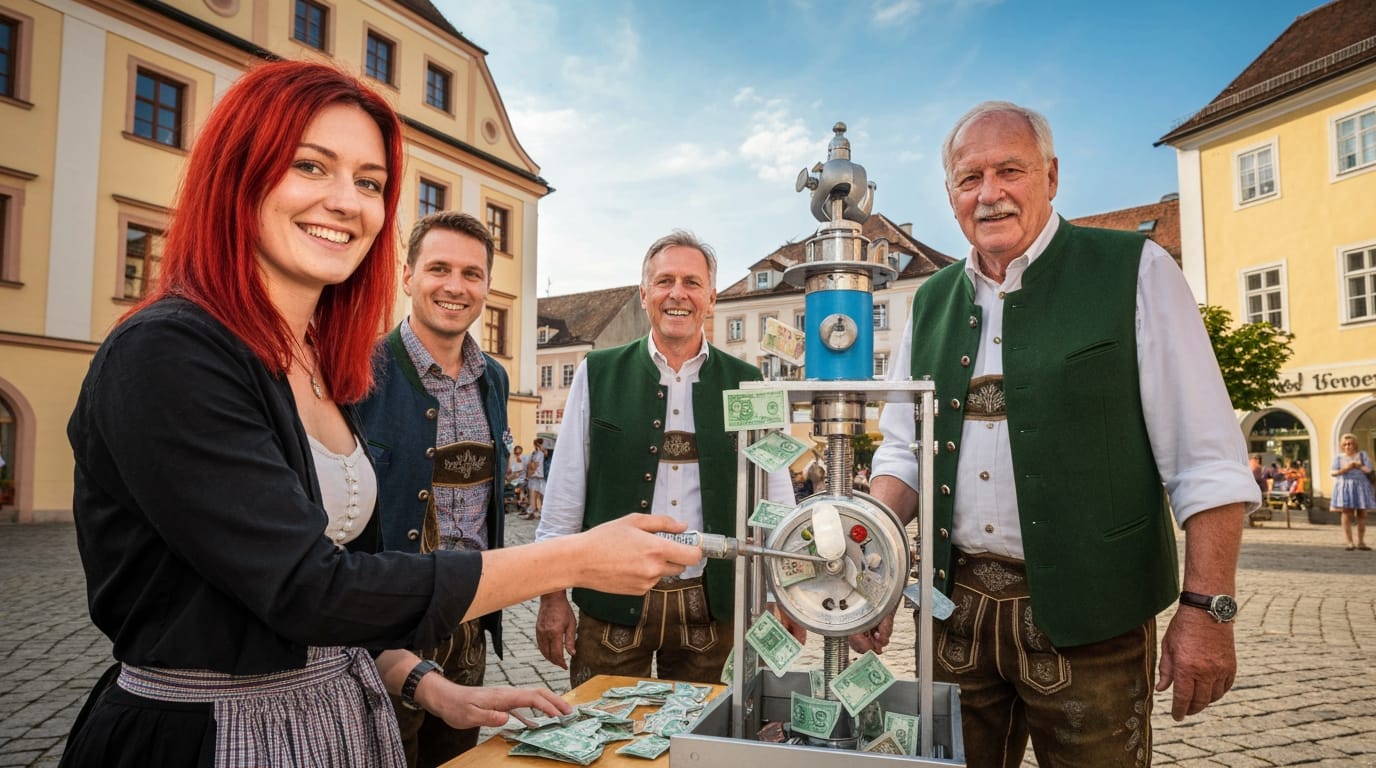
In a groundbreaking initiative, a region in Bavaria, Germany, is demonstrating how a unique local currency, known as the "Chiemgauer," can serve as a powerful tool to simultaneously bolster the local economy and significantly reduce carbon dioxide emissions. Far from mere tokens, these specially designed notes and their electronic counterparts function as a parallel financial system, actively rewarding residents for climate-friendly behaviors and channeling economic activity back into the community. The system has reportedly saved thousands of tons of CO2, offering a compelling model for localized climate action.
The Chiemgauer currency, which may visually resemble "play money" to an outsider, is fully spendable within a network of local businesses, allowing residents to pay for goods and services in a manner distinct from traditional euros. What began as an innovative classroom experiment to address local economic challenges has evolved into a sophisticated microfinance system with a tangible environmental impact, showcasing how monetary design can be leveraged for societal good.
The Chiemgauer: A Currency with a Conscience
The genesis of the Chiemgauer can be traced back to a classroom in Bavaria, where a teacher and his students conceived the idea to counter the outflow of money from local stores to larger shopping malls and external chains. The simple yet profound concept was to create a currency that could only be spent at participating local businesses, thereby strengthening the regional economy. This local currency, which can exist in both cash and electronic forms, circulates through approximately 4,200 individuals and 300 businesses, with an estimated 5 million Chiemgauers spent annually. While not replacing Germany's official currency, the euro, the Chiemgauer operates alongside it as a complementary system.
Over time, the Chiemgauer's mission expanded beyond economic revitalization to actively address environmental concerns. It evolved to incorporate a "climate bonus" reward system, directly incentivizing residents to adopt more sustainable practices. This innovative approach has transformed the local currency into a potent instrument for climate action, demonstrating that financial systems can be purposefully designed to encourage pro-environmental behaviors.
Incentivizing Green Living Through Financial Rewards
The "climate bonus" program is central to the Chiemgauer's environmental strategy, offering financial rewards in Chiemgauer currency for specific actions that reduce carbon footprints. Residents are incentivized for a range of eco-conscious choices, from installing solar panels on their balconies, which can earn them 100 Chiemgauers and contribute to saving 11 tons of carbon dioxide over 20 years, to utilizing shared car services, which yields 50 Chiemgauers. Other rewarded activities include repairing clothing instead of purchasing new items, and insulating homes with natural materials, all of which contribute to a collective reduction in CO2 emissions.
The funding for these climate bonuses is ingeniously integrated into the local economic model. Local businesses and individuals contribute to a fund designed to offset their own carbon emissions. This creates a localized, small-scale emissions trading system, where the financial input from those offsetting emissions directly supports and rewards the climate-friendly actions of others within the community. For every ton of emissions offset through these contributions, approximately nine tons of CO2 are saved through the incentivized behaviors like solar energy adoption and car sharing. This closed-loop system ensures that the currency actively promotes sustainable practices, fostering a greener local economy.
Tangible Impacts and Community Engagement
The environmental benefits of the Chiemgauer system are demonstrably significant. In the past four years alone, the climate bonus system has been credited with saving an estimated 12,800 tons of CO2. This figure is comparable to the average emissions of 2,000 cars over the same period, underscoring the substantial collective impact of individual actions driven by the currency. Independent auditors have reviewed these numbers, confirming the effectiveness of the system in reducing CO2 emissions through supported car sharing and balcony solar installations.
The success of the Chiemgauer is rooted in robust community participation. While it operates as a complementary currency, it engages a substantial portion of the local population and businesses, fostering a strong sense of collective responsibility for environmental stewardship and local economic health. The mechanism is designed to encourage continuous spending within the local circuit; individuals cannot exchange Chiemgauers for euros, while businesses can, albeit with a 5% deduction that supports the currency's operations and local associations. This structure ensures that the money continues to circulate locally, amplifying both its economic and environmental benefits. The Chiemgauer model has even seen expansion, with the climate bonus reward system being adopted in four additional regions across Germany.
Navigating Limitations and Future Potential
Despite its innovative success, the Chiemgauer system operates with certain inherent limitations. Its scope is inherently regional, and it cannot fully address consumption patterns that rely on goods produced abroad and shipped globally, such as clothing or technology. Furthermore, the scale of its adoption remains modest, with less than 1% of locals actively using the Chiemgauer. This limited scale is a deliberate aspect of its operation, as expanding too rapidly could trigger regulatory oversight from Germany's federal bank, which could potentially stifle the initiative.
Nevertheless, the Chiemgauer offers crucial lessons for broader climate policy. It highlights that monetary systems are not immutable and can be deliberately designed to achieve specific goals, including emission reduction. Experts in complementary currencies suggest that while such regional systems might be small in the grand scheme, they effectively demonstrate how financial incentives can shift behavior towards environmental sustainability. The model's expansion to other German regions indicates a growing recognition of its potential as a localized, bottom-up approach to climate action, complementing larger-scale governmental efforts like Germany's national emissions trading system or ambitious targets for CO2 reduction.
In recent years, Germany has made considerable strides in reducing its overall CO2 emissions, reaching their lowest levels in seven decades due to declining coal usage and economic pressures on energy-intensive industries. The nation is committed to achieving net-zero emissions by 2045 and is heavily investing in renewable energy and carbon removal technologies. While the Chiemgauer operates on a different scale, it aligns with this national ambition by demonstrating practical, community-driven methods to foster a greener economy from the ground up.
Conclusion: A Local Solution with Global Implications
The Chiemgauer currency stands as a compelling testament to the power of local innovation in the global fight against climate change. By integrating environmental incentives directly into a community-based economic system, this Bavarian initiative has not only strengthened local commerce but also fostered significant CO2 reductions. It shows that financial tools can be reimagined beyond their traditional roles to actively promote sustainable living. While its reach may be constrained by design, the Chiemgauer provides invaluable insights into how monetary systems can be engineered to encourage environmental responsibility, offering a powerful, replicable blueprint for communities worldwide seeking to make a tangible difference in their carbon footprint. The lesson from this German town is clear: when money is designed to reward ecological stewardship, people will respond, creating a virtuous cycle of economic vitality and environmental protection.