High-Stakes Balloting Underway in Tamil Nadu and West Bengal Assembly Elections
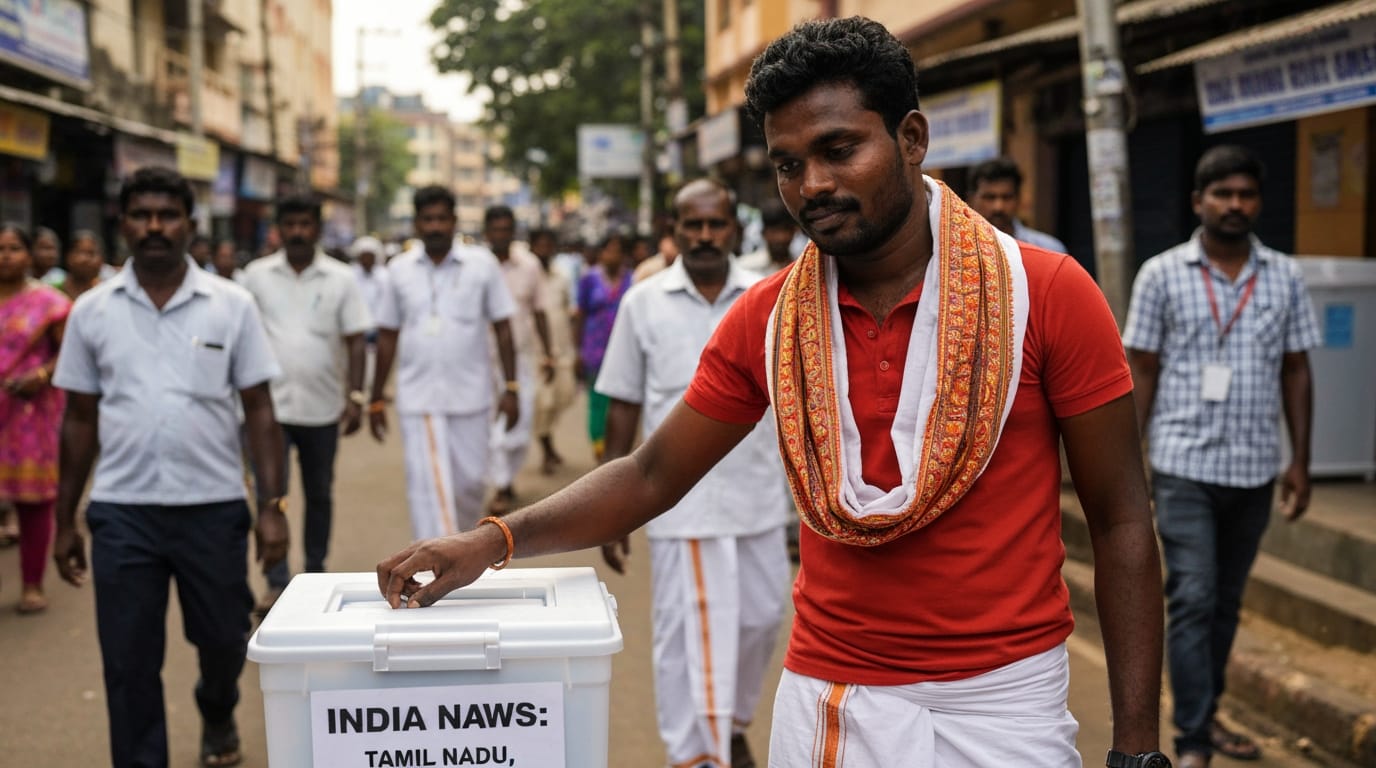
Chennai/Kolkata, India – Voters in the key Indian states of Tamil Nadu and West Bengal headed to the polls today, April 23, 2026, marking a critical phase in the nation's democratic exercise. These Assembly elections, unfolding amidst intense political rivalries and significant policy debates, will determine the future leadership and legislative direction of both states for the next five years. While Tamil Nadu casts votes in a single phase across all its 234 constituencies, West Bengal commences its two-phase electoral battle, with 152 constituencies participating in this initial round. The outcomes, slated for declaration on May 4, are poised to send ripples through the national political landscape.
Dravidian Dynamics and the New Entrant in Tamil Nadu
Tamil Nadu, a state with a rich and distinctive political history rooted in Dravidian ideology, is witnessing a fiercely contested election that could redefine its long-standing bipolar political structure. The ruling Dravida Munnetra Kazhagam (DMK), leading the Secular Progressive Alliance (SPA) which includes the Indian National Congress, is seeking an unprecedented second consecutive term under Chief Minister M.K. Stalin. Pitted against them is the All India Anna Dravida Munnetra Kazhagam (AIADMK), heading the National Democratic Alliance (NDA) with the Bharatiya Janata Party (BJP) and Pattali Makkal Katchi (PMK) as key allies, striving to make a comeback after five years in opposition.
However, a new force has disrupted this traditional duopoly: the Tamilaga Vettri Kazhagam (TVK), led by actor-politician C. Joseph Vijay, who is making a high-profile electoral debut. TVK is contesting all 234 seats, transforming the electoral battle into a triangular contest and potentially fragmenting the anti-DMK vote. Early reports indicate a voter turnout of over 37% by 11 AM across Tamil Nadu, reflecting considerable public engagement. Political observers are closely watching whether Vijay's entry will significantly alter the decades-old power-sharing pattern between the DMK and AIADMK.
Key Issues Dominating the Tamil Nadu Election
The campaign in Tamil Nadu has revolved around a spectrum of issues, from governance and welfare schemes to rising concerns over crime and the state's financial health. The incumbent DMK government is banking heavily on its social welfare initiatives and investments, aiming to secure public mandate for its "Dravidian model 2.0" vision. Conversely, the AIADMK and other opposition parties have intensified their attacks, alleging systemic corruption across various departments and accusing the DMK of driving the state into a "debt trap," with state debt reportedly doubling to over Rs 10 lakh crore since 2021.
Unfulfilled promises from the previous election, such as the scrapping of the National Eligibility cum Entrance Test (NEET), restoration of the Old Pension Scheme, waiving of education loans, and filling two lakh government vacancies, have also been central to the opposition's narrative. Rising crimes against women have emerged as a significant point of concern among the electorate. Youth voters, a substantial demographic, are particularly focused on employment opportunities, quality education, digital access, and overall economic growth, influencing the tailored campaigns of all major parties. The electoral fate of prominent leaders like Chief Minister M.K. Stalin (Kolathur) and Deputy CM Udhayanidhi Stalin (Chepauk-Thiruvallikeni), along with TVK's Vijay contesting from Tiruchirapalli East and Perambur, is being keenly observed.
West Bengal's Battle for Identity and Governance
In West Bengal, the first phase of the Assembly elections commenced today across 152 constituencies, with the state preparing for a second phase on April 29. The battle for control of the 294-seat Assembly is primarily a direct confrontation between the ruling Trinamool Congress (TMC), led by Chief Minister Mamata Banerjee, and the Bharatiya Janata Party (BJP), which has emerged as a formidable challenger. The TMC is seeking a fourth consecutive term, anchoring its campaign around welfare schemes, governance achievements, and the preservation of Bengali identity and culture. Meanwhile, the BJP aims to translate its growing influence into a decisive victory, focusing on anti-incumbency sentiments, allegations of corruption, concerns over law and order, and issues of illegal infiltration and border security.
Initial polling figures indicate a turnout of 41.11% till 11 AM in West Bengal's first phase. The election in West Bengal is seen as a critical juncture for the state's socio-political fabric, determining whether its predominantly centrist and secular politics will continue or shift towards a more right-wing, Hindu-nationalist orientation.
The Shadow of Voter Deletions and Security Measures
A significant and controversial aspect of the West Bengal elections has been the Special Intensive Revision (SIR) of voter rolls. This exercise, which aimed to "purify" the electoral list, resulted in the deletion of approximately 9.1 million names from the register, representing more than 10% of the electorate. While some deletions were attributed to deceased voters or duplicates, about 2.7 million individuals who challenged their expulsions were still removed, raising concerns about mass disenfranchisement, particularly affecting minorities. The Trinamool Congress has accused the Election Commission of acting at the behest of the BJP, while the BJP defends the revision as necessary to remove bogus entries and illegal migrants.
To ensure a free, fair, and peaceful election, tight security measures are in place across both states. The Election Commission of India (ECI) has deployed a record number of central paramilitary forces, with around 2.5 lakh personnel in West Bengal alone, overseeing the process and addressing concerns of intimidation and clashes. Chief Minister Mamata Banerjee has questioned the unprecedented deployment, alleging attempts by the BJP-led Centre to influence the polls.
A Glimpse into the Future
As votes are cast and polling continues throughout the day, these elections represent more than just a change in state leadership. In Tamil Nadu, the outcome will test the resilience of the Dravidian model and the adaptability of established political heavyweights in the face of new contenders. The "Vijay factor" introduces an unpredictable element that could reshape alliances and voter loyalties for years to come.
Similarly, West Bengal's results will be a crucial indicator of voter sentiment regarding governance, identity, and the national political narrative. The intense competition between the TMC and BJP, coupled with the controversies surrounding voter list revisions, underscores the high stakes involved. Both the DMK in Tamil Nadu and the TMC in West Bengal face the challenge of robustly mobilizing their supporters to overcome anti-incumbency and external pressures. The counting of votes on May 4 will reveal the choices of millions and set the course for these politically vibrant states.


