High-Stakes Diplomacy Underway as US and Iran Face Off in Islamabad Amidst Regional War
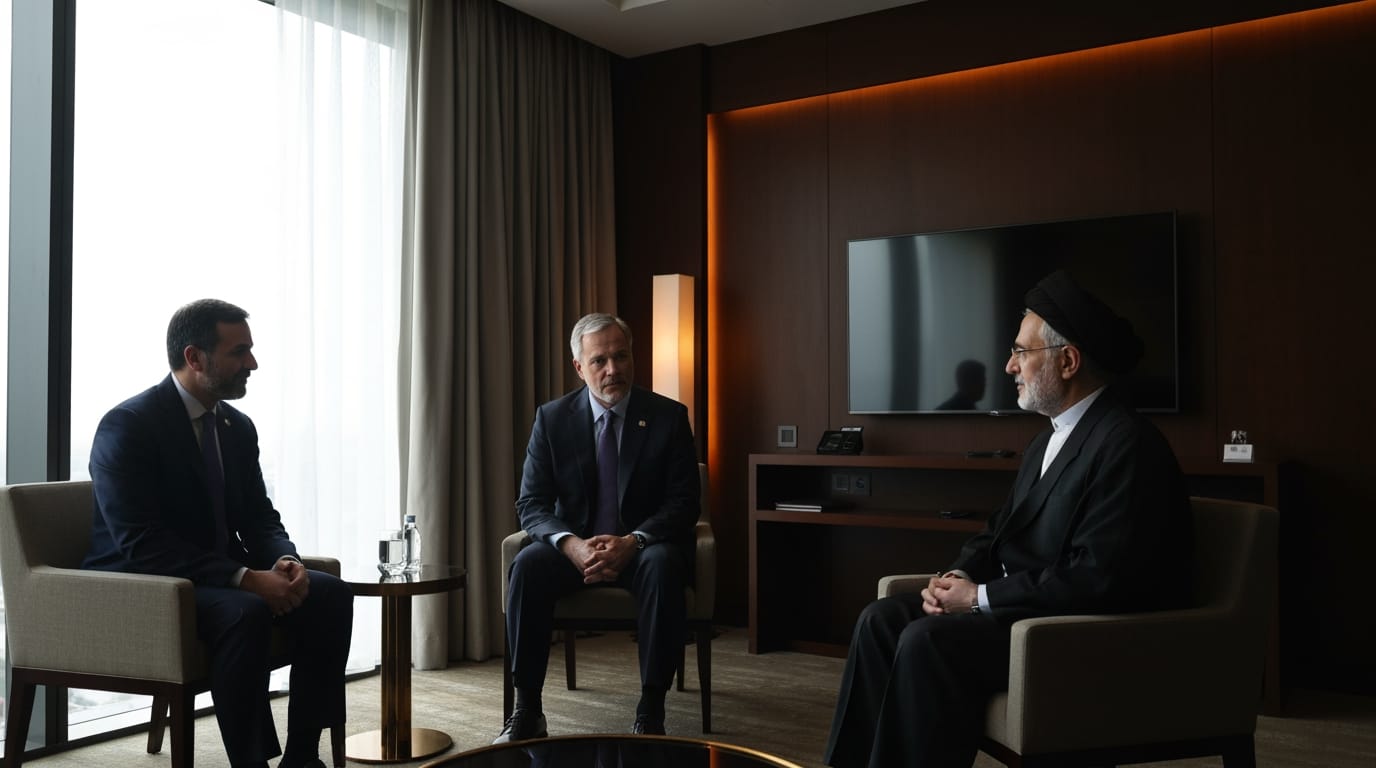
Islamabad, Pakistan – The global spotlight has converged on Islamabad as high-level delegations from the United States and Iran arrived for critical peace talks today, aiming to de-escalate a six-week-old war that has ravaged the Middle East and triggered a devastating global energy crisis. Hosted by Pakistan, which has emerged as an unexpected mediator, these "make-or-break" negotiations are taking place amidst a fragile two-week ceasefire and deep-seated mistrust between the two adversaries. The outcome of these discussions, held under an unprecedented security lockdown in the Pakistani capital, carries immense implications for regional stability and the world economy.
Islamabad Transforms into a Diplomatic Fortress
Pakistan's capital city, Islamabad, has been transformed into a virtual fortress, with army and paramilitary rangers deployed across the city and a public holiday declared to ensure the security of the arriving delegations. The streets, usually bustling, were eerily empty as the city prepared for what Prime Minister Shehbaz Sharif described as "make-or-break" talks. The U.S. delegation, led by Vice President JD Vance and including special envoys Steve Witkoff and Jared Kushner, arrived with a clear mandate from President Donald Trump. Simultaneously, Iran's contingent, spearheaded by Parliament Speaker Mohammad Bagher Ghalibaf and Foreign Minister Abbas Araghchi, also landed in Islamabad, with senior figures from Iran's Revolutionary Guard reportedly among them.
The negotiations are set to unfold in a "proximity format" at the exclusive Serena Hotel, a method where delegations occupy separate rooms, and Pakistani officials shuttle messages between them. This indirect approach underscores the profound lack of direct diplomatic ties between the two nations since 1980, with Pakistan notably serving as Iran's protecting power in the U.S. and Switzerland for the U.S. in Iran. Pakistan's sudden, pivotal role as a peace broker represents a significant diplomatic victory for a nation often associated with regional instability rather than mediation. Pakistani officials, including Prime Minister Sharif and Foreign Minister Ishaq Dar, have engaged in intense diplomatic efforts, making or receiving over 25 contacts in 48 hours to facilitate these talks, demonstrating a commitment to fostering dialogue.
Deep Divides and Contentious Preconditions
Even before the talks officially commenced, the significant chasm separating the two sides became starkly apparent. Iran has laid down clear preconditions for meaningful negotiations: a complete ceasefire in Lebanon and the immediate unfreezing of billions of dollars in Iranian assets. Iranian Parliament Speaker Ghalibaf emphasized that while Tehran approaches the talks with "good intentions," it harbors no trust in the United States, citing a history of unfulfilled promises and failures in past negotiations. He stressed that peace negotiations would be "meaningless" if bombs continued to fall on Lebanon, where Israeli bombardments targeting Hezbollah have resulted in nearly 2,000 casualties since March.
Conversely, the U.S. and Israel maintain that the situation in Lebanon is a separate issue, not intrinsically linked to the current ceasefire agreement. Vice President Vance, while expressing hope for a positive outcome, issued a stern warning to Iran not to "play" the U.S. during the negotiations. President Trump, known for his assertive diplomacy, further reinforced this stance through social media, asserting that Iran possesses "no cards" other than the short-term "extortion" of global waterways. He also reportedly warned that if the Pakistan talks fail, U.S. warships, now reloaded with advanced weaponry, are prepared for large-scale attacks. These statements highlight the precariousness of the current ceasefire and the immense pressure on negotiators to find common ground.
A War's Devastating Toll and Global Ramifications
The urgency of the Islamabad talks is underscored by the devastating impact of the ongoing six-week conflict. Originating in late February with attacks by the U.S. and Israel on Iran, the war has claimed thousands of lives across ten nations and unleashed widespread economic hardship globally. A critical component of this economic fallout has been Iran's retaliatory blockade of the Strait of Hormuz, a vital shipping route responsible for a significant portion of the world's oil and gas transit. This blockade has triggered the worst energy crisis in history, leading to soaring global oil and gas prices, exacerbated inflation, and a significant slowdown in the global economy. Even if a breakthrough is achieved in Islamabad, experts anticipate that the disruption to energy supplies and the broader economic impact could persist for months.
Beyond the immediate economic strain, the conflict has also drawn in various regional players. Gulf countries, including Qatar and Saudi Arabia, have faced heavy bombardments from Iran since the war's inception, and their delegations are also expected to be in Islamabad for potential sideline talks. The complexities of these interconnected regional conflicts add another layer of difficulty to the already intricate US-Iran negotiations. Pakistan itself has a vested interest in the resolution of the conflict, as its own fragile economy is highly exposed to spillover effects, particularly from high energy prices.
A History of Mistrust and Fragile Diplomatic Attempts
The current confrontation in Islamabad is set against a long and tumultuous history of US-Iran relations, marked by decades of mistrust, proxy conflicts, and failed diplomatic overtures. The two nations have had no formal diplomatic relations since 1980, and direct talks have often been limited or conducted through intermediaries. Previous attempts at dialogue, such as the 2015 Joint Comprehensive Plan of Action (JCPOA) nuclear deal, provided a brief period of cooperation, only to see the U.S. withdraw in 2018 under the Trump administration.
Even in the lead-up to the current conflict, indirect talks had been ongoing. In April 2025, U.S. Special Envoy Steve Witkoff and Iranian Foreign Minister Abbas Araghchi engaged in a series of indirect discussions in Oman, focusing primarily on Iran's nuclear program. These talks, initiated after a letter from President Trump to Iran's Supreme Leader, were described as "constructive," but ultimately did not prevent the escalation to the current war. The memory of these past failures and the deep-seated grievances on both sides—ranging from the 1953 CIA-backed coup in Iran to recent assassinations and threats—cast a long shadow over the current negotiations.
A Glimmer of Hope Amidst the Brinkmanship
The talks in Islamabad represent a crucial juncture for the United States and Iran, and by extension, for global peace and stability. While the stated aim is to achieve a lasting peace and end the devastating six-week war, the immediate goal for Pakistan and other international observers is to find enough common ground to simply keep the dialogue going. The presence of such high-level delegations, despite the overt distrust and maximalist demands from both sides, signals a shared, if reluctant, recognition that a diplomatic solution, however difficult, is preferable to continued conflict.
The world watches with bated breath as these historic negotiations unfold. The success or failure of these talks in Islamabad will determine not only the immediate future of the Middle East but also the trajectory of the global economy and international relations for years to come. The fragility of the current ceasefire, coupled with the dire consequences of further escalation, places an extraordinary burden on the negotiators to overcome decades of animosity and forge a path toward a more stable future.


