High-Stakes Diplomacy: US and Iran Converge in Oman Amid Deep Divisions
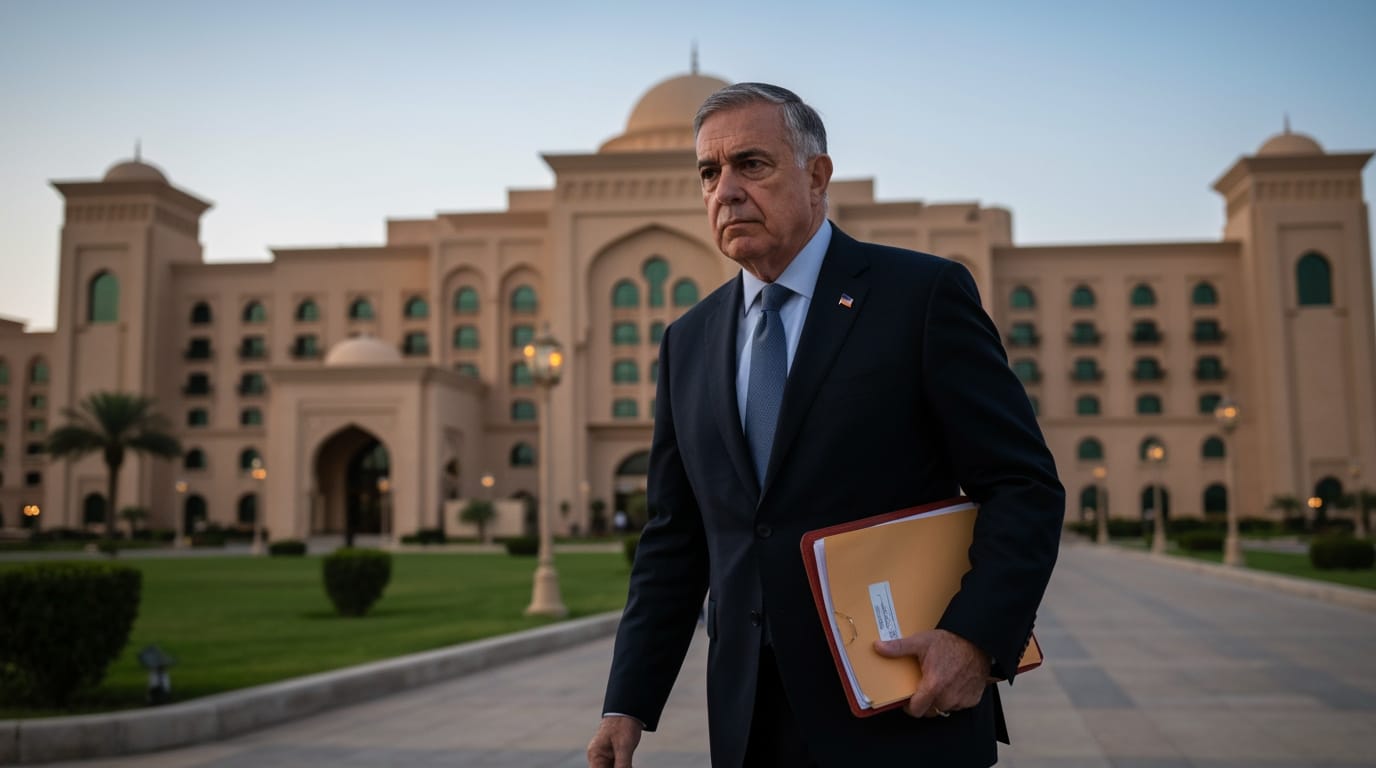
Muscat, Oman – In a tense diplomatic maneuver, officials from the United States and Iran are slated to commence critical talks in Muscat, Oman, on Friday, February 5, 2026. The bilateral discussions arrive at a precarious moment marked by escalating regional tensions, military posturing, and fundamental disagreements over the scope of negotiations. While both nations acknowledge the necessity of dialogue, the stark differences in their proposed agendas cast a long shadow over the prospects for a significant breakthrough.
Diplomacy Amid Escalation
The decision to hold talks in Oman follows a period of heightened friction in the Gulf, underscored by recent military incidents. Just days prior to the scheduled meeting, the U.S. military reported shooting down an Iranian drone that "aggressively" approached the USS Abraham Lincoln aircraft carrier in the Arabian Sea. Hours later, Iranian forces were reported to have threatened a U.S.-flagged vessel in the Strait of Hormuz, prompting an intervention by a U.S. destroyer. These events highlight the volatile environment surrounding the diplomatic efforts.
Initially, the talks were slated to take place in Turkey. However, Iran reportedly insisted on a change of venue to Oman, aiming to ensure negotiations would remain "solely" focused on its nuclear program. This move, according to a regional official, was intended to prevent the agenda from expanding to include broader issues such as Tehran's ballistic missile capabilities or its support for regional proxy groups. White House officials confirmed the U.S. would participate in the Oman talks, reportedly swayed by appeals from several Arab and Muslim leaders urging continued engagement with Tehran. Despite this, U.S. President Donald Trump has maintained a tough stance, indicating that Iranian Supreme Leader Ayatollah Ali Khamenei "should be very worried" and reiterating threats of military action should diplomacy fail. This backdrop of implicit threats and military maneuvers underscores the immense pressure on the diplomatic teams.
The Contentious Agenda: Nuclear Focus Versus Broader Concerns
The central impediment to these talks remains a profound divergence in what each side is willing to discuss. Iran has consistently pushed for the negotiations to be strictly confined to its nuclear program and the lifting of economic sanctions imposed by the United States. Iranian Foreign Minister Abbas Araghchi, who is expected to lead the Iranian delegation, publicly confirmed the talks' focus on nuclear matters. A source cited by Iran's semi-official Mehr News Agency emphasized that any attempts by the U.S. to introduce "issues outside the nuclear framework, including defense matters" would be rejected as "fundamentally non-negotiable." Tehran views its ballistic missile program and regional influence as integral to its national security and deterrent capability.
Conversely, the United States, represented by Special Envoy Steve Witkoff and potentially President Trump's son-in-law Jared Kushner, seeks a more comprehensive agenda. U.S. Secretary of State Marco Rubio and Vice President JD Vance have publicly stated that any meaningful discussions must extend beyond nuclear issues to include Iran's ballistic missile arsenal, its backing of armed proxy groups across the Middle East, and its human rights record. These broader demands, in Washington's view, are crucial for achieving lasting regional stability. The fundamental mismatch in expectations for the talks' scope presents a significant hurdle from the outset.
Oman's Enduring Role as a Discreet Mediator
Oman's selection as the host for these sensitive discussions is not without precedent. The Sultanate has a long-standing reputation as a discreet and trusted intermediary between Tehran and Washington, maintaining open communication channels with both capitals despite their strained relationship. Oman's history of neutrality and its pragmatic foreign policy have positioned it as an ideal venue for delicate diplomatic engagements that might falter elsewhere.
The nation played a pivotal, behind-the-scenes role in facilitating the secret backchannel talks that paved the way for the 2015 Joint Comprehensive Plan of Action (JCPOA), commonly known as the Iran nuclear deal. More recently, in September 2023, Oman also facilitated a complex prisoner exchange between the two adversaries, demonstrating its continued efficacy as a go-between. Its geographic proximity to Iran and its relatively low media profile also make it an attractive location for Tehran, which often prefers to avoid the intense scrutiny associated with European capitals. The consistent reliance on Oman highlights the enduring trust placed in its mediation capabilities by both the U.S. and Iran, providing a critical diplomatic bridge where direct engagement is fraught with political complexities.
Decades of Distrust and the Path Forward
The US and Iran have been without formal diplomatic relations since April 7, 1980, following the 1979 Iranian Revolution and the subsequent hostage crisis at the U.S. Embassy in Tehran. Since then, Switzerland has served as the protecting power for U.S. interests in Iran, while Pakistan represents Iranian interests in the United States. This four-decade absence of direct diplomatic ties has fostered deep-seated distrust and a cycle of escalating tensions.
The 2015 JCPOA aimed to curtail Iran's nuclear program in exchange for sanctions relief, but the U.S. withdrawal from the agreement in 2018 under President Trump and the subsequent reimposition of sanctions further exacerbated tensions. These actions led Iran to gradually roll back its commitments under the deal, with its uranium enrichment levels now nearing weapons-grade purity, a situation viewed with alarm by the international community. While Iran insists its nuclear program is for peaceful purposes, the U.S. and its allies, particularly Israel, remain highly skeptical.
Expectations for the talks in Oman remain cautiously low, primarily due to the vast chasm between the two sides' objectives and the history of failed attempts to broaden the dialogue beyond nuclear issues. However, the sheer necessity of de-escalation in a volatile region, coupled with the potential for devastating military conflict, compels both nations to the negotiating table. The immediate goal may simply be to establish a credible channel for communication and to prevent further escalation, with more complex issues potentially deferred.
Conclusion: A Test of Diplomatic Resolve
The convergence of U.S. and Iranian officials in Oman represents a critical test of diplomatic resolve amidst a deeply fraught relationship. With Iran insisting on a narrow, nuclear-focused agenda and the U.S. pushing for broader regional and security concessions, the path to common ground appears steep and challenging. Oman's proven ability to facilitate discreet dialogue offers a glimmer of hope for meaningful engagement. Yet, the legacy of distrust, coupled with the high stakes of nuclear proliferation and regional stability, means that any progress will likely be incremental and hard-won. The world watches closely as these adversaries attempt to navigate the treacherous waters of diplomacy, seeking a way to avert conflict and foster a more stable future in the Middle East.


