High-Stakes Moscow Talks Yield No Ukraine Peace Breakthrough
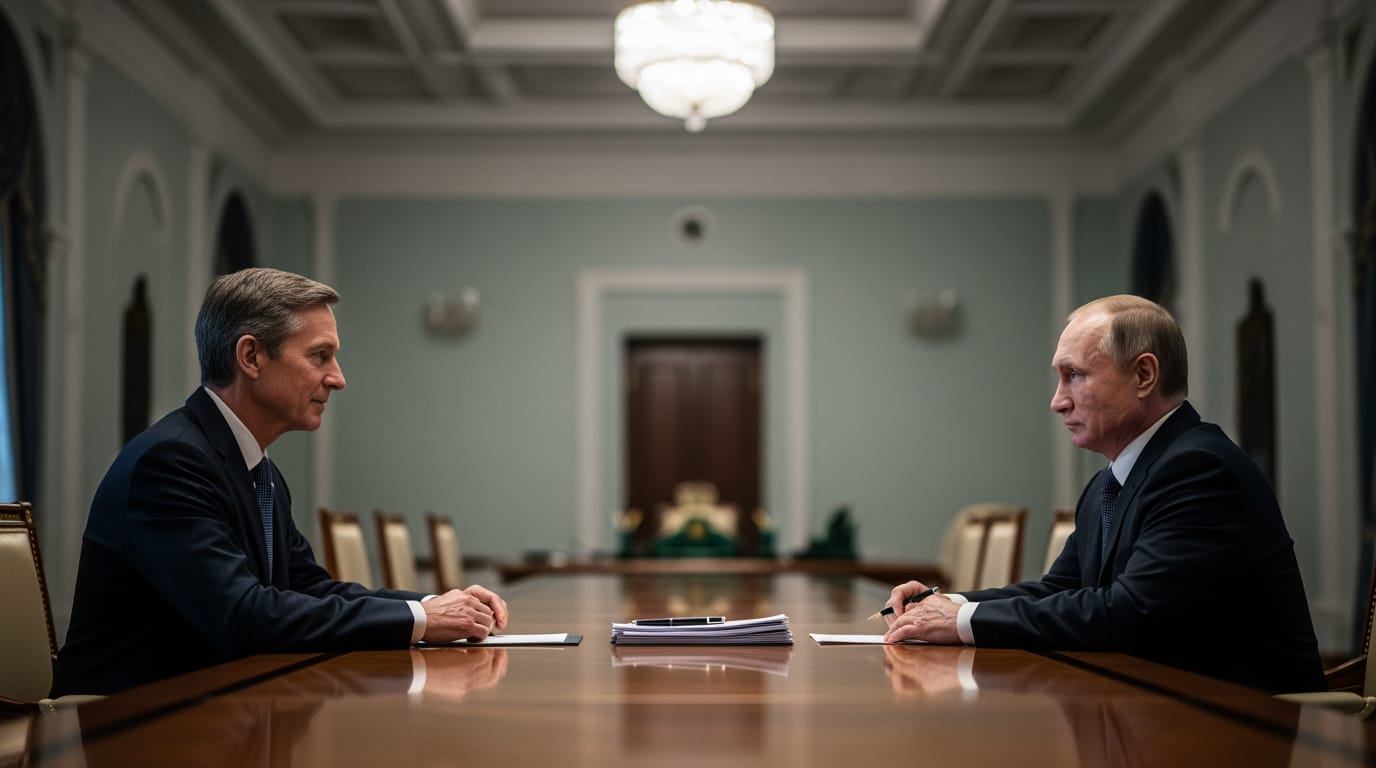
Moscow, Russia – High-level diplomatic efforts aimed at de-escalating the nearly four-year conflict in Ukraine hit a familiar wall this week, as U.S. Special Envoy Steve Witkoff and President Donald Trump's son-in-law, Jared Kushner, concluded a five-hour meeting with Russian President Vladimir Putin in Moscow without a concrete breakthrough. The December 2 talks, described by Russian officials as "useful" and "constructive" despite the lack of a tangible agreement, underscored the persistent chasm between Moscow, Kyiv, and their respective allies regarding a viable path to peace. The meeting signals a continued push by the Trump administration to broker an end to the war, yet it leaves the international community grappling with the enduring complexities and deeply entrenched positions that have thus far defied resolution.
The Kremlin Summit: A Test of Unconventional Diplomacy
The much-anticipated meeting took place in the Kremlin on Tuesday, December 2, bringing together key figures in the U.S. peace initiative with the Russian leadership. U.S. Special Envoy Steve Witkoff and Jared Kushner, an informal advisor to President Trump, engaged directly with President Vladimir Putin, alongside top Kremlin aide Yuri Ushakov and senior economic negotiator Kirill Dmitriev. The discussions, initially slated for five hours, stretched late into the evening, but the protracted engagement did not yield a definitive peace agreement. While Ushakov characterized the dialogue as "very useful, constructive, and highly substantive," he conceded that "no compromise version of a peace settlement has been found." Kremlin spokesperson Dmitry Peskov echoed this sentiment, confirming that while some American proposals were deemed "more or less acceptable," others were not. President Trump, upon receiving a briefing from his envoys, stated that his impression was Putin "would like to end the war," a cautiously optimistic assessment that contrasted with the more subdued reports from Moscow.
The Contentious Peace Proposal at the Core
The Moscow talks centered on a revised U.S.-backed 28-point peace proposal designed to end the nearly four-year conflict. This plan had been the subject of extensive shuttle diplomacy in the preceding weeks, including separate consultations between U.S. and Ukrainian officials in Geneva and Florida in late November 2025. The initial draft of the U.S. proposal, leaked in November, drew sharp criticism from Kyiv and several European capitals, who expressed concerns it leaned too heavily in favor of Russian demands. Critics pointed to provisions that allegedly called for Ukraine to cede territory, restrict its military, and forgo NATO membership, elements that Kyiv has consistently rejected as non-starters. The subsequent revisions aimed to address these concerns, reflecting a delicate balancing act to garner broader acceptance. Despite these efforts, core disagreements, particularly regarding territorial control and Ukraine's security guarantees, remain significant hurdles to any lasting peace.
Divergent Narratives and Enduring Impasse
The aftermath of the Moscow meeting revealed starkly divergent perspectives on the prospects for peace. While President Trump conveyed his envoys' impression that Putin was amenable to ending the conflict, the Russian leader himself offered a more defiant stance. In an interview following the talks, Putin reiterated Russia's commitment to achieving its original war aims, stating that his forces would seize full control of eastern Donbas by force unless Ukrainian troops withdrew. This unequivocal demand directly contradicts Ukraine's steadfast refusal to cede any territory. Putin also issued thinly veiled threats toward Europe, asserting that Russia was "ready" for a military confrontation if European nations initiated one, accusing them of hindering peace efforts.
Ukrainian and European reactions to the Moscow summit were largely skeptical. Ukrainian Foreign Minister Andrii Sybiha openly accused Putin of "wasting the world's time," arguing that the Russian leader had repeatedly demonstrated no genuine interest in ending the war. European leaders, grappling with their own anxieties, expressed mistrust over Washington's unconventional diplomatic approach, fearing it might pressure Ukraine into unfavorable concessions or abandon Kyiv at a critical juncture. These concerns highlight the fragility of the diplomatic landscape, where even high-level engagements struggle to bridge the fundamental disagreements fueling the conflict.
Witkoff's Unconventional Diplomatic Role
At the center of this diplomatic whirlwind is Steve Witkoff, a real estate developer by profession, whose appointment as U.S. Special Envoy for Peace Missions and de facto envoy to President Putin underscores the Trump administration's unconventional approach to foreign policy. Witkoff, who also serves as Special Envoy to the Middle East, notably played a role in brokering a ceasefire between Israel and Hamas earlier in 2025. Despite his limited formal diplomatic experience, his close personal ties to President Trump have afforded him significant influence in critical international negotiations. This reliance on personal envoys operating outside traditional diplomatic channels has drawn scrutiny and raised questions among both allies and adversaries regarding the consistency and efficacy of U.S. foreign policy.
An Uncertain Path Forward
As the December 2 talks concluded without a significant breakthrough, the war in Ukraine continues to exact a heavy toll. As of December 2025, hostilities persist, with Ukrainian forces engaged in ongoing battles in regions like Pokrovsk and responding to continued Russian missile and drone attacks. Ukraine, in turn, has targeted Russian infrastructure, indicating a continuation of offensive and defensive operations. The Moscow meeting, while signifying a willingness for dialogue at the highest levels, ultimately illuminated the profound challenges in reconciling Russia's demands with Ukraine's sovereignty and security aspirations. The immediate future of peace negotiations remains clouded by the fundamental disagreements over territory, security guarantees, and the very terms upon which an end to the conflict could be achieved. Despite the latest diplomatic efforts, a clear and actionable path to a lasting peace in Eastern Europe remains elusive.


