High-Stakes Summit in Florida: Trump and Netanyahu Grapple with Gaza's Future and Iran's Ambitions
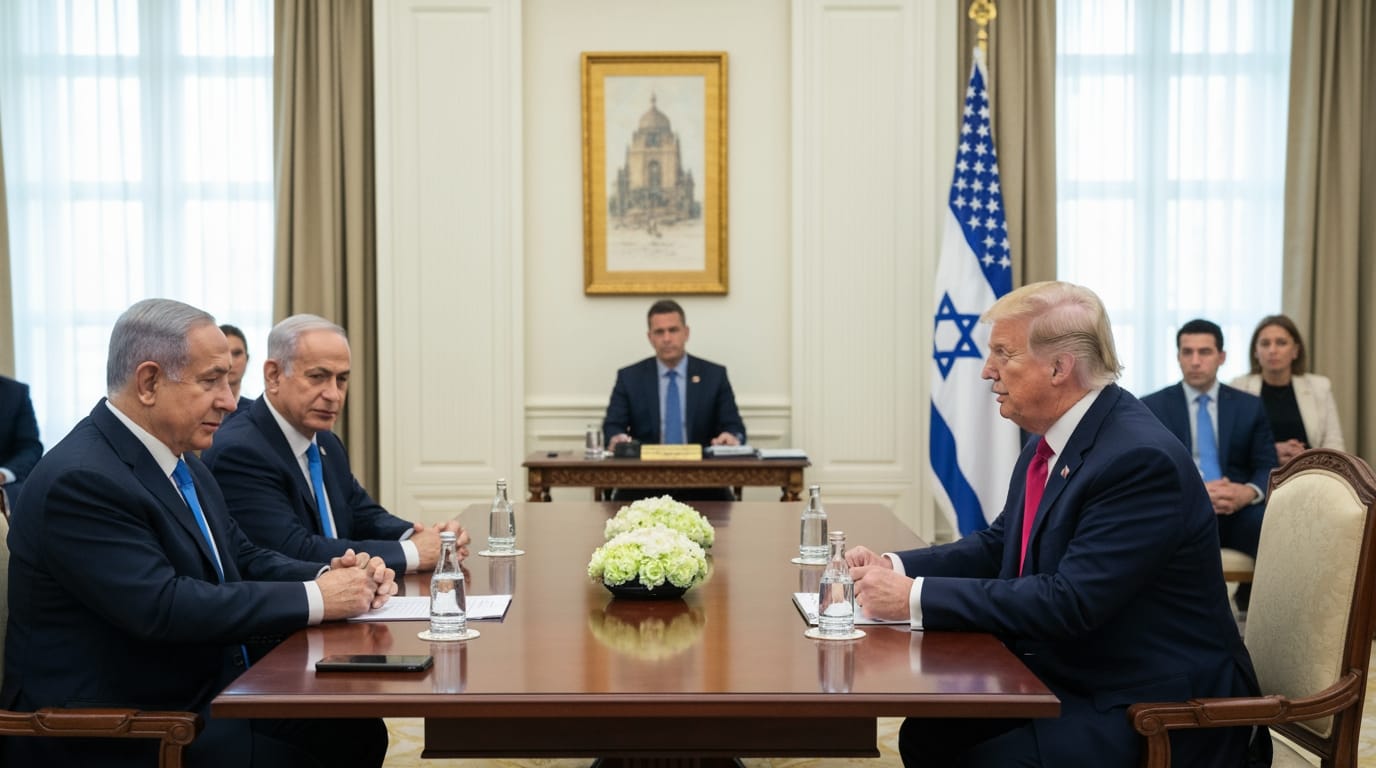
PALM BEACH, Fla. — United States President Donald Trump and Israeli Prime Minister Benjamin Netanyahu convened Monday at Trump's Mar-a-Lago resort in Florida for critical talks aimed at salvaging the fragile Gaza ceasefire and addressing escalating tensions with Iran. The high-stakes meeting, their fifth or sixth face-to-face encounter this year, underscores a growing urgency to advance a stalled U.S.-brokered peace plan for Gaza, even as underlying disagreements and domestic political pressures challenge a unified path forward. White House officials have expressed concern that both Israel and Hamas are "slow-walking" the transition to the second phase of the ceasefire, prompting President Trump's push for renewed momentum.
The Imperative for Progress in Gaza
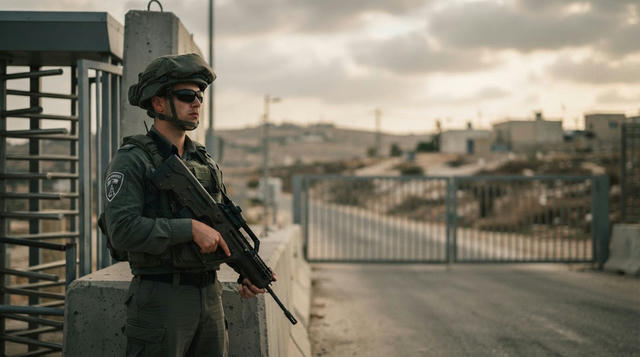
The core of the discussions surrounding Gaza centered on the implementation of the second phase of a U.S.-backed peace plan, a comprehensive vision for the territory outlined in Trump's 20-point proposal and endorsed by the U.N. Security Council. This intricate phase calls for the complete disarmament of Hamas, the demilitarization of Gaza, the establishment of a Palestinian technocratic government, and the deployment of an international stabilization force. The first phase of the ceasefire, initiated in October 2025, largely succeeded in facilitating the release of most hostages taken during the initial Hamas-led attack on Israel two years prior, and allowed for significant humanitarian aid to flow into Gaza.
However, progress has reportedly faltered in recent weeks, with both Israeli and Hamas sides accusing each other of breaches. A critical sticking point for Israel remains the return of the final hostage, Ran Gvili. Prime Minister Netanyahu has emphasized that Israel's operational objectives in Gaza remain unfulfilled until Hamas's military infrastructure is fully dismantled and all hostages are accounted for. Reports suggest that Netanyahu seeks guarantees for the disarmament of Hamas and demilitarization of Gaza before full commitment to the next phase, potentially advocating for a continued Israeli security presence within the enclave. This position has reportedly caused frustration among some White House officials who perceive Netanyahu as stalling the peace process.
President Trump, aiming to announce a Palestinian technocratic government for Gaza and the deployment of an international stabilization force as early as January, is eager to showcase a diplomatic success ahead of the 2026 midterm elections. The proposed "Board of Peace," chaired by President Trump, is envisioned to oversee Gaza's reconstruction under a two-year, renewable U.N. mandate, with a Palestinian technocratic committee managing daily affairs. Yet, there remains a "huge gulf" in understanding regarding the mandate and composition of this international force, particularly concerning Israel's reported objections to countries like Turkey and Qatar being involved.
Iran's Shadow: Ballistic Missiles and Regional Stability
Beyond the immediate crisis in Gaza, discussions between the two leaders were expected to pivot significantly to Iran, a long-standing concern for both the United States and Israel. Prime Minister Netanyahu was anticipated to press for stronger action against the Islamic Republic, particularly focusing on its renewed ballistic missile program. This comes months after a 12-day conflict between Israel and Iran in June, which included U.S. strikes on Iranian nuclear sites. President Trump has repeatedly asserted that these strikes "completely and fully obliterated" Iran's nuclear capabilities.
Netanyahu reportedly intends to present intelligence to President Trump, highlighting Iran's efforts to rebuild its missile arsenal and the perceived threat it poses not only to the Middle East but also to the United States. Some reports indicated Netanyahu might call for more U.S. military strikes against Iran. However, the U.S. administration's internal views on Iran appear to be divided, with some officials favoring sanctions over direct military engagement. Iran, for its part, has dismissed reports of potential new strikes as a "psychological operation" and issued warnings of "harsher consequences" should renewed aggression occur. The evolving situation with Iran's ballistic missile program remains a critical point of potential divergence and intense negotiation between the two leaders.
Broader Regional Agendas and Political Currents
The meeting also touched upon other regional flashpoints, including the volatile situation in Lebanon and Syria. Israeli concerns over Hezbollah's rebuilding efforts in Lebanon, despite a U.S.-brokered ceasefire, and ongoing Israeli strikes in the country were on the agenda. The possibility of an Israel-Syria security agreement was also reportedly part of the discussions.
Both leaders entered the meeting under significant domestic political considerations. President Trump is keen to secure a tangible foreign policy achievement that aligns with his "America First" platform and resonates with voters ahead of the 2026 midterm elections, where his party could face challenges. Demonstrating decisive leadership and a resolution to the protracted Gaza conflict would bolster his image as a dealmaker. Meanwhile, Prime Minister Netanyahu, facing his own election year in Israel with general elections slated for October 2026, views such high-level meetings as an opportunity to reinforce his perceived indispensability in managing Israel's crucial relationship with the U.S. and to shift public discourse away from domestic issues. The meeting's outcome could significantly influence the political trajectories of both leaders in the coming year.
Looking Ahead: A Path of Complex Diplomacy
The discussions between President Trump and Prime Minister Netanyahu highlight a complex geopolitical landscape where the pursuit of peace in one area often intersects with heightened tensions in another. While the U.S. presses for a swift progression to the second phase of the Gaza ceasefire plan, Israel maintains specific security prerequisites, including the complete disarmament of Hamas and the return of all remaining captives. Simultaneously, the specter of Iran's regional activities, particularly its missile program, remains a dominant and potentially destabilizing factor. The ability of both leaders to reconcile their differing approaches and domestic political imperatives will be a critical determinant of regional stability in the coming months. The outcome of these negotiations is expected to have far-reaching implications for the future of Gaza, the broader Middle East, and the enduring alliance between the United States and Israel.