Hijab-Wearing Finalist Turns AfD Criticism into Viral Defiance at Miss Germany
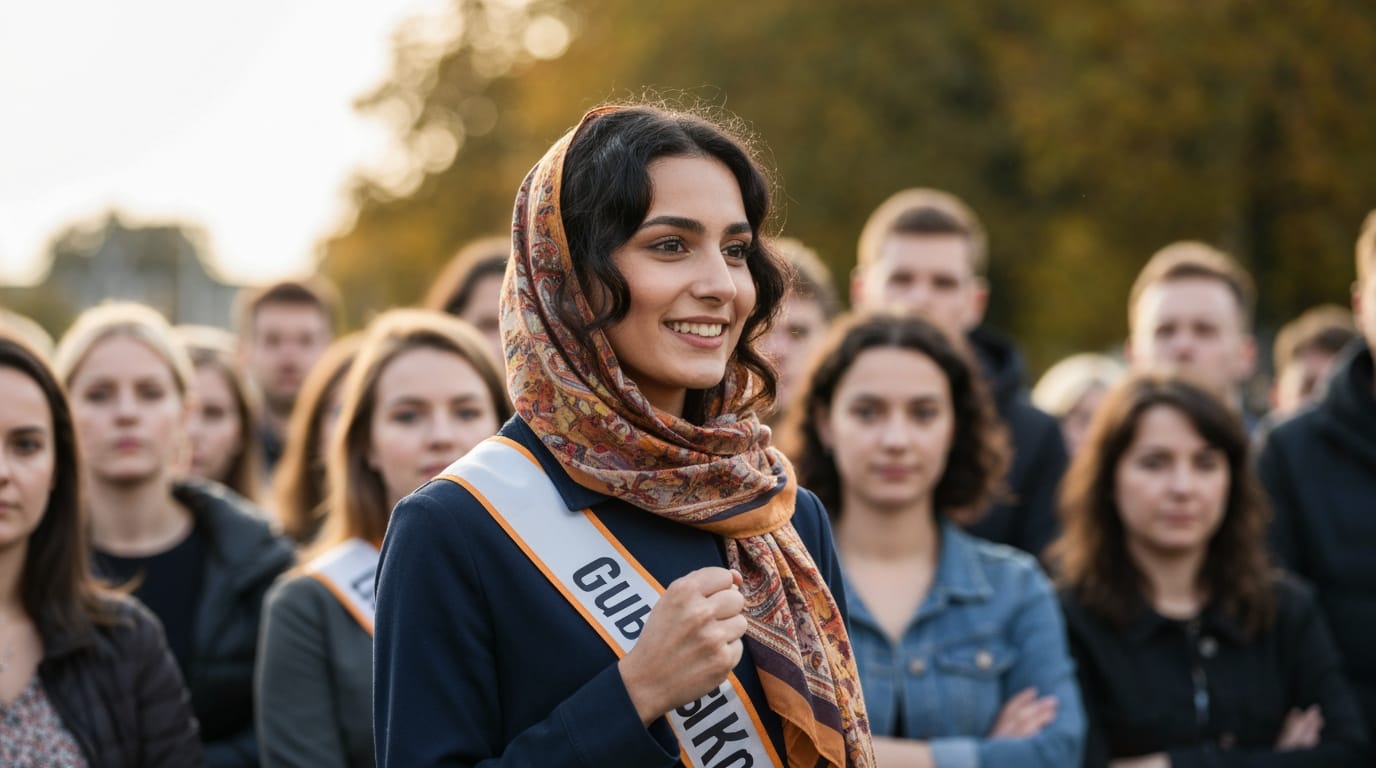
Berlin, Germany – In a striking display of wit and resilience, a young, hijab-wearing German beauty contestant has transformed a political attack by the far-right Alternative for Germany (AfD) into a moment of viral defiance, sparking a broader conversation about integration, identity, and the evolving face of modern Germany. Büsra Sayed, a fashion entrepreneur and finalist in the Miss Germany 2026 competition, captivated national attention after she humorously countered a critical parliamentary speech by AfD politician Beatrix von Storch, underscoring the power of creative resistance in the public sphere.
The incident highlights a significant shift in the Miss Germany competition itself, which has moved away from traditional beauty pageant criteria to embrace a more inclusive and empowerment-focused platform. This modernization has opened doors for diverse contestants who challenge conventional notions of German identity, inadvertently placing them at the center of the nation's ongoing cultural and political debates.
Reshaping the Crown: Miss Germany's Evolution
For decades, the Miss Germany contest adhered to conventional beauty standards, often prioritizing physical appearance above all else. However, beginning in 2020, the competition underwent a radical transformation, rebranding itself to focus on "Female Leader Awards" and celebrating women for their character, achievements, creativity, and life experiences rather than mere looks. The age limit was removed, and the emphasis shifted to finding "an ambassador who can be an idol and an identification figure for many other women".
This profound change has paved the way for a more diverse array of finalists and winners, reflecting Germany's multicultural society. A notable example is Apameh Schönauer, the Iranian-born architect and mother of two who was crowned Miss Germany 2024 at the age of 39. Schönauer, who immigrated to Germany at six years old, used her platform to advocate for women's rights, particularly for women with migrant backgrounds and those fighting for freedom in Iran. Her victory, while celebrated by many, was also met with a wave of online criticism and hate, challenging her eligibility due to her non-ethnic German background and age, with some detractors labeling her win as a "political agenda". Schönauer publicly addressed this backlash, stating she knew there would be "a bit of headwind," but the intensity showed her that her message of encouraging young women with migrant backgrounds was more important than ever. She urged critics to engage in constructive dialogue rather than hide behind anonymous screens.
This evolving landscape of the Miss Germany contest set the stage for the controversy surrounding Büsra Sayed. The new format actively seeks out women who embody social responsibility and individuality, traits that Sayed exemplified through her entrepreneurship and cultural identity.
The AfD's Parliamentary Broadside
The political flashpoint occurred when Beatrix von Storch, a prominent member of the Alternative for Germany (AfD) party, singled out Büsra Sayed during a speech in the Bundestag. Von Storch, known for her strong anti-immigrant and anti-Islam rhetoric, delivered a scathing critique of Sayed and other hijab-wearing finalists in the Miss Germany 2026 competition. In her address, she controversially declared, "Where the headscarf is, the jihadists are not far," and expressed outrage that two finalists in the Miss Germany competition were wearing hijabs.
The AfD politician further accused Sayed of being a "hijab activist" engaged in "marketing," suggesting that her entire attire conformed to a fatwa from an Islamic research institute in Saudi Arabia, which reportedly mandates the covering of limbs in addition to the hair. Von Storch's comments echoed the AfD's broader stance on religious head coverings, with figures like Alice Weidel, another leading party member, having previously called for a ban on headscarves in public spaces, equating them to an "absolutely sexist symbol" and comparing them to apartheid. This parliamentary attack underscored the deep ideological chasm within Germany regarding cultural integration and the visibility of religious symbols in public life.
A Humorous Counter-Attack
Rather than retreat in the face of political condemnation, 27-year-old Büsra Sayed chose a different path: humor and entrepreneurial savvy. In a move that quickly went viral across social media platforms like Instagram and TikTok, Sayed created a reel directly responding to von Storch's speech. The video began with Sayed playfully thanking her "friend" from the AfD for providing unexpected publicity for her brand in the Bundestag.
The punchline came when Sayed, with a smirk, announced that von Storch, in her supposed enthusiasm, had "forgotten the discount code." She then offered a 10% discount on all her hijabs using the code "AfD10," even suggesting that customers could purchase them in "AfD blue," a clear jab at the party's distinctive color. Sayed's quick-witted response garnered immense traction, with her Instagram video alone reaching six million views. The "AfD Blue" hijab, in particular, quickly sold out, demonstrating the significant public resonance of her message. Beyond mere sales, Sayed reported that her community of followers grew substantially, with many people expressing solidarity and even purchasing hijabs despite not being Muslim themselves.
Sayed emphasized that her primary motivation was not increased sales but rather to leverage the sudden attention to combat discrimination and foster sincere dialogue in a diverse society. Her approach effectively disarmed the political attack, transforming a moment of intended criticism into an opportunity for engagement and challenging stereotypes with grace and humor.
Broader Implications for German Society
Büsra Sayed's story transcends the realm of beauty pageants and parliamentary debates; it speaks to the ongoing evolution of German society and the increasing prominence of diverse voices. Her response to the AfD's criticism highlights the growing confidence of younger generations with migrant backgrounds in asserting their identity and challenging prejudice through unconventional means.
The incident underscores the tension between traditionalist views, often espoused by parties like the AfD, and a more inclusive vision of German nationhood that recognizes and celebrates its multicultural fabric. Sayed's success in turning a political attack into a moment of cultural affirmation demonstrates the shifting dynamics of public discourse in the digital age, where individuals can directly counter powerful political narratives and mobilize public support.
Furthermore, her participation in Miss Germany and subsequent handling of the controversy symbolize the broader struggle for representation and acceptance faced by many women of color and those with migrant backgrounds in European societies. By presenting herself as a German woman who wears a hijab and runs a business, Sayed directly challenges exclusionary narratives and provides a visible role model, fulfilling the very mission of the revamped Miss Germany contest to empower women and foster positive change.
Conclusion
The encounter between Miss Germany finalist Büsra Sayed and the AfD's Beatrix von Storch is more than a fleeting news item; it is a microcosm of Germany's contemporary societal challenges and triumphs. Sayed's ability to transform political negativity into a widely celebrated act of resistance through humor and entrepreneurship offers a powerful lesson in navigating prejudice in a diverse and interconnected world. Her story, alongside that of Apameh Schönauer, underscores that the new face of "Miss Germany" is not just about glamour, but about courage, conviction, and the vibrant, complex tapestry of modern German identity.


