Religion's Enduring Grasp: Politics Realigned in India and Bangladesh
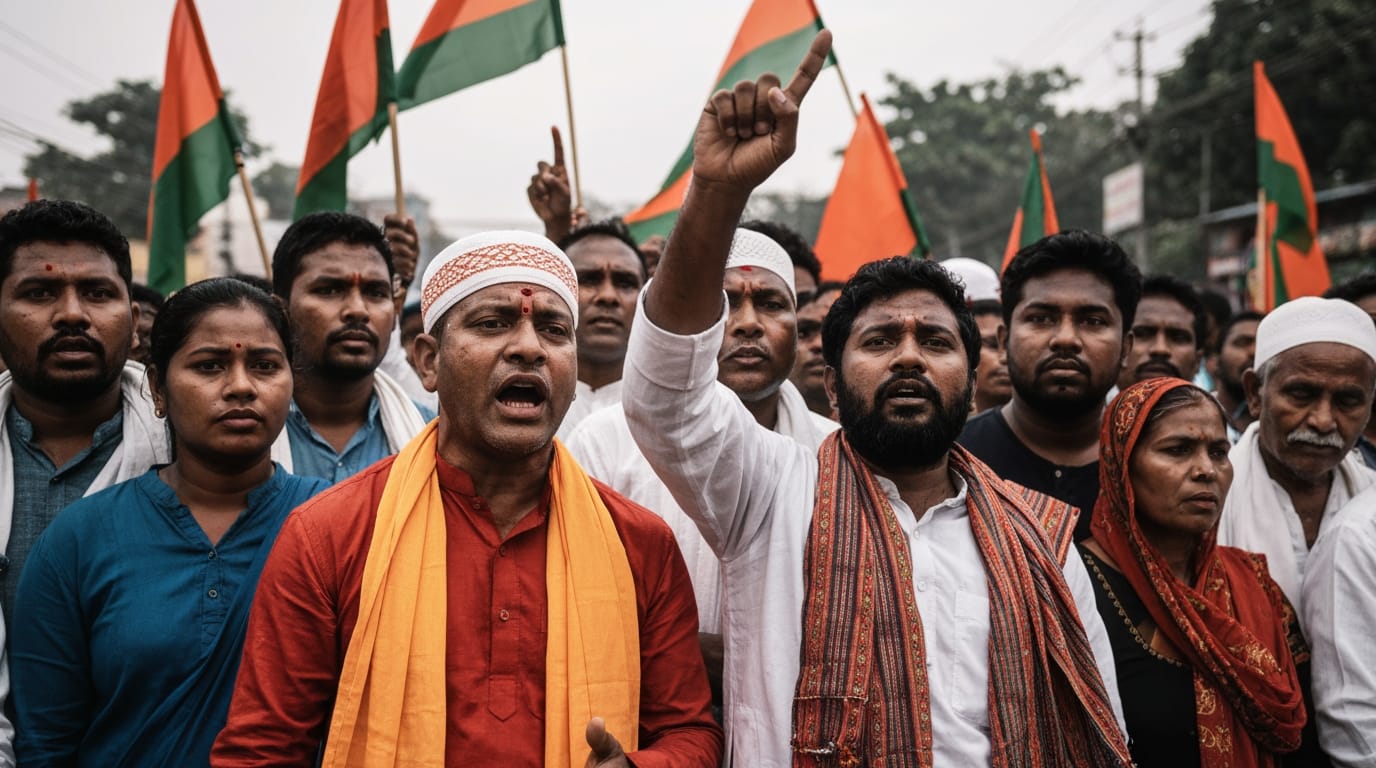
The delicate balance between faith and governance is once again at the forefront in South Asia, as both India and Bangladesh grapple with the escalating influence of religious identity on their political landscapes. While constitutionally founded on secular principles, these neighboring nations are experiencing a profound reshaping of their public spheres, driven by majoritarian narratives and electoral strategies that leverage religious sentiment. This resurgence of religion in politics challenges the foundational secular ideals of both states, leading to increased polarization, heightened tensions for minority communities, and significant implications for regional stability.
The Ascent of Hindu Nationalism in India
India, the world's largest democracy, has witnessed a significant shift in its political identity, largely propelled by the rise of Hindu nationalism, or Hindutva. This ideology, rooted in the belief that Indian national identity and culture are intrinsically linked to the Hindu religion, asserts the establishment of India as a Hindu state. Its origins can be traced back to the late 19th and early 20th centuries, with the Rashtriya Swayamsevak Sangh (RSS), an influential Hindu nationalist organization, formed in the 1920s. The political wing of this movement, the Bharatiya Janata Party (BJP), has centered its existence on this philosophy.
Since its ascent to power in 2014 under Prime Minister Narendra Modi, a lifelong member of the RSS, the BJP has adopted an openly pro-Hindu platform. This has translated into a series of policies and actions that critics argue systematically favor the Hindu majority, which constitutes nearly 80% of India's population. Key examples include the construction of the Ram temple in Ayodhya at the site of the demolished Babri mosque, a move that stirred Hindu pride and marked an unofficial start to the 2024 general election campaign. Other significant legislative and administrative changes, such as the abrogation of Article 370 granting special status to Jammu and Kashmir, the Citizenship Amendment Act (CAA) which offers a path to citizenship for non-Muslim religious minorities from neighboring countries but excludes Muslims, and various anti-conversion and cow protection laws in BJP-ruled states, further underscore this shift.
The electoral landscape in India now reflects this deepening religious polarization. Recent elections reveal that Hindu voters predominantly back the BJP, while Muslim voters are increasingly consolidating their support behind secular parties like the Indian National Congress. Political analysts refer to this as a "reverse polarization," a trend that, given India's demographic realities, further strengthens the BJP's electoral advantage and continues to reshape the nation's political identity. This environment has also been marked by increased communal violence and hate speech, impacting Muslim minorities who feel increasingly marginalized and whose citizenship is questioned.
Bangladesh's Evolving Religious Identity
Across the border, Bangladesh's journey with religious identity in politics has followed a distinct yet similarly impactful trajectory. The nation was founded in 1971 on the bedrock of secularism, a principle explicitly enshrined in its original 1972 constitution, which also initially banned religion-based political parties. However, this secular foundation began to erode following the assassination of Sheikh Mujibur Rahman in 1975.
Successive military regimes, notably under Ziaur Rahman and Hussain Muhammad Ershad, gradually integrated Islamic elements into the state apparatus. Ershad's declaration of Islam as the state religion in 1988 marked a significant departure from the country's founding principles. Despite efforts to restore secularism, particularly the 2011 constitutional amendment that brought secularism back as a guiding principle, Islam remains the state religion, creating an enduring paradox. This constitutional ambiguity is often seen as symptomatic of a political environment where governments, even those with secular leanings, continue to appease Islamist demands for political expediency.
The influence of Islam in Bangladeshi politics is profound, with political parties often using religious symbols and language to legitimize their rule and mobilize support. The fall of Sheikh Hasina's government in 2024 has further exacerbated this trend, with Islamist groups gaining prominence and instances of violence against minority communities, particularly Hindus, surging under the interim administration. Reports indicate an alarming rise in public support for Sharia law and proposals to remove "secularism" from the constitution entirely, threatening the rights of religious minorities to openly express their faith. Minority groups, including Hindus, Buddhists, and Christians, face ongoing discrimination, land grabbing, and sporadic communal violence, often tied to broader political upheavals.
Converging Dynamics and Cross-Border Ripples
Both India and Bangladesh are grappling with an increasing majoritarianism that profoundly impacts their respective minority populations. In India, Hindu nationalism asserts dominance, while in Bangladesh, a growing Islamic influence shapes public and political life. While their constitutional frameworks theoretically guarantee religious freedom and equal rights for all citizens, the practical implementation often falls short, leading to vulnerabilities for minorities.
A critical aspect of this religious-political dynamic is its cross-border nature. Tensions and rhetoric in one nation frequently resonate and amplify sentiments in the other. Hindu nationalist narratives in India, particularly those framing Muslims as "others" or linking them to perceived external threats, can fuel anti-Hindu sentiment and violence in Bangladesh. Conversely, reports of persecution of Hindus in Bangladesh are often amplified by Hindutva-linked accounts in India, further entrenching the narrative that secularism has failed and that only a religious order can ensure dignity. This digital feedback loop of resentment and suspicion validates each side's deepest fears, fostering a cycle where the extremes in one country reinforce those in the other.
Societal and Economic Repercussions
The deepening intertwining of religion and politics carries substantial social and economic implications for both India and Bangladesh, and for the broader South Asian region. Social cohesion is increasingly strained as religious polarization fosters societal divisions and distrust. Instances of hate crimes, communal clashes, and discrimination against minorities undermine the pluralistic fabric of these societies.
Economically, religious tensions and instability can deter foreign direct investment and hinder overall growth. Discrimination based on religion also leads to inefficiencies in markets and a sub-optimal economic growth level. The socio-economic life of minority communities can be significantly impacted, facing challenges in employment, education, and political representation. Furthermore, the rise of Islamophobia in India creates diplomatic strains with Bangladesh, affecting critical bilateral relations, trade, and cross-border security cooperation.
The current trajectory indicates that the influence of religion on politics in India and Bangladesh is not merely a transient phenomenon but an evolving force. Both nations face the urgent challenge of reconciling historical legacies with contemporary political realities, ensuring that their diverse populations can coexist without being perpetually defined or divided by faith. The path forward for regional stability and inclusive growth hinges on how effectively these nations navigate the complex interplay between religious identity and democratic governance.


