German Business Community Grapples with Deep-Seated Frustration Amidst Economic Headwinds
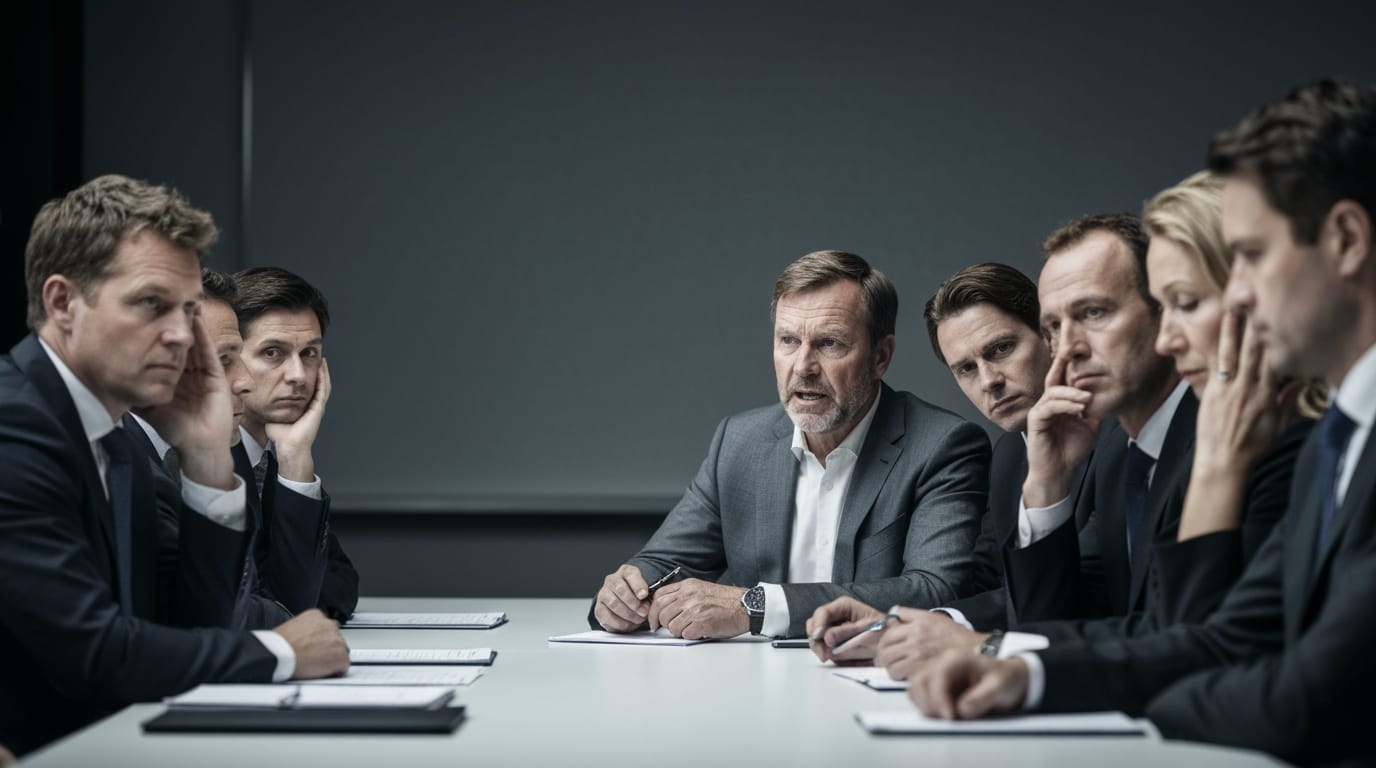
Berlin, Germany – A profound sense of frustration and disillusionment is sweeping through Germany's business community, casting a long shadow over the future of Europe's largest economy. Decades of robust growth and industrial prowess are being challenged by a confluence of escalating energy costs, stifling bureaucracy, a critical shortage of skilled labor, and geopolitical instability, leading many to question the nation's long-term competitiveness. The once-heralded "Made in Germany" label now faces unprecedented pressure, with a significant number of companies contemplating scaling back operations or even relocating production abroad.
The sentiment is stark: the Ifo Business Climate Index, a key barometer of business morale, plummeted to 84.40 points in April 2026, marking its lowest point since the height of the COVID-19 pandemic in May 2020. This decline significantly undershot market expectations, signaling a deep-seated unease. Similarly, a recent survey by the German Chambers of Industry and Commerce (DIHK) revealed that 32% of German firms operating internationally anticipate a worsening of economic conditions within the next 12 months, an 8-percentage point increase since before the recent escalation of the Iran war. This pervasive pessimism underscores a fragile recovery that many hoped would take hold after years of stagnation. Germany's real GDP in 2024 remained roughly at its 2019 level, with forecasts projecting only marginal growth of 0.2% in 2025, followed by a modest 1.2% in both 2026 and 2027 after two years of contraction. Some economists and political observers are increasingly reviving the once-retired moniker of "the sick man of Europe" to describe the nation's current economic malaise.
The Crushing Burden of Energy and Geopolitics
At the forefront of corporate concerns are the soaring energy prices and the unpredictable tremors emanating from global geopolitical conflicts. The Middle East conflict, in particular, has severely disrupted supply chains and sent energy costs spiraling, with 46% of German companies abroad identifying high energy prices as a primary business risk – more than double the figure from autumn 2025. This has directly impacted Germany's vital industrial base, with energy-intensive sectors like the chemical industry bearing a disproportionate burden. Power consumption in the chemical manufacturing sector has seen a nearly 20% decline from 2014-2018 levels, and chemical production itself was down approximately 21% on 2021 figures. Alarmingly, 25% of European chemical plants that have ceased operations since 2022 were located in Germany.
The combination of volatile energy markets and policy uncertainties is forcing drastic considerations within boardrooms. A survey by the Association of German Chambers of Industry and Commerce (DIHK) indicated that four out of ten industrial companies are actively considering cutting production within Germany or relocating parts of their operations abroad. This figure has steadily climbed from 21% in 2022 and 32% in 2023, reflecting a deepening crisis of confidence. High energy prices are not only affecting operational costs but also hindering critical investments in climate action and research, posing a significant long-term threat to innovation and adaptation. The current environment, described by DIHK Head of Foreign Trade Volker Treier as a "dangerous combination of an energy price shock, fragile logistics, and growing geopolitical mistrust," disproportionately affects export-oriented companies and stifles vital investment.
Bureaucratic Bottlenecks and a Lagging Digital Future
Beyond energy, German businesses cite an increasingly heavy burden of bureaucracy and a sluggish pace of digitalization as significant impediments to growth and innovation. The country's regulatory environment is often described as overly complex, creating a labyrinthine system that stifles agility and speed. The sheer amount of time required for administrative processes is a striking concern: obtaining a business license in Germany reportedly takes 120 days, more than twice the average for OECD countries. Similarly, securing a permit for an onshore wind farm, crucial for Germany's energy transition, can stretch to an agonizing five to six years. This bureaucratic inertia directly contributes to a lack of planning security, further dampening the mood among companies.
In an era defined by rapid technological advancement, Germany's digital infrastructure and its approach to innovation are also raising alarms. The nation is often criticized for lagging in digitalization, possessing one of the less advanced modern digital infrastructures among developed nations. Slow internet speeds and limited access to cutting-edge technological facilities impede the adoption of digital innovations. This issue is compounded by a cultural inclination towards caution and meticulous planning, which, while fostering precision, also cultivates a pervasive risk aversion. A study by the German Startups Association highlighted this, finding that only 45% of German startups are willing to take significant financial risks, a stark contrast to 70% in the United States. This conservatism, a preference for established practices over disruptive ideas, slows down the pace at which marketable innovations emerge from Germany's impressive patent output.
The Human Capital Challenge: Skilled Labor and Succession
The cornerstone of Germany's economic success – its highly skilled workforce and its robust Mittelstand (small and medium-sized enterprises) – is facing severe structural challenges. A critical shortage of skilled labor has become a major bottleneck, hindering economic growth and impeding the country's ambitious green and digital transitions. More than 40% of German companies report a lack of qualified workers, with 27% of firms experiencing labor shortages in early 2025. The Mittelstand, which forms the backbone of the German economy, is particularly vulnerable; 62% of these companies fear they will be unable to fill vacant training positions in the coming year. These smaller, often family-owned businesses, which comprise over 99% of all German firms and account for nearly 60% of jobs and 52% of GDP, are struggling to compete with larger corporations for talent.
Adding to this demographic challenge is a burgeoning succession crisis within the Mittelstand. A "quiet crisis" is threatening thousands of these vital enterprises as owners approach retirement with no clear successors in sight. Previously, there were typically three potential successors for every company; now, there are three companies vying for each successor. This alarming trend suggests that roughly 230,000 SMEs are expected to close by the end of 2025 due to a lack of succession, representing a nearly 30% increase from the previous year. For family-owned businesses, the situation is particularly acute, with 42% reporting no family successor lined up. The potential closure of these companies poses a significant threat to economic stability and growth, not just regionally but nationally.
Struggling for a Path Forward
The German government, under Chancellor Friedrich Merz, elected in May 2025, has acknowledged the severity of the situation. The new coalition has pledged a pro-business agenda focused on corporate tax cuts, streamlined regulations, and significant investments in energy and digital infrastructure. Measures include a planned five-point corporate tax cut phased in from 2028 and initiatives to reduce energy costs for energy-intensive industries. A €10 billion "Germany Fund" aims to leverage private capital for strategic investments, particularly in startups.
However, the effectiveness of these measures remains uncertain. Critics argue that the proposed tax cuts are too modest and slow to make a tangible impact, while the coalition itself faces challenges due to a fragile political environment and concerns over the implementation of structural reforms. The current economic climate, characterized by external pressures and internal structural weaknesses, means that the road to recovery is steep. The European Commission forecasts a period of broad stagnation in 2025, with investment projected to contract due to persistent weak sentiment and high uncertainty, before a gradual recovery. The German economy, described as "tired" and lacking "speed, power, and dynamism" by some observers, faces a critical juncture. The ability of policymakers to implement effective, swift, and comprehensive reforms will be paramount in restoring confidence and ensuring Germany's long-term prosperity in a rapidly changing global landscape.


