Iran's Nuclear Material: A Looming Crisis Amidst Eroding Oversight
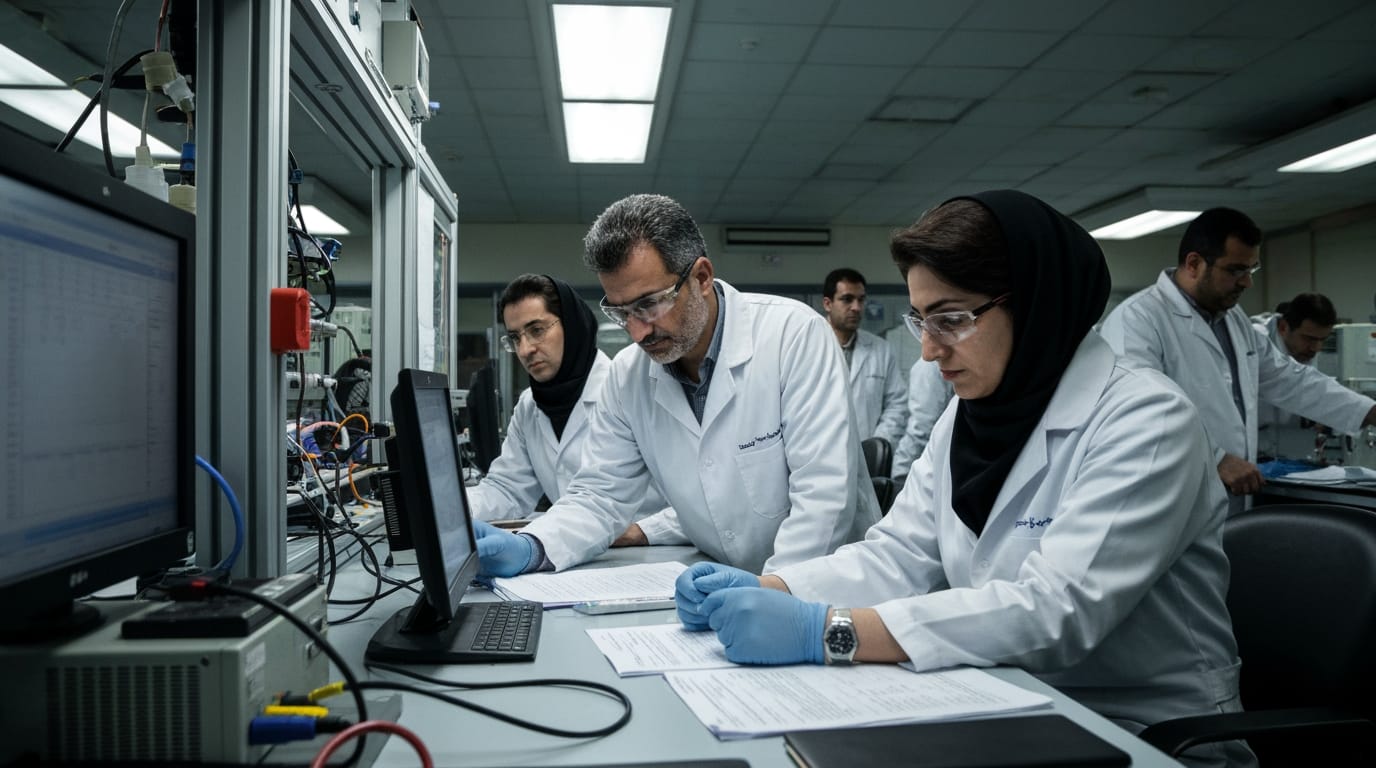
The international community faces a deepening crisis over Iran's nuclear material, as Tehran continues to rapidly expand its uranium enrichment program and restrict international oversight. Years after the unraveling of the 2015 nuclear deal, the Joint Comprehensive Plan of Action (JCPOA), Iran's stockpiles of highly enriched uranium have reached unprecedented levels, drastically shortening the theoretical "breakout time" to produce nuclear weapons-grade material and sparking widespread alarm among global powers. The situation is exacerbated by significantly reduced monitoring by the International Atomic Energy Agency (IAEA), leaving critical gaps in the understanding of Iran's nuclear activities.
Unprecedented Accumulation and Shortened Breakout
Recent reports from the IAEA paint a stark picture of Iran's advancing nuclear capabilities. As of June 13, 2025, Iran's stockpile of uranium enriched to 60% purity stood at 440.9 kilograms, marking a substantial increase from previous assessments. This material is just a short technical step away from weapons-grade levels of 90%. In addition to 60% enriched uranium, Iran also possesses significant quantities of 20% and 5% enriched uranium, with its total enriched uranium stockpile estimated at 9247.6 kilograms as of May 17, 2025. The IAEA has noted that Iran is the only non-nuclear-weapon state in the world producing and accumulating uranium enriched to 60%, a level that has no practical civilian application and remains a serious concern.
The rapid accumulation of these enriched materials has dramatically shortened Iran's "breakout time" – the period theoretically required to produce enough weapons-grade uranium for a nuclear device. As of late 2024, assessments indicated Iran could produce sufficient weapons-grade uranium for five to six bombs in less than two weeks. By June 2025, the IAEA considered Iran to possess enough nuclear material for nine nuclear weapons if further enrichment to 90% were achieved. While international observers emphasize that having enough fissile material is distinct from developing a deliverable nuclear weapon, which would take additional months or years, the shrinking breakout time intensifies proliferation fears.
The Shadow of the JCPOA's Collapse
The current precarious state of Iran's nuclear program is largely a consequence of the gradual disintegration of the Joint Comprehensive Plan of Action. Signed in 2015 by Iran and the P5+1 nations (China, France, Germany, Russia, the United Kingdom, and the United States), the JCPOA imposed stringent limits on Iran's nuclear activities in exchange for sanctions relief. Under the agreement, Iran was permitted to enrich uranium to no more than 3.67% purity, maintain a uranium stockpile of only 300 kilograms, and was prohibited from enriching uranium at facilities like Fordow. These restrictions were designed to ensure that Iran would need at least a year to produce enough fissile material for a single nuclear weapon, providing ample time for a diplomatic or military response if Iran chose to violate the deal.
However, the landmark agreement began to unravel in May 2018 when the United States, under then-President Donald Trump, unilaterally withdrew from the deal and reimposed sanctions on Iran. The US withdrawal eliminated key economic incentives for Iran to adhere to its commitments and increased the risk of the entire agreement being derailed. In response, Iran began incrementally breaching the JCPOA's limits in 2019, systematically expanding its enrichment program and activating advanced centrifuges that enrich uranium more efficiently than those permitted under the deal. This series of escalating violations has led Iran to its current advanced nuclear posture.
Eroding Oversight and International Alarm
A critical concern arising from Iran's expanded nuclear activities is the significant reduction in international oversight. Since 2021, Iran has scaled back its cooperation with the IAEA, making it increasingly challenging for the agency to verify the peaceful nature of Tehran's nuclear program. This reduced monitoring includes limiting inspector access to nuclear facilities and suspending the implementation of the Additional Protocol, an expanded set of requirements for information and access that was a cornerstone of the JCPOA's verification regime.
The IAEA reported in November 2025 that it had lost "continuity of knowledge" regarding Iran's stockpiles of nuclear materials, largely due to Iran's decision to suspend IAEA access to sites, particularly those affected by military strikes in June 2025, and its failure to provide updated nuclear material accountancy reports. While the IAEA Director General Rafael Grossi has stated there is no current indication of a systemic program in Iran to manufacture a nuclear weapon, he warns that without Iran's full cooperation, the agency cannot provide assurance that Iran's nuclear program is exclusively peaceful. This lack of transparency and verifiable information deepens global anxieties and complicates diplomatic efforts.
Diplomatic Stalemate and the Shadow of Conflict
The escalating nuclear concerns unfold against a backdrop of stalled diplomatic efforts and renewed regional tensions. Since late 2024, multiple rounds of indirect talks between the United States and Iran, often brokered by Oman, have attempted to revive a nuclear agreement. However, these negotiations have repeatedly faltered, with some rounds even cancelled following military actions, such as Israeli attacks against Iranian nuclear facilities in June 2025. These strikes, which caused damage to several declared facilities, further complicated the already fragile diplomatic landscape and led to Iran temporarily suspending IAEA access to the affected sites.
Iran's leadership has consistently maintained that its nuclear program is for peaceful civilian purposes and has expressed a firm stance against dismantling its enrichment capabilities. Meanwhile, the United States has reportedly sought a complete ban on enrichment for 20 years in any future deal, a position starkly at odds with Iran's current trajectory. Israeli Prime Minister Benjamin Netanyahu has explicitly stated that the conflict will continue as long as Iran retains highly enriched uranium and active enrichment facilities, advocating for the removal of nuclear material from Iran. The interplay of these firm stances, combined with the lack of comprehensive oversight, underscores the urgent need for a diplomatic breakthrough to prevent further escalation.
An Uncertain Future
The trajectory of Iran's nuclear material remains a critical point of international tension and uncertainty. With rapidly increasing stockpiles of highly enriched uranium and diminished international monitoring, the risk of proliferation continues to mount. The breakdown of the JCPOA and the subsequent acceleration of Iran's nuclear program have fundamentally altered the regional and global security landscape. While diplomatic channels remain open, they are fraught with challenges, exacerbated by a history of distrust and recent military engagements. The international community, led by the IAEA, continues to press for renewed transparency and a verifiable resolution, recognizing that the future of Iran's nuclear material will have profound implications for non-proliferation efforts and stability in the Middle East and beyond. The stakes are exceptionally high, demanding urgent and concerted action to avert a full-blown nuclear crisis.


