Historic 2026 World Cup Draw Unfolds in Washington, D.C., Unveiling Expanded Tournament Groups and Inaugural FIFA Peace Prize
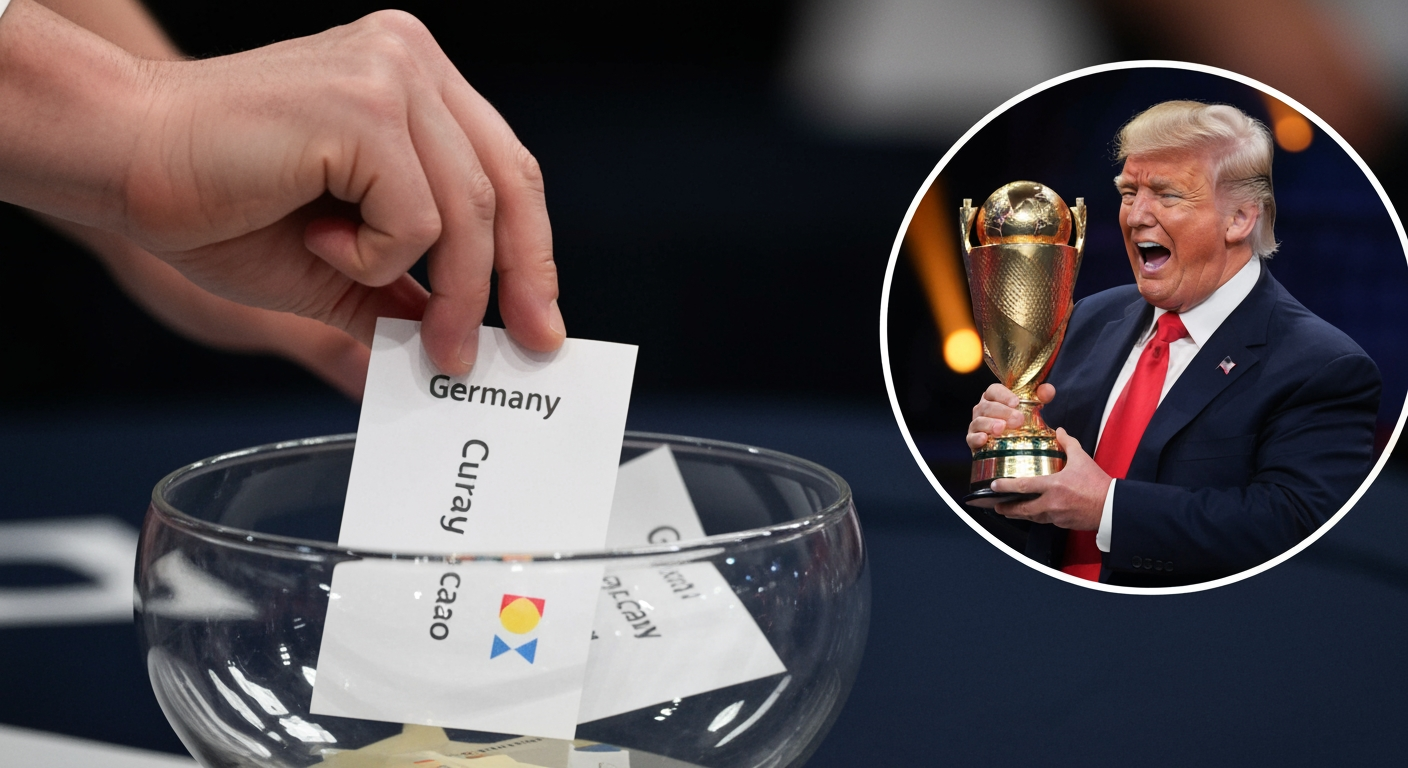
WASHINGTON, D.C. — In a landmark ceremony marking the definitive launch of the 2026 FIFA World Cup, the global football community convened in Washington, D.C., today to witness the official draw for the expanded tournament. The event, hosted at the prestigious John F. Kennedy Center for the Performing Arts, set the stage for an unprecedented 48-team competition across North America, simultaneously making headlines with the presentation of the inaugural FIFA Peace Prize to former United States President Donald Trump. As group stage matchups began to take shape, football enthusiasts globally turned their attention to the implications of the new format and the teams poised to make history.
A New Era for the World's Game: Expanded Format Takes Center Stage
The 2026 FIFA World Cup is set to revolutionize the quadrennial spectacle, transitioning from 32 to an expanded 48 teams, a format change last seen in 1998. This expansion introduces significant alterations to the tournament structure, promising more matches and a wider global representation. The 48 qualified nations will be divided into twelve groups of four teams, with the top two from each group, along with the eight best third-placed teams, advancing to a new Round of 32. This revised structure will see the total number of matches surge from 64 to 104, extending the tournament duration to 39 days and requiring teams reaching the final four to play eight games, one more than previous editions.
The tournament, officially marketed as FIFA World Cup 26, will be jointly hosted by three North American nations: Canada, Mexico, and the United States. Sixteen cities have been designated as hosts, with 11 venues across the U.S., three in Mexico, and two in Canada. Notable host cities include Los Angeles, Miami, Atlanta, Mexico City, Toronto, and Vancouver. The opening match is slated for June 11, 2026, at Mexico City's iconic Estadio Azteca, while the final will be played on July 19, 2026, at MetLife Stadium in East Rutherford, New Jersey, which will be temporarily rebranded as New York New Jersey Stadium to comply with FIFA's corporate naming policies. This marks the first time three nations will jointly host the men's World Cup, and only the second time more than one country has shared hosting duties.
Group Stage Unveiled: Germany's Path and Curacao's Historic Ascent
The tension was palpable as FIFA officials and football legends conducted the draw, meticulously assigning teams to their respective groups. The process involved four pots, carefully arranged based on FIFA rankings and qualification criteria, to ensure a balanced distribution of talent across the tournament's 12 groups. Each group is designed to include one team from each pot, with certain geographical restrictions in place to prevent too many teams from the same confederation facing each other early on, except for UEFA, which may have up to two teams per group.
Among the European powerhouses, four-time World Cup champions Germany secured their place in the tournament by topping their UEFA Group A with a commanding 6-0 victory over Slovakia in their final qualifying match. Entering the draw as a Pot 1 team, Germany was subsequently placed into Group E, alongside Ecuador, according to early draw results. This pairing sets up an intriguing initial challenge for Julian Nagelsmann's squad, which aims to rebound from consecutive group-stage exits in the previous two World Cups and reaffirm their status as a global footballing giant.
Meanwhile, the draw also highlighted the remarkable achievement of Curacao, which made history by qualifying for the FIFA World Cup for the very first time. The small Caribbean island nation earned its debut by topping Group B in Concacaf qualifying, securing a 0-0 draw against Jamaica in a thrilling finale. With a population of just over 150,000, Curacao becomes the smallest nation by both population and area ever to qualify for the World Cup, a testament to its burgeoning football program, often dubbed "The Blue Wave." Their qualification underscores the inclusive vision of the expanded 48-team format, providing opportunities for nations traditionally on the periphery of global football to compete on the biggest stage. Curacao was among the teams allocated to Pot 4, eagerly awaiting their full group assignment. While the full group pairings for all 48 teams are being progressively revealed, the presence of such diverse nations promises a vibrant and unpredictable tournament.
FIFA's Inaugural Peace Prize Awarded to Donald Trump
Beyond the sporting allocations, the draw ceremony took an unexpected turn with the presentation of the inaugural FIFA Peace Prize. In a move that garnered significant attention, FIFA President Gianni Infantino awarded the newly established accolade to former United States President Donald Trump. The award, announced by FIFA last month, aims to recognize "individuals who have taken exceptional and extraordinary actions for peace" and have united people worldwide.
Infantino, a vocal ally of the former president, lauded Trump's purported efforts in promoting global peace and diplomatic engagement, citing his actions to "promote peace and unity around the world." Trump accepted the prize, which included a large golden trophy depicting hands holding the earth and a gold medal, remarking that it was "truly one of the greatest honors of my life." He also claimed credit for resolving several global conflicts during his tenure, including the India-Pakistan and Russia-Ukraine wars, while continuing to position himself as a candidate deserving of the Nobel Peace Prize. The decision to award the FIFA Peace Prize to Trump was noted as a departure from the federation's traditional focus purely on sport, sparking broader conversations about the intersection of sports, politics, and global diplomacy.
Anticipation Builds for a Global Spectacle
With the draw ceremony now concluded, the focus shifts to the detailed match schedule and venue assignments, which FIFA will release in the coming days. The expansion to 48 teams, coupled with the joint hosting across three diverse nations, sets the stage for a World Cup of unprecedented scale and geographic reach. Football fans can anticipate a longer, more engaging tournament, filled with more teams and more stories of triumph and heartbreak. The 2026 FIFA World Cup promises to be a celebration of global football, bringing together nations and cultures in a truly historic event, bridging sporting rivalries with moments of international recognition and spectacle.
Related Articles


Bundesliga Kicks Off 2026-27 Season with Newcomers, Familiar Giants, and High Expectations
The German Bundesliga is poised for another season of thrilling football, with the 2026-27 campaign officially commencing on Friday, August 28, 2026. As defending champions Bayern Munich prepare to open their title...

UEFA Ends Boycott Threat as FIFA Assures Against Privatization of Major Tournaments
ZURICH, SWITZERLAND – European football's governing body, UEFA, is poised to withdraw its threat to boycott FIFA competitions, signaling a significant de-escalation in the protracted power struggle between the sport's...