Historic Framework Agreement Forged Between Israel and Lebanon, Signaling Hope for Regional Stability
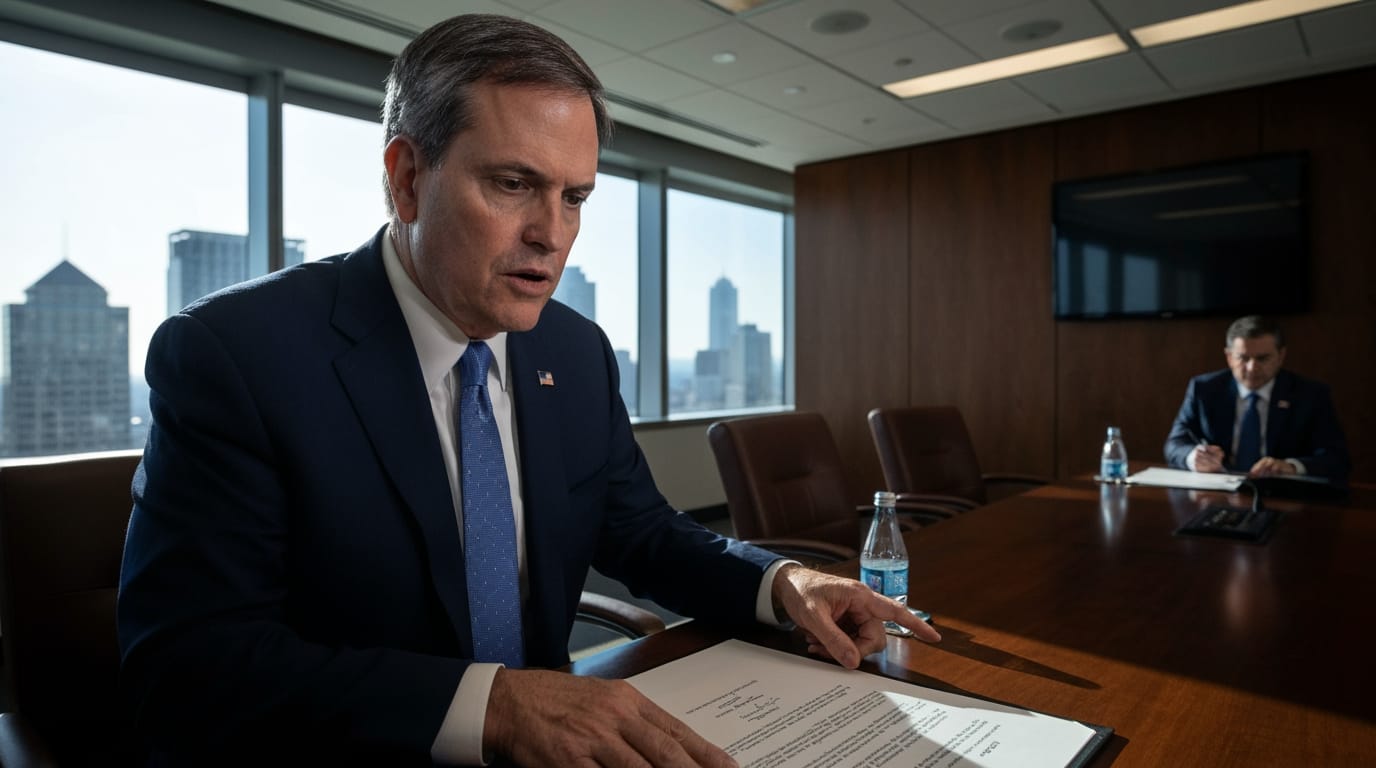
WASHINGTON D.C. – After decades of fraught relations and escalating tensions, Israel and Lebanon have announced a landmark framework agreement, brokered by the United States. The accord, formalized in Washington D.C. today, June 26, 2026, represents a significant diplomatic breakthrough aimed at paving the way for a future peace agreement and introducing immediate confidence-building measures between the two long-standing adversaries. US Secretary of State Marco Rubio, announcing the deal, acknowledged the substantial work still ahead but hailed the agreement as a crucial first step toward long-term regional stability.
The agreement emerges from intensive, US-mediated negotiations that have seen high-level engagement between Israeli and Lebanese officials, marking the first such direct talks since 1993. While specific details of the framework remain largely undisclosed, its very existence offers a rare glimmer of hope for de-escalation in a region perpetually on edge. Both nations, historically in a technical state of war, now possess a documented pathway to address enduring border disputes, security concerns, and the deeply entrenched mistrust that has defined their interactions for generations.
A New Chapter in Bilateral Diplomacy
The formal announcement by Secretary Rubio on Friday underscored the meticulous efforts of American diplomacy to bridge an chasm of animosity. The framework agreement is designed to lay out a comprehensive path toward a more permanent peace, alongside actionable confidence-building measures intended to stabilize the volatile border region immediately. This diplomatic feat was years in the making, following various indirect and discreet discussions. The trilateral meeting held on April 14, 2026, involving Secretary Rubio, Ambassador Yechiel Leiter of Israel, and Ambassador Nada Hamadeh Mouawad of Lebanon, was a pivotal moment, signaling a renewed commitment to direct engagement.
The reactions from the involved parties, while cautious, reflected the gravity of the moment. Lebanon's Ambassador to the United States, Nada Hamadeh Mouawad, described the framework as a "critical first step" toward restoring her nation's full state sovereignty. This sentiment highlights Beirut's aspirations to assert greater control over its territories, independent of non-state actors. On the Israeli side, Ambassador Yechiel Leiter emphasized that the successful conclusion of the bilateral framework represented a significant geopolitical setback for forces aiming to destabilize the region, a clear reference to Iran and its proxies. These statements underscore the agreement's potential to reshape regional power dynamics and foster greater governmental authority.
Navigating a History of Conflict
The framework agreement comes against a backdrop of deeply rooted conflict and recent escalations. Israel and Lebanon have technically remained at war since 1948, with their shared border frequently serving as a flashpoint for military engagements. The presence and influence of Hezbollah, a powerful Shiite militant group and political party in Lebanon, have long complicated any prospects for peace, acting as a significant barrier to direct governmental dialogue and often initiating cross-border hostilities.
The urgency for a diplomatic solution was starkly highlighted by recent events preceding the Washington talks. The region had endured weeks of near-daily Israeli strikes, resulting in the tragic deaths of nearly 3,500 people since March 2, despite an existing ceasefire that took effect on April 17 and was later extended. Reports indicated that Israeli Prime Minister Benjamin Netanyahu had even ordered deeper incursions into Lebanese territory, only to be reportedly restrained by US President Donald Trump, underscoring the precarious security situation that necessitated immediate intervention. This history of cyclical violence and the constant threat of wider conflict provided a compelling impetus for the Biden administration's intensified mediation efforts. The agreement now offers a structured, albeit challenging, alternative to ongoing military confrontation.
The United States' Pivotal Diplomatic Offensive
The role of the United States, under the leadership of Secretary of State Marco Rubio and the broader Trump administration, has been instrumental in bringing both parties to the negotiating table and fostering this breakthrough. Washington's strategy has reportedly focused on empowering the Lebanese government and its armed forces to assert greater control over its sovereign territory, particularly with the explicit goal of disarming Hezbollah. Secretary Rubio articulated this objective clearly, stating the aim is to build a Lebanese military with the "strength and the capability to disarm Hezbollah and reclaim the entirety of the country." He further emphasized that Hezbollah poses a challenge not only to Israel but also to the stability of the Lebanese state itself and its citizens.
The complexity of addressing Hezbollah's role is undeniable, especially given that the organization was not a direct participant in the Washington talks. This absence introduces significant questions regarding the practical implementation of any security provisions designed to curb its influence. However, US diplomatic efforts have aligned support for Israel's security needs with assistance to the Lebanese Armed Forces, seeking to create a paradigm where the Lebanese government and Israel can collaboratively work towards regional security. Israeli officials, for their part, have consistently articulated that any potential withdrawal of their forces from southern Lebanon would be contingent upon receiving robust security guarantees and the complete disarmament of terror infrastructure within Lebanon. These intertwined objectives form the core of the security dialogue within the new framework.
Economic Prospects and Enduring Challenges
Beyond the immediate security implications, the framework agreement holds significant potential for economic revitalization, particularly for Lebanon, which has long grappled with severe economic crises. The United States has indicated that successful negotiations could unlock substantial reconstruction assistance, drive economic recovery, and foster expanded investment opportunities for both nations. Such economic incentives are crucial for Lebanon, offering a tangible pathway to stability and prosperity that has been elusive for years.
However, the road ahead is fraught with challenges. Secretary Rubio himself tempered expectations, labeling the agreement "the beginning of the beginning" and acknowledging that "there is still a long road of work ahead." Internal opposition within both nations, historical grievances, and the enduring influence of non-state actors like Hezbollah pose significant hurdles to the full implementation of any comprehensive peace deal. Discussions regarding a potential scale-back of Israeli troops from southern Lebanon, contingent on Lebanese forces establishing control over "pilot zones," have already encountered difficulties, with reports suggesting a lack of full cooperation from both sides at various points in the negotiation process. Furthermore, the broader geopolitical context, including US efforts to link Israel-Lebanon peace to a resolution of its conflict with Iran, adds another layer of complexity.
A Fragile Hope for a Volatile Region
The framework agreement between Israel and Lebanon, facilitated by US diplomacy, marks an undeniable diplomatic triumph. It represents a critical departure from decades of stalemate and direct confrontation, offering a structured platform for ongoing dialogue and the potential for a more stable future. While the path to a comprehensive and lasting peace remains arduous and uncertain, filled with historical baggage, deep-seated mistrust, and formidable political obstacles, this initial accord injects a fragile but potent hope into a region desperately in need of it. The success of this framework will ultimately hinge on the sustained commitment of all parties, the efficacy of international mediation, and the political will to transcend generations of animosity.


